


Are Wide Shoes Good for Lymphedema in the UK?
Wide shoes can be useful for lymphoedema when the foot genuinely needs more width, but the best pair must also provide enough depth, adjustable volume and secure support. A shoe that is simply oversized can allow movement and rubbing. Fit it with the compression hosiery or bandaging approved for you and involve your lymphoedema or orthotics service when swelling is difficult to accommodate.
Width is only one dimension
Swelling may sit across the forefoot, on top of the foot or around the ankle. A wider sole does not always create more instep depth. Look at the opening, upper volume and fastening range as well as the stated width.
| Footwear need | Feature to assess |
|---|---|
| Forefoot expansion | Accurate measured width and wide toe box |
| Swelling on top of the foot | Extra depth and adjustable opening |
| Volume changes through the day | Long strap or lace adjustment range |
| Compression hosiery | Fit with the complete prescribed setup |
| Skin vulnerability | Smooth lining and careful daily checks |
Birmingham Community Healthcare NHS notes that dorsal foot swelling can make footwear challenging and that good fit supports swelling management and stability when walking. The NHS also advises correctly fitting supportive shoes and avoiding barefoot walking when the lower limbs are affected.
Fit securely without constriction
Try shoes later in the day if swelling builds, but follow the timing advice from your lymphoedema team if you use compression. The heel should remain seated, toes should move without touching the front and the upper should not leave a sharp pressure line.
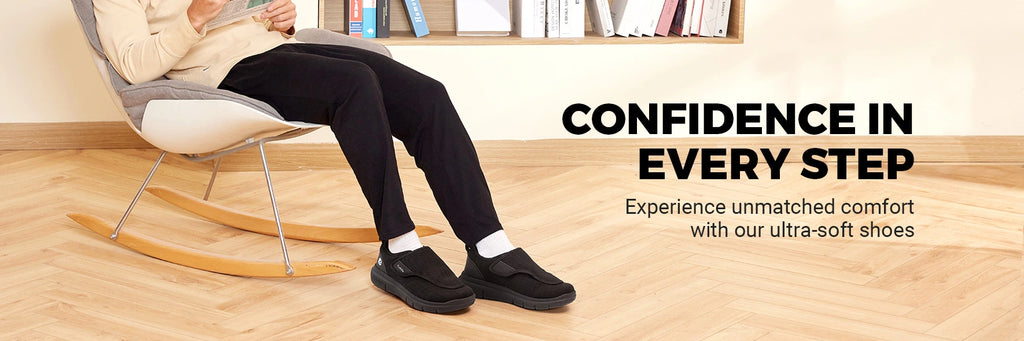
The FitVille EasyTop Wings V2 lists 2E through 6E widths, a high instep, adjustable strap and smooth lining. Those features make it one candidate for changing volume, not a recommendation for every person. The exact swelling pattern and compression setup determine fit.
For people whose swelling is modest and stable, a conventional lace-up such as the FitVille Women's Rebound Core V9 may provide a more structured heel and broad platform. Compare both styles with your complete setup.
Protect the skin
Lymphoedema increases the importance of preventing cuts, rubbing and fungal problems. Inspect feet daily, keep skin clean and dry between the toes and avoid walking barefoot. Contact a GP promptly if the limb becomes red, hot, more painful or suddenly more swollen, because infection needs quick attention.
Do not alter compression strength or stop a prescribed plan because a shoe feels tight. Contact the service that supplied it so the footwear and compression can be reviewed together.
FAQ
Should lymphoedema shoes be extra wide?
Only if measurements and the full setup require it. Some people need extra depth or a wider opening rather than the widest outsole available.
Can I wear slip-on shoes with lymphoedema?
A slip-on may need to squeeze the foot to stay on or may become loose as volume changes. Adjustable fastening generally provides more control.
Bottom line
Wide shoes help when width is the actual constraint. For lymphoedema, combine the right width with depth, adjustment, secure retention and skin protection, and seek specialist input for difficult swelling.
Shop Fresh Picks and use code AFS25 for 25% OFF sitewide
Next read
References
- Lower-limb lymphoedema footwear guidance. Birmingham Community Healthcare NHS Foundation Trust
- Footwear and skin-protection advice for lymphoedema. NHS
- FitVille EasyTop Wings V2 product specifications. FitVille
- FitVille Women's Rebound Core V9 product specifications. FitVille




