


What Shoes Are Best for Edema in Feet in the UK?
For foot oedema, choose a wide, comfortable shoe with a low stable sole, adjustable fastening and enough depth for the swollen area. The shoe should avoid tight pressure points while still holding the heel securely. Before shopping, check whether the swelling needs urgent NHS advice, especially when it is sudden, one-sided, painful, red or hot.
Check the cause before relying on footwear
Oedema means swelling caused by fluid build-up. The NHS lists many possible causes, from prolonged sitting or standing and pregnancy to medicines, vein problems, injury and conditions affecting major organs. A shoe may accommodate swelling but cannot identify why it is happening.
Ask for urgent GP help or NHS 111 if one foot or leg swells without a known cause, swelling is severe or sudden, the area is red or hot, or you have diabetes with swollen feet. Call 999 for swelling with breathlessness, chest tightness or pain, coughing blood, faintness or confusion.
Match the shoe to the swelling pattern
| Swelling pattern | Footwear response |
|---|---|
| Across the ball of the foot | Accurate width and rounded toe shape |
| On top of the foot | Extra depth and a wide-opening tongue |
| Changes during the day | Adjustable laces or long straps |
| Around the ankle | Padded opening without a tight rim |
| One foot larger | Fit both feet and ask about split sizing |
Try shoes at the time your feet are usually largest, unless your clinician gives different advice. Wear the intended socks and any prescribed compression or orthotic. Avoid tight sock cuffs and do not buy so much extra length that the heel slides.
Compare structured and highly adjustable options
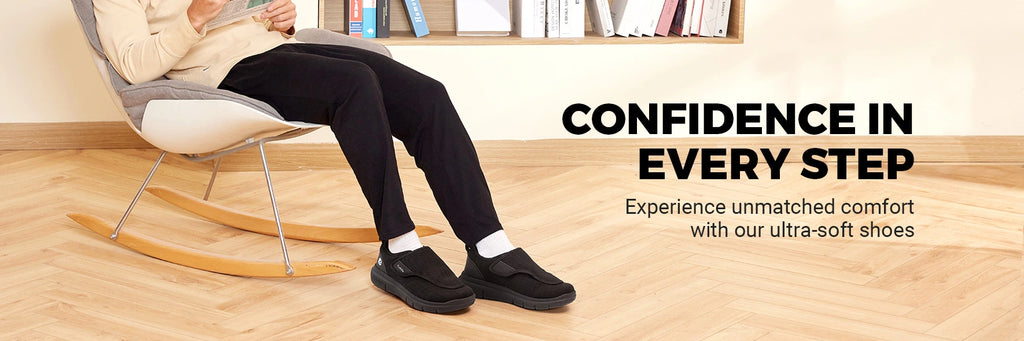
The FitVille EasyTop Wings V2 lists an adjustable strap, high instep and widths from 2E to 6E, which may suit larger volume changes. The FitVille Women's Rebound Core V9 lists 2E and 4E widths with a more structured lace-up heel and broad platform. Either model must be fit-tested; oedema can require depth and opening space that a width label does not describe.
Combine footwear with the agreed swelling plan
NHS self-care advice includes raising the legs when possible, gentle walking to support blood flow, avoiding long static periods and caring for the skin. If you have been given compression or another plan, use it as directed and fit footwear around the approved setup.
Inspect the feet each day. Persistent pressure marks, blisters, broken skin or increasing discomfort mean the shoe needs review.
FAQ
Are extra-wide shoes always best for oedema?
No. Choose the narrowest width and depth that avoid pressure while keeping the foot stable. Adjustable volume may matter more than maximum width.
Should I buy shoes in the morning or evening?
If swelling typically increases through the day, an afternoon fitting shows the larger volume. Bring everything you will wear inside the shoe.
Bottom line
Address urgent or unexplained swelling first. For ongoing fit, use a low stable shoe with measured width, enough depth and adjustable fastening rather than an oversized slip-on.
Shop Fresh Picks and use code AFS25 for 25% OFF sitewide
Next read
References
- Causes, self-care and urgent warning signs for oedema. NHS
- UK footwear fit and shoe-selection advice. Guy's and St Thomas' NHS Foundation Trust
- FitVille EasyTop Wings V2 product specifications. FitVille
- FitVille Women's Rebound Core V9 product specifications. FitVille




