


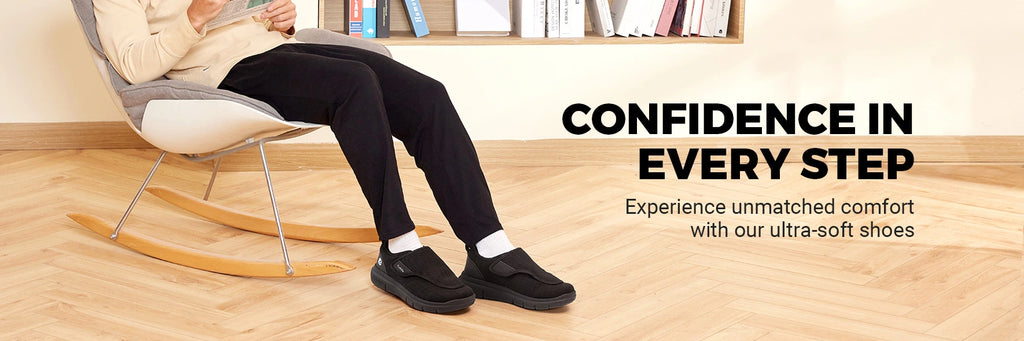
What to Look for in Shoes for Wide Feet
Look for a stated width option, a suitable toe shape, enough depth over the foot and a closure that holds the heel comfortably. A soft upper or a photograph of a broad shoe does not answer all of those questions. Use the product page as a checklist of evidence to confirm during fitting.
Start with information you can verify
A useful listing tells you which width you are selecting, supplies a size chart and identifies the model clearly. General claims such as comfort fit are less useful when there is no explanation of the available widths.
| Feature | Evidence to look for | What still needs a fitting check |
|---|---|---|
| Width | A selectable width and a model-specific chart | Pressure across the ball of the foot |
| Toe shape | Clear views of the front and inside | Space for toes to rest naturally |
| Depth | Upper construction and opening design | Pressure above the toes and instep |
| Closure | Adjustable laces or straps | Heel hold without excessive tension |
| Sole | Intended activity and construction | Comfort and control in motion |
The chart explains what a shoe is designed to offer. Your foot determines whether those features work together in the selected size.
Understand the difference between width and depth
Width concerns side-to-side room. Depth concerns vertical room. A shoe may provide one while falling short on the other, particularly if you have a high instep or use an insert.
This distinction changes what to try next. If the top of the foot feels squeezed, simply selecting the widest available size may leave the heel loose without resolving the upper shape. Compare another upper or closure design as well.
A wide toe box is another separate feature. It describes room and shape around the toes; it should not be treated as proof of unlimited midfoot space.
Read width labels in context
Brooks and ASICS both publish width guidance, but the label must be interpreted for the brand and product category. Read the men's or women's chart linked to your exact selection. Avoid carrying one familiar width code into every store without checking.
Look again after changing a color or length. Some shopping interfaces reset a selected option when another variant changes. Before paying, verify that the cart still contains the width you intended.
For comparison, look at how New Balance and Brooks display their selectable widths, then inspect the variant information on FitVille Rebound Core V9. The point is to understand the listing, not to assume that matching labels promise identical fit.
Test the claims with a short try-on
Use your usual socks and any insert you plan to wear. Put on both shoes, stand and walk within the shop's or seller's try-on conditions. Notice the sides, top, toes and heel separately.
A shoe that passes while seated may feel different under your standing weight. Likewise, a pair that feels soft for a few seconds may rub during repeated steps. Pay attention to a developing pressure point before deciding that the fit is good enough.
Choose a model whose shape works at a sensible length. Do not rely on a break-in period to make a clearly unsuitable fit comfortable.
FAQ
Does stretch fabric mean the shoe is wide?
No. The fabric may yield while the shape underneath remains unsuitable. Judge the platform and upper together.
Are removable insoles essential?
They can be useful if you use another insert, but they are not proof of adequate depth. Check the complete shoe with the insert you will actually wear.
What is the most useful buying question?
Ask which exact width is available in your size and how the model's shape differs from the pair you currently find restrictive.
Shop Fresh Picks and use code AFS25 for 25% OFF sitewide
References
- Width labels and upper-volume guidance. Brooks
- Choosing running shoes for wide feet. ASICS
- Ten points of proper shoe fit. FootCareMD
- Women's Rebound Core V9 width and construction specifications. FitVille
Next read: What Shoes Are the Best for Wide Feet? · How to Choose Walking Shoes for Wide Feet




