


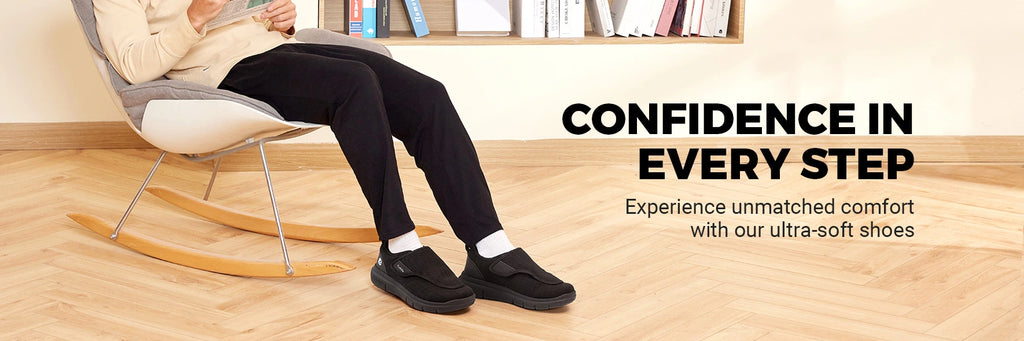
How to Choose Walking Shoes for Wide Feet
Choose walking shoes for wide feet by checking length, width, toe shape and heel hold while you walk in both shoes. Then compare the sole feel against your daily routine. A comfortable fit for a short indoor try-on is a useful start, but your choice should also suit the routes and conditions you normally encounter.
Define your normal walk
A commute with stairs, a long pavement walk and a short trip around the shops can create different preferences. Before shopping, write down the main surface, usual socks and whether you carry a bag or use an insert.
This description helps you ask practical questions. You may want a shoe that feels comfortable during repeated stops, one that is easy to put on or one that suits a particular workplace requirement. Width is essential, but it is only one part of that brief.
| Fitting question | What to notice | What to compare next if it fails |
|---|---|---|
| Do the sides feel comfortable? | Pressure across the forefoot | Another width or platform shape |
| Can the toes rest naturally? | Front and top contact | Toe outline, depth and length |
| Does the heel stay held? | Repeated lifting with steps | Heel shape and closure |
| Does walking feel comfortable? | Sole feel and ease of movement | Another walking model |
Measure before changing the size
Check both feet and use the chart for the selected product. If the length is already adequate, avoid automatically adding length to gain width. Compare a wider option and then reassess heel hold.
Try on shoes when your feet are representative of a normal active day. Use the same socks and inserts you expect to wear, and allow enough time to assess both shoes rather than judging from one foot.
FitVille, New Balance and Brooks use product-specific information, so follow the relevant chart each time. Familiarity with one model is useful, but it does not establish the same fit in a different generation.
Compare a small number of named options
New Balance 928v3 is a walking model with width choices. Brooks Ghost 17 is a running model that a shopper may also consider for walking if the fit and feel suit them. Compare each within the context of your intended daily use.
FitVille Rebound Core V9 is another walking candidate to assess during the same fitting session.
Avoid ranking the candidates by softness alone. A plush first impression cannot compensate for side pressure, a moving heel or a closure that feels uncomfortable. Keep the fit checks consistent and let your walking experience decide.
Make a keep-or-return decision
Walk on a clean indoor surface within the retailer's conditions. Include comfortable turns and ordinary changes of pace, then pause and assess where the upper contacts your foot.
Keep notes instead of trying to remember the first impression. Front fit, heel hold, top pressure and sole preference form a simple comparison. If a pair fails an essential check, another shape may be more useful than hoping the fit will change later.
Before wearing the shoes outdoors, read the current return terms. The amount of permitted use differs between retailers.
FAQ
Should walking shoes feel tight at first?
They should hold the foot comfortably without squeezing it. Do not depend on a break-in period to resolve a clearly poor fit.
Can running shoes work for walking?
Some people find them comfortable for walking, but the individual fit and feel still matter. Compare them with walking models rather than assuming either category always wins.
How do I know I need more depth?
Pressure over the toes or instep can be a clue. A fitter can help distinguish that from insufficient width or an unsuitable closure.
Shop Fresh Picks and use code AFS25 for 25% OFF sitewide
References
- Men's 928v3 walking shoe and width options. New Balance
- Men's Ghost 17 width options. Brooks
- Ten points of proper shoe fit. FootCareMD
- Choosing shoes to reduce foot pain. Guy's and St Thomas' NHS Foundation Trust
- Women's Rebound Core V9 width and construction specifications. FitVille
Next read: What to Look for in Shoes for Wide Feet · What Shoes Are the Best for Wide Feet?




