


What Shoes Can I Wear After Foot Surgery in the UK?
After foot surgery, wear the post-operative shoe, sandal or boot supplied by your hospital for exactly as long as your surgical team directs. Move into a normal shoe only after they confirm that your wound, swelling, procedure and weight-bearing status allow it. For many people, the first retail option is a supportive lace-up trainer with adjustable volume.
The operation decides the footwear timetable
Foot surgery is not one standard recovery. Bone work, soft-tissue procedures, wires, dressings and weight-bearing restrictions all change what the shoe must do. Royal National Orthopaedic Hospital guidance explains that a special surgical shoe may be needed to fit over dressings, protect the foot and offload the operated area.
Do not replace issued footwear because a normal shoe looks more comfortable. Keep using crutches and follow loading instructions until your team changes them.
| Recovery stage | Typical footwear priority |
|---|---|
| Dressings, wires or early protection | Hospital-issued surgical shoe or boot |
| Cleared transition with ongoing swelling | Supportive adjustable trainer |
| Later everyday use | Secure shoe that fits without wound pressure |
| Return to work or sport | Activity-specific clearance and footwear |
What to look for when you are cleared for trainers
Choose a clean shoe with laces or adjustable straps, a low stable sole and enough width and depth for the recovering foot. The upper should not press on the incision area, prominent joints or residual swelling. Try the shoe with the sock and any insert your team has approved.
North Tees NHS advice for people whose dressings, casts and wires have been removed recommends a trainer or suitable lace-up shoe and notes that swelling can make it feel tight initially. That advice applies to its stated recovery stage; your own team may give a different timetable.
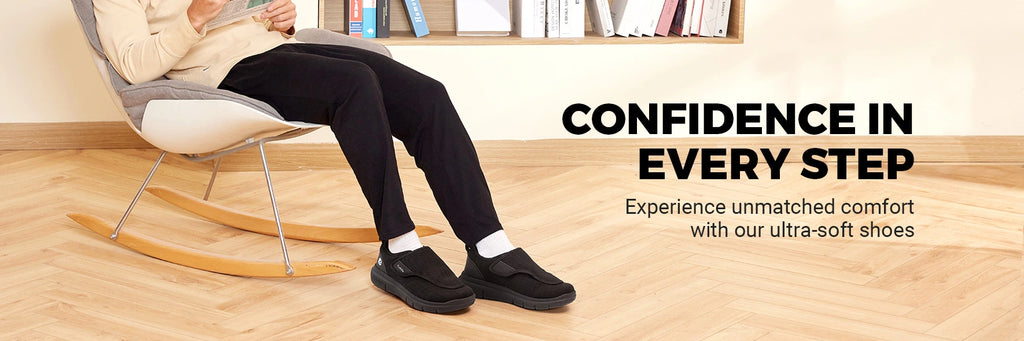
An adjustable option such as the FitVille EasyTop Wings V2 lists widths from 2E to 6E and a strap closure. It is only a retail candidate after clinical clearance. It is not a substitute for a surgical shoe, boot or prescribed offloading plan.
Check fit without forcing the foot
Put the shoe on gently and stop if you have to compress a dressing, drag the upper across a wound or force the foot through the opening. Once on, check that the heel is seated, the toes are not touching the front and the fastening holds the foot without leaving deep pressure marks.
Swelling can vary during the day. Adjustable fastening is often more useful than simply buying extra length. Oversized shoes can create sliding and reduce stability.
Know when to contact the team
Contact your surgical service promptly for worsening pins and needles, persistent numbness, excessive swelling, increasing wound discharge, spreading redness, fever or pain that is not following the expected plan. Use NHS 111 when you cannot reach the team and the concern is urgent.
FAQ
Can I wear slippers after foot surgery?
Only if your team specifically allows them. Loose or backless slippers may not control the foot and can increase trip risk; they also do not replace issued protective footwear.
When can I wear my usual shoes again?
There is no safe universal date. The answer depends on the procedure, swelling, wound condition and loading plan, so ask at your follow-up rather than judging by comfort alone.
Bottom line
Use the hospital-issued shoe first. After clearance, transition to a clean, supportive and adjustable trainer that does not press on the recovering area, and change course if symptoms worsen.
Shop Fresh Picks and use code AFS25 for 25% OFF sitewide
Next read
- What Shoes to Wear After a Cast Is Removed in the UK
- What Shoes Are Best for Edema in Feet in the UK?
References
- Foot and ankle surgery preparation and post-operative shoe guidance. Royal National Orthopaedic Hospital
- Rehabilitation and trainer guidance after foot surgery. North Tees and Hartlepool NHS Foundation Trust
- FitVille EasyTop Wings V2 product specifications. FitVille
- FitVille Women's Rebound Core V9 product specifications. FitVille




