


How to Choose Shoes for an Elderly Parent in the UK
Choose shoes with your parent, not just for them. Start with where they walk, how they put shoes on, whether their feet swell and what they already find secure. Then check length, width, depth, fastening, heel hold and sole stability on both feet.
Begin with daily life
A shoe for short indoor trips has different demands from one used outdoors, on stairs or with a walking aid. Bring the socks, orthoses or ankle support used in real life. Ask about numbness, skin problems, bunions, heel pain, swelling and any recent fall.
| Question | What it changes |
|---|---|
| Can they reach and grip the fastening? | Laces versus strap or hands-free entry |
| Do feet swell? | Opening, depth and adjustability |
| Is balance poor? | Heel security, stable base and seated dressing |
| Is sensation reduced? | Extra skin checks and professional advice |
| Is an orthosis used? | Removable liner and internal depth |
Respect colour, style and comfort preferences. Footwear that is left unworn cannot help.
Fit both feet carefully
Measure while standing and use the larger foot. Aim for roughly 1cm beyond the longest toe, adequate width across the forefoot and enough depth for toes to lie flat. The heel should stay seated while walking and turning.
Shop later in the day if swelling is typical. Do not assume an old size still applies, because foot shape can change. Use a retailer with a suitable indoor-return policy and keep packaging until the walking trial is complete.
Let your parent demonstrate the whole routine
From a firm chair, ask them to put on and fasten both shoes, stand safely, walk, turn and sit again. Watch for toe gripping, heel lift, shuffling, catching the toe or needing to over-tighten. A physiotherapist, occupational therapist or podiatrist can help when mobility or foot health is complex.
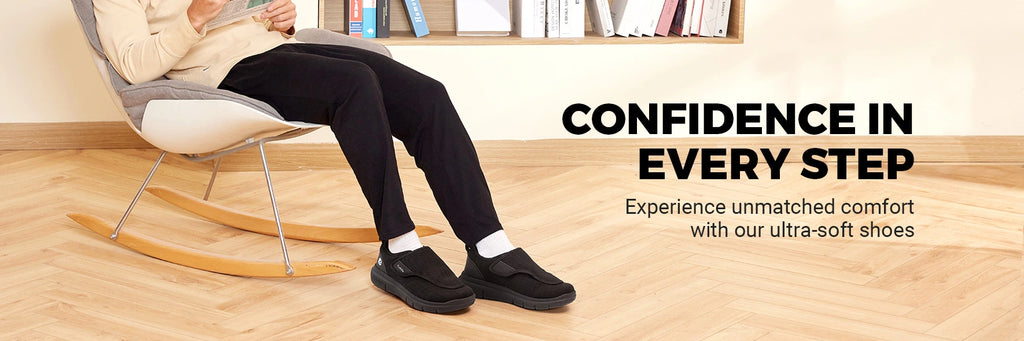
The FitVille EasyTop Wings V2 provides an adjustable-strap example, while the FitVille Women's Rebound Core V9 provides a lace-up wide-width example. Compare the fastening and fit rather than assuming one is best because of age.
FAQ
Should I buy shoes without my parent present?
Avoid it when possible. Measurements, walking and fastening ability are difficult to judge remotely. If necessary, choose a retailer with straightforward returns.
Should elderly people wear a larger size?
Only when measured length requires it. Width and depth problems should be addressed directly instead of adding unnecessary length.
Bottom line
The best purchase matches your parent's foot, abilities, routine and preferences. A shared try-on and walking test is more reliable than any “senior shoe” label.
Shop Fresh Picks and use code AFS25 for 25% OFF sitewide
Next read
References
- Older-adult shoe selection and fit guidance. Lincolnshire Partnership NHS Trust
- Secure-fastening and footwear safety guidance. RDaSH NHS Foundation Trust
- FitVille EasyTop Wings V2 product details. FitVille
- FitVille Women's Rebound Core V9 product details. FitVille




