


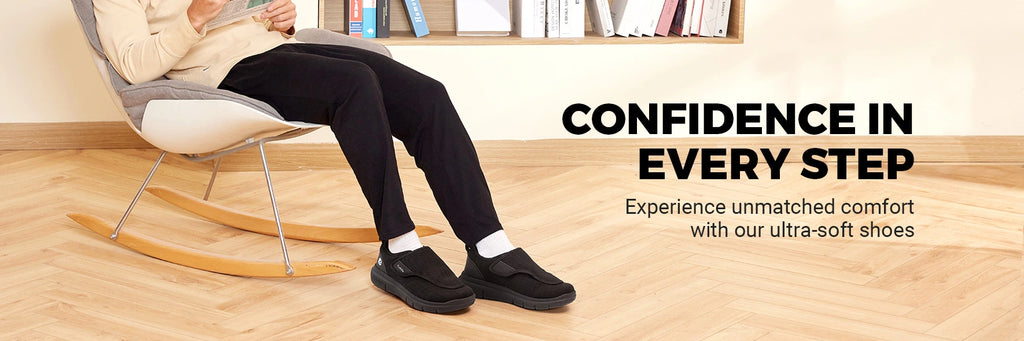
What Causes Wide Feet in the UK?
Wide feet may come from inherited foot shape, gradual changes in the arch and soft tissues, pregnancy, body-load changes, bunions or swelling. Some people have always needed more forefoot width; others notice a new change over months or years. Sudden or one-sided widening is more likely to be swelling and deserves a different response.
Natural foot shape and inherited structure
Feet vary in bone shape, toe alignment, arch height and forefoot proportions. A person can have a broad forefoot with a narrow heel, a high-volume instep or a consistently wide shape across the whole foot. Family patterns are common, although a width label still depends on foot length and the brand's last.
Measure both feet while standing and compare with model-specific charts. Appearance alone cannot distinguish a wide forefoot from swelling or a high instep.
Feet can change gradually over time
With age and repeated loading, the tissues supporting the arch may change and the foot can become somewhat longer or wider. Body-weight changes can alter load on the foot. Pregnancy can also affect foot dimensions through both swelling and ligament changes; some changes may persist after pregnancy.
| Pattern | Possible contributor |
|---|---|
| Wide for as long as you remember | Inherited anatomy or natural shape |
| Gradual increase over years | Age, arch change or changing load |
| Change during pregnancy | Swelling and ligament-related change |
| Local bump at the big-toe joint | Bunion-related forefoot width |
| Rapid one-sided increase | Injury, inflammation or oedema requiring advice |
Bunions can change forefoot width
A bunion moves the big-toe joint profile outward and makes the forefoot harder to fit. Guy's and St Thomas' notes that bunions are often inherited and can also be associated with joint movement; narrow pointed shoes and high heels may speed symptoms or aggravate pressure. Tight shoes are not a simple explanation for every wide foot.
Wide fitting footwear can accommodate the shape, but it does not reverse a structural prominence. Choose a toe shape that follows the foot and keeps the heel secure.
Swelling can mimic a width change
Oedema can affect one or both feet and may fluctuate with time of day. The NHS lists prolonged static positions, pregnancy, some medicines, vein problems, injury and several health conditions among possible causes.
Seek urgent GP help or NHS 111 for unexplained one-sided swelling, severe or sudden swelling, redness, heat or swelling with diabetes. Call 999 if swelling occurs with breathlessness, chest pain or tightness, coughing blood, faintness or confusion.
Choose shoes for the current shape
Re-measure rather than forcing an old size. The FitVille Women's Rebound Core V9 offers 2E and 4E widths with a model-specific chart, making it one example of how width should be matched to both length and measurement. People with greater volume changes may need adjustable designs rather than only a wider sole.
FAQ
Can tight shoes make feet permanently wide?
Tight shoes can compress the toes, aggravate rubbing and contribute to symptoms around susceptible joints, but they do not explain every broad foot. Inherited structure, arch changes and swelling are separate factors.
Is it normal for one foot to be wider?
Small differences are common, so fit the larger foot. A new, marked or painful difference should be assessed, particularly when redness, heat or swelling is present.
Bottom line
Wide feet can be natural or develop gradually, while sudden change points more toward swelling or injury. Track the timeline, measure both feet and use current fit rather than an old shoe size.
Shop Fresh Picks and use code AFS25 for 25% OFF sitewide
Next read
References
- Age, load and pregnancy-related foot-size changes. Cleveland Clinic
- Bunion causes, footwear pressure and width guidance. Guy's and St Thomas' NHS Foundation Trust
- Oedema causes and urgent warning signs. NHS
- FitVille Women's Rebound Core V9 product specifications. FitVille




