


Should I Wear Wide Shoes for Neuropathy?
Should I wear wide shoes for neuropathy? Choose more width only when measurement and inspection show pressure, while keeping the heel secure and skin protected.
Neuropathy does not automatically mean every person needs a wide size. Foot shape varies, and reduced sensation can make an overly tight or overly loose shoe difficult to recognize. Use measurements, visible fit, and post-wear skin checks.
Use This Decision Guide
| Observation | What to compare next |
|---|---|
| Foot overhangs the sole or upper bulges | Same length in a wider size |
| Toes contact tapered sides | Wide toe box |
| Top of foot or toes shows marks | More depth or adjustable upper |
| Heel lifts in a wide shoe | Different last with a narrower heel |
| No visible pressure and foot stays centered | Current width may be appropriate |
| Foot shape has changed or wounds have occurred | Professional footwear assessment |
The goal is the smallest width that avoids pressure and keeps the foot centered. Excess volume can allow sliding, friction, and instability.
Do Not Use Tightness as Sensory Feedback
Some people with reduced sensation may choose a tight shoe because it is easier to feel. This can hide harmful pressure. A safe fit should be based on foot measurement and objective checks rather than the intensity of sensation.
Check the widest point of the forefoot, toe-box outline, upper depth, and heel hold. Fit both feet and account for any prescribed insert.
Verify the Choice After Short Wear
Before wear, inspect the interior and outsole. During the first uses, wear the shoes indoors for a short period. Afterward, inspect both feet for redness, blisters, cuts, swelling, warmth, or color change.
If a pressure mark remains, stop using the shoe and seek fitting advice. Contact a clinician promptly about broken skin, drainage, a wound, or another concerning change.
Compare Wide Options as Part of a System
Appropriate width works with a smooth interior, adequate depth, adjustable closure, closed protective upper, stable sole, and dependable grip. General retail shoes may not be appropriate when specialized footwear has been prescribed.
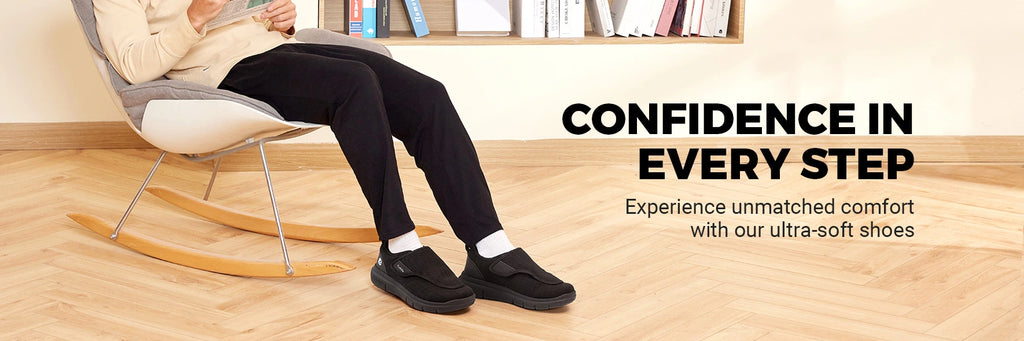
FitVille's Men's Wide Shoes and Women's Wide & Extra Wide Shoes provide current widths to compare. The Women's Rebound Core V9 is one current wide toe box option; inspect the complete fit rather than choosing it from the label alone.
Shop Fresh Picks and use code AFS25 for 25% OFF sitewide
FAQ
Is extra-wide safer than wide?
Only when the foot needs the added space. If wide already removes pressure, extra-wide may add movement and rubbing.
Should I go up a size for width?
Not automatically. Added length can cause sliding. Compare the same length in another width, depth, or shoe last first.
Who should fit my shoes?
A trained shoe fitter can measure both feet, but a podiatrist or orthotist is especially useful when there is loss of protective sensation, diabetes, a previous wound, foot-shape change, or prescribed footwear.
References
- Neuropathy footwear fitting and inspection guidance. RDaSH NHS Foundation Trust
- Footwear guidance for reduced sensation. University Hospitals Coventry and Warwickshire NHS Trust
- Current Women's Rebound Core V9 specifications. FitVille
Next read: Which width is best? · Wide-fit pressure audit




