


Are Wide-Fitting Shoes Good for Plantar Fasciitis?
Wide-fitting shoes can be good for plantar fasciitis when standard footwear squeezes the forefoot or toes. They remove unnecessary side pressure, but width alone does not provide heel cushioning, arch support or secure retention. Those features must be assessed separately.
What width can and cannot do
A correctly wide shoe lets the forefoot sit on the platform without bulging over the sole. It may improve comfort when swelling, bunions or a naturally broad foot occur alongside plantar fascia pain.
Extra width does not automatically support the arch or cushion the heel. If the shoe becomes loose, the foot may slide and the wearer may tighten laces excessively or grip with the toes.
| Fit sign | Meaning |
|---|---|
| Side pressure disappears and heel stays secure | Width may be appropriate |
| Foot slides laterally | Shoe may be too wide |
| Heel lifts | Last, size or fastening may be wrong |
| Pressure remains over the instep | More depth may be needed |
Build the complete footwear setup
NHS guidance recommends cushioned heels and good arch support and advises against high heels, tight pointy shoes, flip-flops and backless slippers. A fastening helps hold the foot in a consistent position. A removable liner can create space for an advised insole.
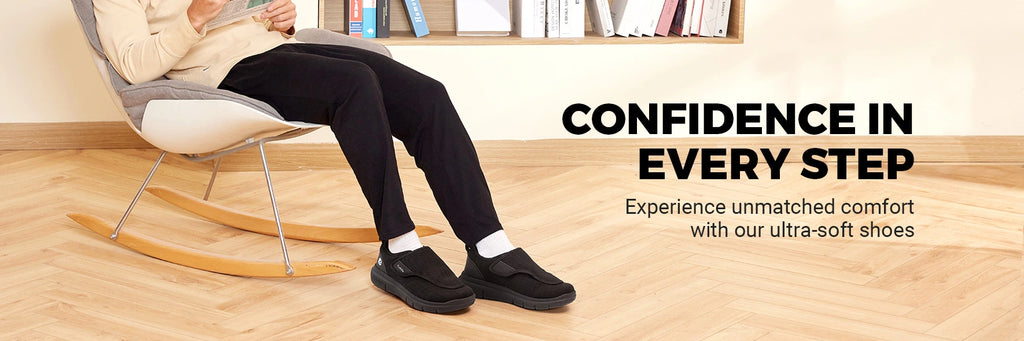
Compare widths within the same model and length where possible. The FitVille Women's Rebound Core V9 offers 2E and 4E with a removable insole, letting shoppers test width while keeping the basic design constant.
Do not rely on shoes alone
Plantar fasciitis often needs a broader self-care plan that may include temporary activity changes, stretching and insoles or heel pads. Seek advice if pain is severe, follows injury, includes tingling or loss of sensation, or has not improved with self-care.
FAQ
Can shoes be too wide for plantar fasciitis?
Yes. Excess volume can reduce heel and midfoot control. The goal is pressure-free fit, not the widest available label.
Is a wide toe box enough?
No. Toe shape can improve forefoot comfort, but the heel, arch, fastening and sole still determine the overall setup.
Bottom line
Use wide-fitting shoes when measured width and side-pressure signs justify them. Combine the right width with stable cushioning, comfortable arch support and secure fastening.
Shop Fresh Picks and use code AFS25 for 25% OFF sitewide
Next read
References
- NHS footwear and self-care guidance for plantar fasciitis. NHS
- Supportive shoe, fastening and orthosis guidance. Dorset HealthCare University NHS Foundation Trust
- FitVille Women's Rebound Core V9 product details. FitVille




