


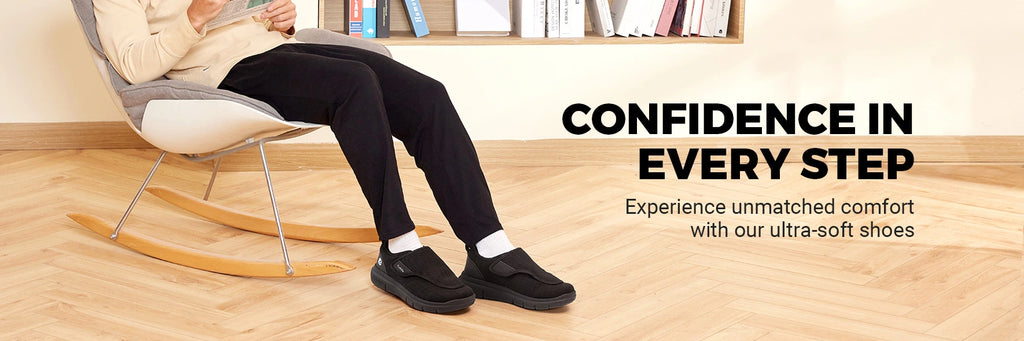
Are Wide-Fitting Shoes Good for Metatarsalgia?
Wide-fitting shoes can be good for metatarsalgia, but only when the foot actually needs more breadth. Width can reduce forefoot compression, but metatarsalgia describes ball-of-foot pain rather than one single cause, so cushioning, sole stiffness and pads must match the individual problem. Width is one part of fit, not a complete footwear prescription.
What a wide fitting changes
A purpose-built wide option adds space across the forefoot or overall volume without unnecessarily adding length. It may reduce side pressure and allow the foot to sit over the shoe platform. It does not guarantee the right toe-box depth, instep room, heel hold, cushioning or arch interface.
| Feature | Why it matters |
|---|---|
| Wide deep toe box | Avoids compressing the forefoot and toes |
| Low heel | Reduces forward pressure on the ball of the foot |
| Cushioned or suitably firm sole | Changes loading according to the assessed cause |
| Secure adjustable fastening | Keeps the foot from sliding forwards |
| Removable liner | Creates space for an advised metatarsal pad or insole |
Signs that width is helping
The right-length wide shoe should remove side pressure while keeping the heel seated. The foot should not spill over the sole, slide laterally or need toe gripping. Persistent pressure over the top of the foot points towards depth rather than width.
Try shoes with the intended pad or insole and walk at your usual pace. Check that the ball of the foot sits over the broadest part of the sole without pinching, sliding or heel lift. Avoid high heels, narrow pointed shapes, thin hard soles and worn footwear. Do not assume the softest sole is best when a clinician has advised a firmer platform.
Use product details as a starting point
The FitVille Women's Rebound Core V9 lists 2E and 4E widths, a removable insole and a broad platform. Those specifications make it one candidate to fit-test; they do not show that its arch shape, depth or cushioning will suit every foot.
If a wide version still feels wrong, change model rather than automatically moving wider. Last shape, heel geometry and upper construction vary. Arrange assessment for severe or persistent pain, swelling, numbness, weakness, inability to walk normally, pain after injury or a new lump or skin change.
FAQ
Can wide shoes be too wide for metatarsalgia?
Yes. Too much volume can cause heel lift, lateral movement and rubbing. The goal is enough room without losing control.
Is a wide toe box the same as a wide shoe?
Not always. A shoe may have a broad toe shape but standard midfoot volume, or a wide label with inadequate depth. Use measurements and the real fit.
Bottom line
Choose wide-fitting shoes when the right-length standard shoe compresses the foot. Keep evaluating depth, fastening, heel hold and the condition-specific features rather than stopping at the width label.
Shop Fresh Picks and use code AFS25 for 25% OFF sitewide
Next read
References
- Metatarsalgia shoe, fastening and padding guidance. North Cumbria Integrated Care NHS Foundation Trust
- Wider footwear and metatarsal-pad guidance. Dorset MSK NHS service
- Firmly laced footwear, cushioned inlays and podiatry guidance. Chelsea and Westminster Hospital NHS Foundation Trust
- FitVille Women's Rebound Core V9 product details. FitVille




