


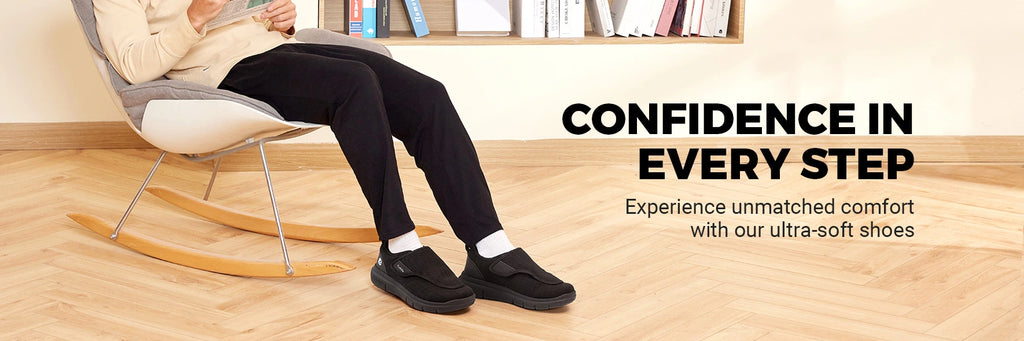
Should I Wear Wide Shoes for Diabetic Feet?
Wide shoes can suit diabetic feet when standard widths create pressure, but excess room can cause sliding. Use measurements and skin checks to decide.
Choose wide shoes for measured need
Wear a wide shoe when the standard-width version squeezes the forefoot, crowds the toes, or distorts the upper—and a wider size resolves that pressure without reducing heel security. Diabetes by itself does not determine shoe width.
Too little width can create rubbing and pressure. Too much width can also be a problem because the foot may slide, the toes may grip, and the heel may rub. The goal is a pressure-free, secure fit rather than the widest available shoe.
A simple decision tree
Standard width may work when:
- The forefoot sits fully on the sole.
- The upper keeps its intended shape.
- Toes have side and top clearance.
- The heel stays seated.
- Post-wear checks show no persistent marks.
Try a wider option when:
- The sides press or leave lasting redness.
- Toes overlap or touch the shoe edge.
- The upper bulges over the sole.
- The proper length feels narrow across the forefoot.
Look for extra depth instead when:
- Pressure is mainly over the toes or instep.
- An insert makes the shoe vertically tight.
- Toe shape changes require more room above, not only at the sides.
Browse Men's Wide Shoes or Women's Wide Shoes after measuring both feet.
Confirm the choice safely
Try shoes later in the day with your usual socks and any prescribed insert. Lace or fasten both shoes, stand, and walk on the surfaces you normally use. Feel inside the shoe with your hand before wear.
Begin with a short indoor session and inspect the feet afterward. If sensation is reduced, visible evidence matters more than a lack of pain. Stop using the pair and seek prompt advice for broken skin, drainage, persistent redness, warmth, swelling, or a new change in foot shape.
Compare construction as well as width
The FitVille Women's Rebound Core Walking Shoes V9 is one option to compare for width choice, toe space, closure, cushioning, and heel hold. Confirm that the chosen pair matches the foot rather than assuming every wide size fits alike.
Bottom line
Wide shoes are appropriate for diabetic feet only when the foot needs the added width. Measure, compare adjacent widths, check depth separately, and choose the pair that stays secure without pressure.
Shop Fresh Picks and use code AFS25 for 25% OFF sitewide
References
- HRSA: Appropriate footwear selection
- AAOS: Care of the Diabetic Foot
- FitVille Women's Rebound Core Walking Shoes V9




