


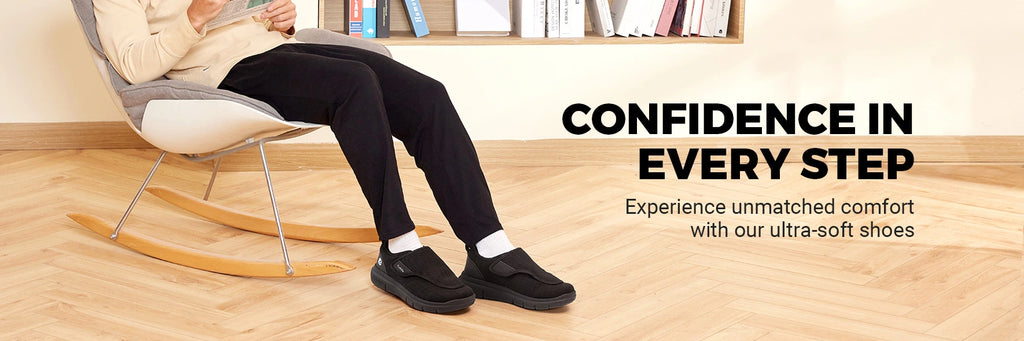
Best Wide-Fit Shoes for Rheumatoid Arthritis in the UK
The best wide-fit shoes for rheumatoid arthritis combine accurate width with the other features the condition requires. Width may accommodate swollen joints or forefoot changes, but rheumatoid arthritis can alter shape and skin risk over time, so depth, soft uppers, fastening and podiatry review also matter. Choose by measured fit and on-foot testing rather than a wide label or a list of popular brands.
Build the full shortlist
| Feature | Why it matters |
|---|---|
| Measured width and depth | Accommodates joints and changing foot shape |
| Soft low-seam upper | Limits rubbing on sensitive or prominent areas |
| Secure adjustable fastening | Adapts to volume while controlling the heel |
| Stable cushioned sole | Supports walking and spreads load |
| Removable liner | Leaves room for an advised orthosis |
A shoe can pass the width test and still fail because it is too shallow, unstable or loose at the heel. Avoid relying on a width label when the shoe is shallow or has stiff overlays. During a flare, do not force the foot into yesterday's fastening position or a shoe that leaves pressure marks.
Fit the shoe, not the diagnosis
Fit both feet with usual socks and any orthosis, preferably when swelling is representative. Check joint prominences, toe depth, heel hold and the skin after a short indoor trial.
Compare widths within the same model when possible. Keep the length aligned with the larger foot and reject any pair that creates pressure marks, repeated heel lift or sliding. A retailer with a suitable indoor-return policy makes a careful trial easier.
A FitVille option to assess
The FitVille Women's Rebound Core V9 lists 2E and 4E widths, a removable insole and a broad platform. Those specifications make it one candidate to fit-test; they do not show that its arch shape, depth or cushioning will suit every foot.
No product should be presented as universally best. A rheumatology podiatrist may assess joint and tendon changes, callus, skin, gait, footwear and orthosis needs, working with the wider rheumatology team when appropriate. Seek prompt advice for a new wound or blister, hot markedly swollen joint, colour change, infection signs, rapidly changing shape or sudden loss of walking ability.
FAQ
Is the widest option automatically best for rheumatoid arthritis?
No. The shoe should remove compression while keeping the heel and midfoot secure. Extra width can create movement when it is not needed.
Should I buy a longer shoe instead of a wide one?
Only when length is genuinely insufficient. Extra length changes heel fit and flex position and is not a reliable replacement for width or depth.
Bottom line
Shortlist shoes that combine suitable width with the condition-specific features above, then keep the pair that remains pressure-free and secure during walking.
Shop Fresh Picks and use code AFS25 for 25% OFF sitewide
Next read
References
- Rheumatology podiatry, footwear and joint-protection guidance. Northumbria Healthcare NHS Foundation Trust
- Rheumatoid-arthritis foot assessment and specialist footwear guidance. Gateshead Health NHS Foundation Trust
- Width, depth and orthosis-friendly footwear guidance. Guy's and St Thomas' NHS Foundation Trust
- FitVille Women's Rebound Core V9 product details. FitVille




