


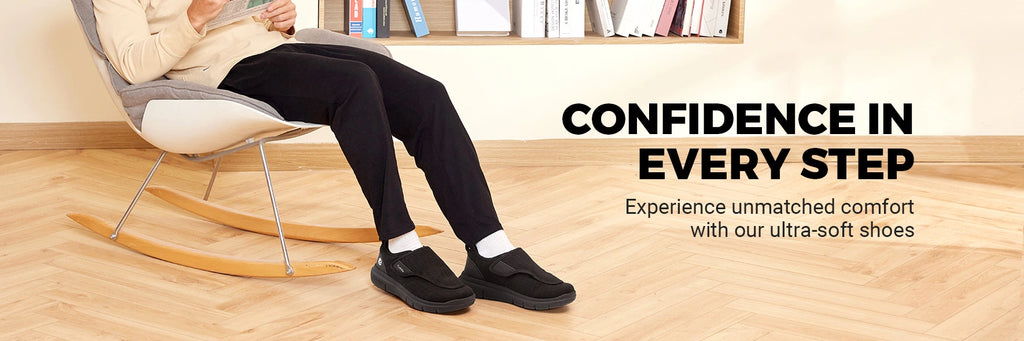
What Are the Best Shoes for Diabetic Feet?
The best shoes for diabetic feet depend on your risk stage. Low-risk feet with full sensation do well in well-fitted wide shoes with cushioned soles. Higher-risk feet — reduced sensation, deformity, or a previous ulcer — need extra-depth, seam-free footwear, and often custom insoles prescribed alongside it.
Risk staging is the framework foot clinics use, and it maps directly onto shoe requirements. Matching the shoe to the stage prevents both under-protection and unnecessary cost.
Shoes by Risk Stage
| Stage | What it means | What the shoe must do |
|---|---|---|
| Stage 0–1: low risk | Full sensation, no deformity, no history of ulcer | Wide fit, cushioned sole, seam-free toe box — ordinary good shoes |
| Stage 2: at risk | Loss of protective sensation, or mild deformity | Extra depth, seamless lining, pressure-spreading insole |
| Stage 3: high risk | Deformity plus neuropathy, or previous ulcer | Extra-depth therapeutic shoe, custom or prescription insole, professional fitting |
| Active ulcer or infection | Under clinical care | Offloading footwear as directed by the clinic — not self-chosen |
Why Stage Matters More Than Brand
A brand's "diabetic shoe" label does not know your stage. The features that protect a foot with neuropathy — rigid rocker soles, deep hollows under the toes, total-contact insoles — can be unnecessary or cumbersome for a foot at low risk. Over-speccing wastes money; under-speccing risks an ulcer.
The practical sequence: know your stage (a foot screening takes minutes), then buy the features that stage requires.
The Three Features That Do the Work at Higher Risk
Extra depth. Deformity changes the top of the foot before it changes the sole. Depth keeps the toe box off clawed toes and accommodates the swollen midfoot.
Pressure-spreading insoles. At stage 2 and above, a flat contoured insole that spreads load across the whole sole measurably reduces peak pressure under the metatarsal heads — the site of most ulcers.
Seam-free construction. At any stage with sensory loss, internal seams are the single most common avoidable cause of skin breakdown.
Warning Signs Your Shoes Are No Longer Safe
- Red marks or indentations that last more than 20 minutes after removal.
- Warm spots compared with the same spot on the other foot.
- Thickened skin (callus) building up under the ball or toes — a pressure signature.
- The shoe wearing unevenly on the outsole, which changes where load lands.
Any of these warrants a change of shoe and, at stage 2 or above, a foot clinic visit.
Where the Wider Fit Fits In
Swelling, deformity and bandaged feet all widen the foot. Wide toe box shoes carry the toe box clearance that diabetic feet need at every stage — the feature overlaps between the two conditions is why the same lasts serve both.
FAQ
Do I need prescription diabetic shoes?
At stage 2 and above, prescription or professionally fitted therapeutic shoes are worth discussing — many healthcare systems and insurers cover them when criteria are met. At low risk, well-chosen retail shoes meet the need.
Are rocker soles good for diabetic feet?
For forefoot ulcers or high pressure under the ball, rocker soles reduce bending load at the push-off and are often prescribed. They change balance, so introduce them carefully.
Can diabetic feet recover sensation?
Usually not. Prevention — including correct footwear — remains the strategy throughout.
References
- Men's diabetic footwear. Men's Shoes for Diabetes
- Extended-width footwear. Men's Wide Shoes
Related Questions
Further fit answers on this site:




