


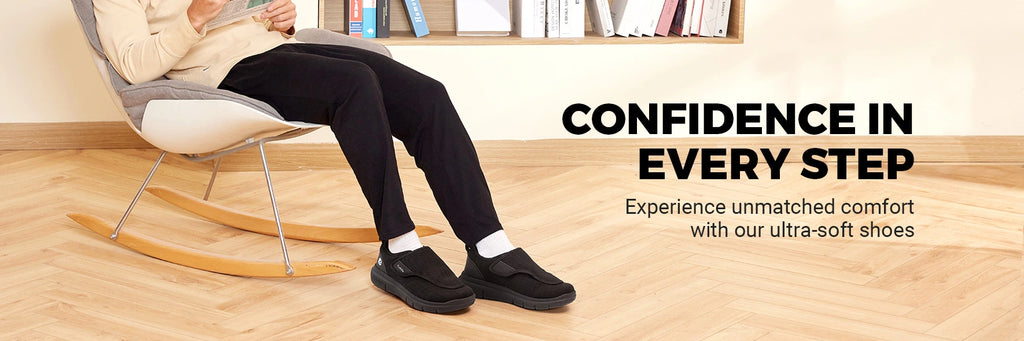
Shoes for Wide Feet and High Insteps
Wide feet and a high instep create two different fit problems. A shoe can offer enough side-to-side width while pressing the top of the foot, or provide vertical room while squeezing the toes. The best solution is to evaluate width and volume separately instead of simply buying a longer size.
Width Is Not the Same as Instep Height
Width describes the space across the forefoot. Instep volume describes the space from the footbed up to the top of the shoe. Look at both when trying on footwear.
| Fit area | What to check |
|---|---|
| Forefoot | Toes can spread naturally without side pressure. |
| Instep | Tongue and laces do not create a concentrated pressure line. |
| Length | Longest toe clears the front without the foot sliding. |
| Heel | Heel stays seated after fastening. |
| Opening | Foot can enter without forcing the upper or tongue. |
An extra-long shoe may create more room at the top, but it also moves the flex point and can make the heel unstable. Start with the correct length, then compare a roomier last, adjustable closure, or extra-depth construction.
Closures That Create Useful Volume
Laces can distribute pressure when the eyelets and tongue offer enough room. Broad hook-and-loop straps create a larger opening and can be adjusted during the day. Stretch panels are convenient but may not provide enough control for a high-volume foot.
Try the closure at its normal tension. If the eyelets pull sharply apart or the strap reaches its end before the foot feels secure, the model is probably not giving you usable volume. A removable insole can change depth, but test the complete shoe after every insole change.
An Afternoon Try-On Test
Feet often feel fuller after activity. Try shoes later in the day with your usual socks and any approved insert. Walk, turn, climb a step, and bend at the forefoot. Check the top of the foot, the little-toe side, and the heel after several minutes rather than judging only the first step.
Do not accept numbness, tingling, or persistent pressure as a break-in requirement. If fit remains difficult or symptoms persist, a qualified professional can help assess footwear needs.
Where FitVille Fits
FitVille’s Rebound Core collection is a useful place to compare current wide-fit walking options. Check the exact product selector and return terms; no collection label replaces a personal fit test.
Shop Fresh Picks with code AFS25
Use code AFS25 for 25% OFF sitewide when active.
Buying Checklist
- Confirm width and instep volume separately.
- Fit the correct length before sizing up.
- Test the closure at its full usable range.
- Use real socks and inserts.
- Try shoes later in the day.
- Keep outdoor wear until the fit is confirmed.
FAQ
Are wide shoes automatically good for high insteps?
No. Width is horizontal space; a high instep needs vertical volume as well. Compare the upper, tongue, opening, and closure.
Should I size up for a high instep?
Not as the first solution. Extra length can create sliding. Look for more volume or an adjustable design in the correct length.
Do laces or straps work better?
Either can work. Choose the closure that gives enough opening and lets you secure the midfoot without concentrating pressure.
References
- High-instep fit guide. Dr. Comfort
- Rebound Core collection. FitVille
- Rebound Core collection. FitVille




