


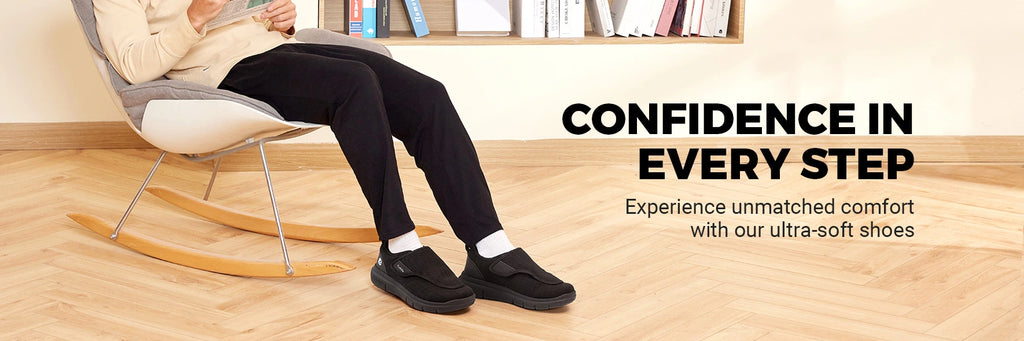
Can the Right Shoes Relieve Edema?
The right shoes may ease external pressure and improve walking comfort with edema, but they do not reduce fluid buildup or address its cause.
Shoes can influence pressure, not edema itself
Can the right shoes relieve edema? They may make walking more comfortable by reducing upper contact, toe crowding, and impact around a swollen area. They do not remove fluid buildup, change the cause of edema, or replace guidance from a qualified clinician.
The benefit also depends on timing. When swelling is near its usual level, a well-fitted shoe can provide useful space and stability. When swelling is sudden or severe, even light contact over the swollen forefoot may be intolerable.
Use five checks when swelling is near its usual level
- Toe space: Toes should spread without touching the front or sidewall.
- Upper pressure: The material should not press on swollen areas.
- Closure: Laces or straps should adapt to ordinary volume changes.
- Heel security: The heel should stay seated without pinching.
- Sole behavior: Cushioning should feel stable, with traction suited to the surface.
The FitVille Women's Rebound Core Walking Shoes V9 is one candidate to compare for these properties during a stable period. Walk indoors first and stop if rubbing, pressure, or instability appears.
Plan separately for high-swelling days
Do not force a markedly swollen or highly sensitive foot into a closed shoe. Seek prompt guidance for new one-sided swelling, a sudden or severe increase, pronounced redness or heat, fever, or skin damage. Call emergency services for shortness of breath or chest pain.
Bottom line
The right shoes can reduce avoidable external pressure and impact, but they do not address the underlying cause of edema. Judge fit when symptoms are stable and keep a separate plan for acute days.
Shop Fresh Picks and use code AFS25 for 25% OFF sitewide
References
- NHS: Swollen ankles, feet and legs (oedema)
- Guy's and St Thomas': Choosing shoes to reduce foot pain
- FitVille Women's Rebound Core Walking Shoes V9




