


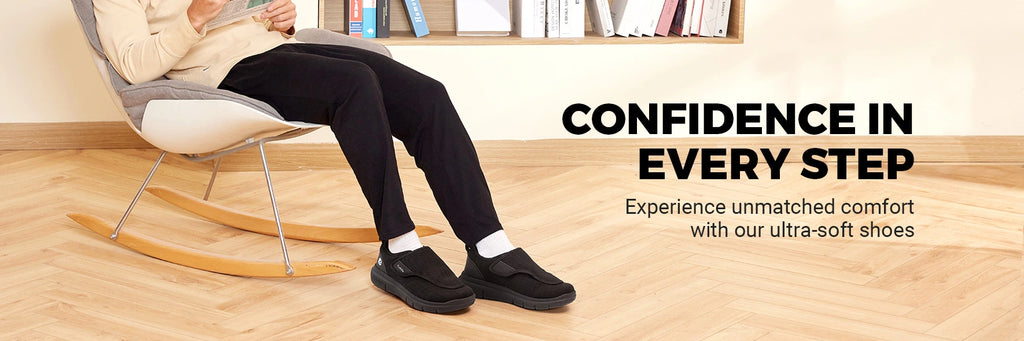
Shoes for One Foot Bigger Than the Other
Small differences between feet are common, but they make shoe shopping frustrating. One shoe may feel comfortable while the other presses at the toes or slips at the heel. The dependable starting point is to measure both feet and fit the larger one for length and width, then use adjustability to refine the smaller side.
Measure Both Feet Later in the Day
Measure while standing, wearing the socks you normally use. Record length, forefoot width, and any difference in instep or heel volume. Feet can change during the day, so a morning-only measurement may understate the space you need.
The larger foot determines the minimum usable length. Buying a smaller size to suit the smaller foot can crowd the larger one, while buying a much longer size can create sliding. Look for a model with a secure closure and a return policy that lets you evaluate the pair indoors.
Use the Closure to Balance the Pair
Laces, straps, and adjustable openings can let the smaller foot feel more secure without compressing the larger one. Fasten each shoe independently; the two sides do not need identical tension.
| Situation | Useful approach |
|---|---|
| Larger forefoot | Fit width and toe room to the larger foot. |
| Smaller heel | Use lacing or an adjustable strap for extra hold. |
| Different instep height | Choose a model with opening and volume adjustment. |
| Orthotic on one side | Test the exact insert in both shoes. |
Any insert or added layer changes the shoe’s internal volume. Test the final setup while walking, turning, and using stairs.
What to Check Before Keeping the Pair
Try shoes later in the day. The longest toe should clear the front on a downhill step, the wider foot should not spill over the platform, and neither heel should rub. Walk for several minutes, then remove the shoes and inspect any pressure marks.
If the difference is substantial, ask a pedorthist or qualified fitter about split sizing or other options. Do not modify a shoe in a way that creates instability. Persistent pain, numbness, or skin damage deserves professional attention rather than a new sizing trick.
Where FitVille Fits
The FitVille Rebound Core collection is a useful category to compare for current wide-fit walking options. Confirm the exact width selector, closure, and return terms before ordering.
Shop Fresh Picks with code AFS25
Use code AFS25 for 25% OFF sitewide when active.
Buying Checklist
- Measure both feet while standing.
- Fit the larger foot first.
- Use adjustable closures to stabilize the smaller side.
- Test inserts in the final setup.
- Walk indoors before outdoor wear.
- Seek professional fitting help for a large difference.
FAQ
Should I buy two different shoe sizes?
It is one possibility, but availability and cost vary. First look for a model whose length fits the larger foot and whose closure can secure the smaller foot.
Which foot should I measure first?
Measure both. The larger length or width usually controls the purchase decision.
Can socks fix a small size difference?
They can change volume slightly, but thick socks may create pressure and thin socks may not stabilize the heel. Treat them as part of the fit test, not a guaranteed fix.
References
- Different-sized feet fitting guidance. Pedorthic Association of Canada
- Shoe-fit guidance. AAOS OrthoInfo
- Rebound Core collection. FitVille




