


Choosing Shoes for People with Reduced Grip Strength
When hand grip is limited, a shoe should be manageable to put on and fasten while still holding the foot securely. A pull tab, wide opening or easy-adjust closure may help, but no single feature suits everyone. Consider the person's hand movement, balance, usual socks and daily setting.
Compare closure effort
Laces can be adjusted precisely but may take finger strength and coordination. Hook-and-loop straps or elastic laces can reduce some steps, while a wide opening may make entry easier. Slip-on shoes can be convenient yet may not retain the heel securely. Try the exact fastening method and ask whether assistive tools or caregiver support are appropriate.
Check the complete routine
Practice putting on and removing both shoes while seated if that is safer. Check the heel is fully in place, the closure is secure and no fabric or tongue is folded. Consider the surface and activity where the shoe will be used. An occupational therapist or footwear specialist can assess accessibility needs and safe options.
A practical fitting checklist
| Check | What to observe | Reconsider when |
|---|---|---|
| Position | Device or feature sits as instructed | It rocks, shifts or presses at an edge |
| Space | Toe, instep and heel room remain | The foot is lifted or pushed forward |
| Retention | Shoe holds foot securely | Closure must be painfully tight |
| Movement | Pair behaves as intended for use | Pain or instability appears |
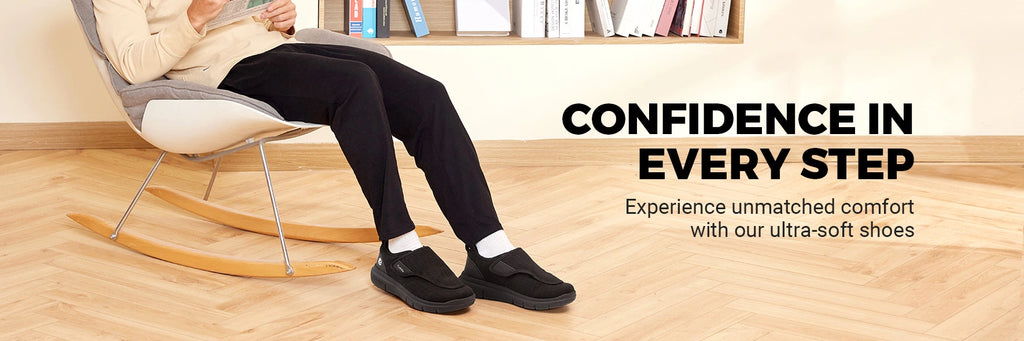
A strap that opens widely can ease entry, but it still needs to close securely without creating pressure across the foot.
Bring the exact shoe, insert and usual socks to a qualified fitter when a prescribed device is involved. Do not change or trim a prescribed device to make an uncertain combination fit. Record the model, size and width so that you can compare the same setup consistently. Test both shoes on the same clean, level indoor route. Change one fit variable at a time, and check the maker's current instructions before relying on a feature name.
FitVille options to assess
The following current FitVille models are examples to discuss during a fitting, not claims of compatibility with a prescribed orthotic, foot plate or lift. Confirm the complete combination before use. Product selectors and availability can change.

FitVille Women's Rebound Core V9
Review the exact model, current size and construction details. No shoe feature guarantees suitability for every person or surface; compare the stated use and fit.

FitVille Men's EasyTop Wings V2
Review the exact model, current size and construction details. No shoe feature guarantees suitability for every person or surface; compare the stated use and fit.
FAQ
Are slip-on shoes always easier?
Not always. They may require pulling at the heel and can fit loosely. Test the actual pair.
Can elastic laces replace a prescribed closure?
Ask a clinician or therapist if a prescribed device or safety requirement is involved.
Should I keep using a combination that creates new pain?
Stop the trial and ask the prescribing clinician or qualified fitter. A product label cannot replace individual assessment.
Recommended reading
How to Buy Shoes for Wide Feet
Related shoe-fit guidance from FitVille.
How to Measure Wide Feet for Shoes
Related shoe-fit guidance from FitVille.
How to Choose Walking Shoes for Your Foot Shape 2026
Related shoe-fit guidance from FitVille.
Next steps
Use these checks to prepare questions for your fitter. Explore FitVille Fresh Picks for current footwear selections. No specific model is represented as medically compatible.




