


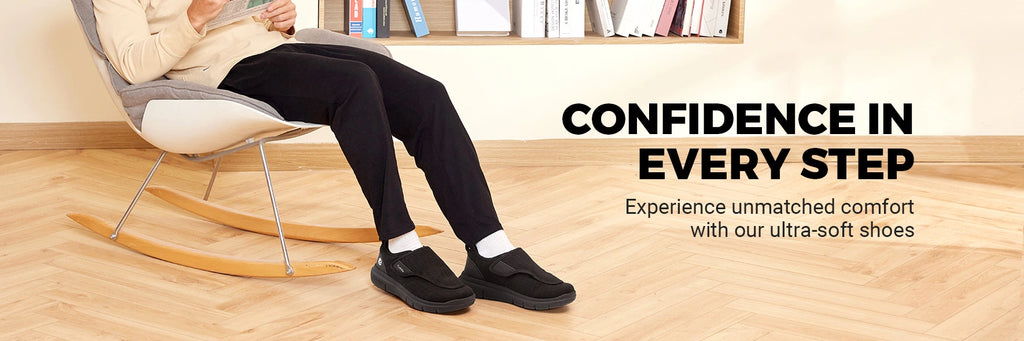
Choosing Shoes for Pressure-Sensitive Heels
Start by identifying whether shoe pressure is under the heel, behind it or along the sides. Those locations involve different parts of a shoe. Cushioning beneath the foot does not necessarily address rubbing from a rear seam, and a padded collar does not establish comfort under the heel. Persistent pain, skin damage or altered sensation needs professional advice.
Match the fitting check to the contact location
For rear or side contact, inspect lining seams, heel-counter shape and collar position. Check whether the heel lifts with each step or stays seated without pinching. For underfoot discomfort, compare the whole footbed and sole rather than assuming that a thicker insert is better. An extra layer can lift the heel toward the collar and reduce toe space. If you already use a prescribed insert, bring it to the fitting and follow the provider's advice about changes.
Use a short and consistent indoor trial
Wear the socks you expect to use and fasten both shoes comfortably. Start with a short indoor walk on a clean, level route. Record the location and timing of pressure rather than continuing until a hot spot becomes painful. Compare a different heel shape or lining if a seam repeatedly contacts the same point. Do not rely on painful wear to soften a rigid edge. People with reduced sensation should follow their clinician's skin-check instructions rather than relying only on how the shoe feels.
A practical fitting checklist
| Check | What to observe | Reconsider when |
|---|---|---|
| Position | Heel and tongue sit comfortably | A seam or edge creates local pressure |
| Space | Toe, instep and heel room remain | The foot is lifted or pushed forward |
| Retention | Shoe holds foot securely | Closure must be painfully tight |
| Movement | Pair behaves as intended for use | Pain or instability appears |
Example: a thick replacement liner feels soft under the heel but raises it against a collar seam. More cushioning has changed another part of the fit. Reassess the entire shoe instead of adding a second pad.
Record the model, size, width and sock choice for each pair you compare. Note the particular feature you are checking and the location of any contact. A brief shop trial cannot predict every wearing condition, so review the return policy before a longer trial. Bring any prescribed insert and its instructions when a fitter needs to assess the complete combination.
For a useful comparison, change one feature at a time and keep socks, route and pace consistent. Note where the shoe contacts the foot, whether the heel stays in place and how the sole moves through a step. Product names and category labels are starting points, not measurements. If fit changes during the day, record when it happens. Stop a trial if it creates pain or instability, and ask a qualified fitter or clinician about persistent concerns.
FitVille options to assess
These current models provide two starting points for a fit comparison. They have not been tested for your individual needs; inspect the relevant contact points and confirm the full setup before choosing. Availability varies by size and width.

FitVille Women's Rebound Core V9
Compare this walking model with your usual socks. Check toe clearance, instep contact and heel retention in the selected size and width.

FitVille Men's EasyTop Wings V2
Inspect the opening and fastening during a seated try-on, then check that the heel remains seated during a short indoor walk.
FAQ
Should I size up to avoid heel pressure?
Not automatically. Additional length can increase heel movement. Compare shape, closure and the exact contact point.
Are heel grips a universal solution?
No. They occupy space and change contact. A fitter can help determine whether an accessory is appropriate or another shoe is needed.
Should I keep using a combination that creates new pain?
Stop the trial and ask a qualified fitter or clinician about persistent symptoms. Do not continue wearing a shoe that causes skin damage or new numbness.
Recommended reading
How to Buy Shoes for Wide Feet
Related shoe-fit guidance from FitVille.
How to Measure Wide Feet for Shoes
Related shoe-fit guidance from FitVille.
How to Choose Walking Shoes for Your Foot Shape 2026
Related shoe-fit guidance from FitVille.
Next steps
Use these checks to prepare questions for your fitter. Explore FitVille Fresh Picks for current footwear selections. Check the exact model and available size before making a selection.




