


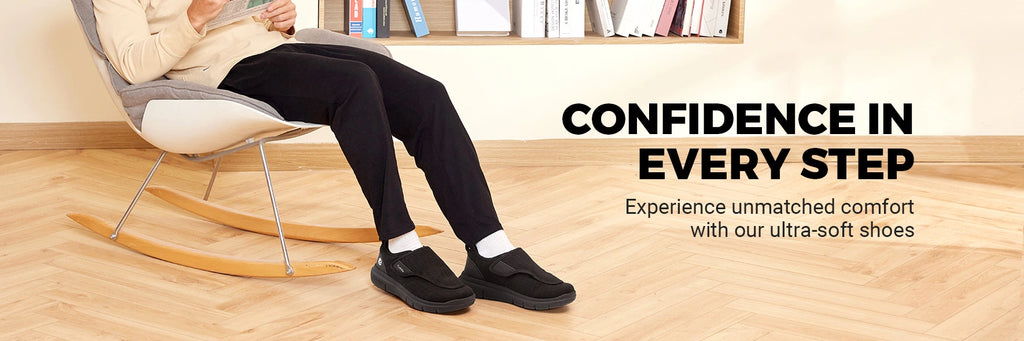
What Is a Shoe Flex Point and Why Does It Matter?
A shoe flex point is the area where the shoe bends during a step. In many flexible walking shoes, that bend occurs around the forefoot, but rocker soles, stiff plates and specialized footwear may behave differently. The label or a hand-fold test alone cannot identify the right design for you.
Locate the bend in context
The ball of the foot is near the forefoot joints, but its position relative to the heel varies by person. A shoe that bends far ahead or behind that area may feel awkward, depending on the construction and activity. Heel-to-toe length does not fully describe heel-to-ball length. A trained shoe fitter can measure both. This is a comparison aid rather than a clinical diagnosis, and prescribed footwear should follow the prescriber's guidance.
Observe the shoe while walking
Seat the heel, fasten the shoe comfortably and walk on a safe, level surface. Notice where the sole rolls or bends and whether your foot slides before the shoe flexes. Do not force a stiff shoe into a fold or assume a rocker sole should bend at all. Compare the same activity and socks across models. If an unfamiliar flex causes persistent discomfort, stop the trial and seek fitting advice.
A practical fitting checklist
| Check | What to observe | Reconsider when |
|---|---|---|
| Position | Device or feature sits as instructed | It rocks, shifts or presses at an edge |
| Space | Toe, instep and heel room remain | The foot is lifted or pushed forward |
| Retention | Shoe holds foot securely | Closure must be painfully tight |
| Movement | Pair behaves as intended for use | Pain or instability appears |
For instance, a running shoe with a pronounced rocker may move through a step without a sharp fold. Its flex behavior should be compared with another rocker shoe, not judged by the standard expected of a flat flexible sneaker.
Bring the exact shoe, insert and usual socks to a qualified fitter when a prescribed device is involved. Do not change or trim a prescribed device to make an uncertain combination fit. Record the model, size and width so that you can compare the same setup consistently.
FitVille options to assess
The following current FitVille models are examples to discuss during a fitting, not claims of compatibility with a prescribed orthotic, foot plate or lift. Confirm the complete combination before use. Product selectors and availability can change.

FitVille Women's Rebound Core V9
Check the listed 2E and 4E options as a starting point. Width alone does not confirm orthotic or foot-plate compatibility; trial your prescribed setup.

FitVille Men's EasyTop Wings V2
The product lists 2E, 4E and 6E widths and an adjustable strap. These details do not establish fit with an orthosis or prescribed device; ask your provider.
FAQ
Is the shoe flex point always under the ball of the foot?
No. Construction varies. Some shoes roll over a rocker or use a stiff plate instead of bending sharply.
Does a crease show the flex point?
Not necessarily. The upper can wrinkle away from the place where the sole bends.
Should I keep using a combination that creates new pain?
Stop the trial and ask the prescribing clinician or qualified fitter. A product label cannot replace individual assessment.
Recommended reading
Walking Shoe Insoles & Orthotics Explained 2026
Related shoe-fit guidance from FitVille.
How to Buy Shoes for Wide Feet
Related shoe-fit guidance from FitVille.
How to Measure Wide Feet for Shoes
Related shoe-fit guidance from FitVille.
Next steps
Use these checks to prepare questions for your fitter. Explore FitVille Fresh Picks for current footwear selections. No specific model is represented as medically compatible.




