


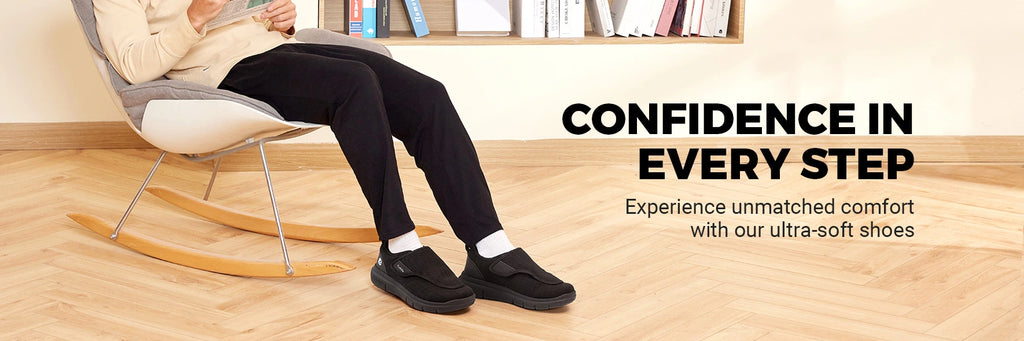
Shoe Features to Look for With Neuropathy
Compare shoe features for neuropathy, including toe room, depth, closures, interiors, cushioning, and stability, with a practical safety checklist for fit.
Start with essential features
Neuropathy can alter sensation, so the safest footwear choice is based on objective fit and repeated skin checks—not comfort alone. Prioritize features that reduce avoidable pressure and help keep the foot stable:
- Proper length and width: Toes should not touch the front or sides, while the heel stays secure.
- Enough depth: The upper should not press on the toes or top of the foot.
- Wide, foot-shaped toe box: Toes need room to rest naturally without excessive empty space.
- Adjustable closure: Laces, straps, or similar closures help secure the foot as volume changes.
- Smooth interior: Check for prominent seams, rough edges, folded lining, and debris.
- Stable cushioning: The midsole should soften impact without feeling wobbly.
- Protective outsole: Look for reliable ground contact and suitability for the surfaces you use.
Compare Men's Wide Shoes and Women's Wide Shoes by measurements and construction, not the width label alone.
Useful extras depend on the person
Removable insoles can create space for an insert or make interior inspection easier. A padded collar may feel comfortable, but it should not press into the ankle. Breathable materials can help manage moisture, while a firmer heel structure may improve security.
These are optional advantages, not universal requirements. An extra feature is helpful only if the complete shoe fits the foot and does not create a new pressure point.
A 10-point shoe safety scorecard
Before keeping a pair, confirm:
- The longer foot was measured for length and width.
- The shoe fits the foot's shape as well as its size.
- Toes can rest without crowding.
- The top of the shoe does not press down.
- The heel remains secure during walking.
- The closure holds the foot without pinching.
- A hand-check finds no rough interior areas or objects.
- The sole feels stable on turns and uneven ground.
- Short indoor trials cause no persistent marks or skin changes.
- The shoe still fits when the feet are at their usual end-of-day volume.
Increase wear time gradually and inspect the feet after each trial. Seek prompt professional advice for broken skin, drainage, persistent redness, or a warm swollen area, particularly with diabetes or reduced protective sensation.
Compare a real shoe by the same criteria
Use the FitVille Women's Rebound Core Walking Shoes V9 as one example to compare width, cushioning, closure, toe space, and overall stability. Product descriptions cannot replace an in-person fit check.
Bottom line
Shoes for neuropathy should have enough room, a secure adjustable fit, a smooth interior, stable cushioning, and an outsole suited to the walking environment. Fit is individual, so measure, inspect, trial gradually, and recheck the skin every time.
Shop Fresh Picks and use code AFS25 for 25% OFF sitewide
References
- NIDDK: Peripheral Neuropathy
- CDC: Your Feet and Diabetes
- FitVille Women's Rebound Core Walking Shoes V9




