


Shoe Features That Accommodate a Dorsal Foot Bump
A dorsal foot bump is a prominence on the top of the foot. For shoe shopping, the important question is where the upper, tongue or fastening touches that area. Look for sufficient instep depth, an opening that adjusts comfortably and a lining without a firm seam at the contact point. A wide forefoot alone does not establish enough space above the foot.
Separate instep depth from forefoot width
Compare the shoe with your usual socks while seated, then standing. Locate the bump relative to the tongue, lace crossings and any overlay. A broad sole or a wide size label tells you little about clearance at that exact location. Check the underside of the tongue for folded edges and feel inside the upper for stitching. If pressure appears only after fastening, examine the closure placement as well as the available depth. A photograph cannot show how a reinforced panel will meet your foot.
Adjust without losing heel hold
An adjustable closure lets you compare comfortable tension, but the heel must remain seated. Ask a fitter whether a different lacing arrangement or another upper shape would suit the contact point. Do not leave the shoe so loose that the foot slides forward, and do not cut or heat an upper to make room. A soft tongue can still press when the shoe is shallow. New, enlarging or painful bumps need professional assessment; appearance alone cannot identify their cause.
A practical fitting checklist
| Check | What to observe | Reconsider when |
|---|---|---|
| Position | Heel and tongue sit comfortably | A seam or edge creates local pressure |
| Space | Toe, instep and heel room remain | The foot is lifted or pushed forward |
| Retention | Shoe holds foot securely | Closure must be painfully tight |
| Movement | Pair behaves as intended for use | Pain or instability appears |
Example: two shoes share the same width label. One has a rigid lace panel over the prominence, while the other has a differently positioned opening. Compare contact at the bump and heel retention in each; the width label cannot decide between them.
Record the model, size, width and sock choice for each pair you compare. Note the particular feature you are checking and the location of any contact. A brief shop trial cannot predict every wearing condition, so review the return policy before a longer trial. Bring any prescribed insert and its instructions when a fitter needs to assess the complete combination.
For a useful comparison, change one feature at a time and keep socks, route and pace consistent. Note where the shoe contacts the foot, whether the heel stays in place and how the sole moves through a step. Product names and category labels are starting points, not measurements. If fit changes during the day, record when it happens. Stop a trial if it creates pain or instability, and ask a qualified fitter or clinician about persistent concerns.
FitVille options to assess
These current models provide two starting points for a fit comparison. They have not been tested for your individual needs; inspect the relevant contact points and confirm the full setup before choosing. Availability varies by size and width.

FitVille Women's Rebound Core V9
Compare this walking model with your usual socks. Check toe clearance, instep contact and heel retention in the selected size and width.

FitVille Men's EasyTop Wings V2
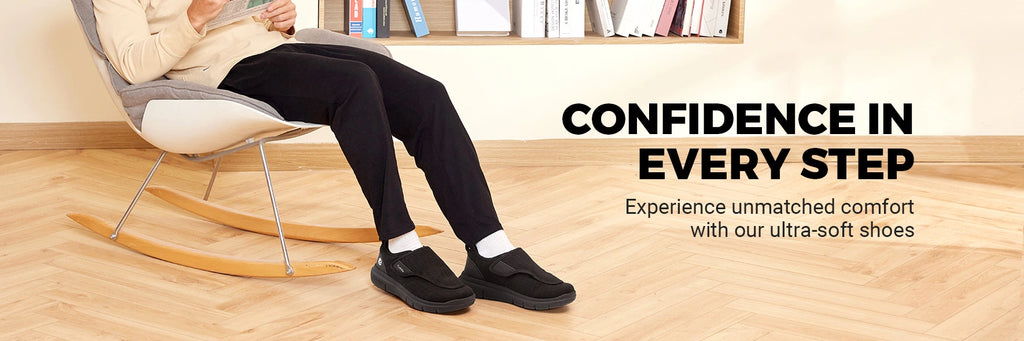
Inspect the opening and fastening during a seated try-on, then check that the heel remains seated during a short indoor walk.
FAQ
Does a dorsal bump always require extra-wide shoes?
No. Forefoot width and instep depth are different measurements. Check the location of pressure before changing width.
Should I buy a longer shoe to clear the bump?
Extra length may create sliding without adding useful depth. Compare the upper shape and opening first.
Should I keep using a combination that creates new pain?
Stop the trial and ask a qualified fitter or clinician about persistent symptoms. Do not continue wearing a shoe that causes skin damage or new numbness.
Recommended reading
How to Buy Shoes for Wide Feet
Related shoe-fit guidance from FitVille.
How to Measure Wide Feet for Shoes
Related shoe-fit guidance from FitVille.
How to Choose Walking Shoes for Your Foot Shape 2026
Related shoe-fit guidance from FitVille.
Next steps
Use these checks to prepare questions for your fitter. Explore FitVille Fresh Picks for current footwear selections. Check the exact model and available size before making a selection.




