


Podiatrist-Recommended Shoes for Overpronation
Podiatrists do not recommend one universal shoe brand for overpronation. They usually match footwear to symptoms, foot shape, walking pattern, pressure areas and any insole or brace. The useful recommendation is a feature checklist plus a personal fit test.
Features commonly considered
| Feature | Why it matters |
|---|---|
| Stable broad platform | Reduces unwanted side-to-side shoe movement |
| Firm heel counter | Holds the rearfoot securely |
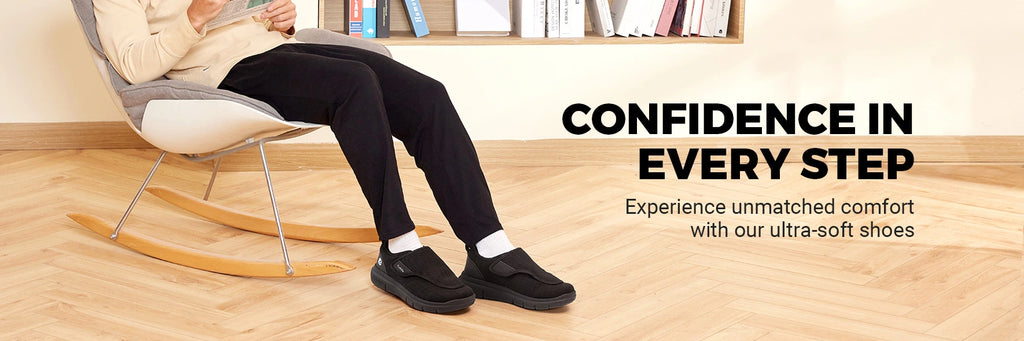
| Secure adjustable fastening | Keeps the foot consistently positioned |
| Removable liner and depth | Leaves space for an advised orthosis |
| Measured width | Avoids compression without creating looseness |
Width addresses fit, not inward motion. Wide shoes are useful only when the forefoot needs more breadth; overpronation may instead call for a stable shoe, secure heel and individually selected insole. Avoid buying the widest label to control pronation, relying on a hard generic arch bump or using an oversized shoe. Stability features must still match the wearer and activity.
What changes after an assessment
A podiatrist may assess symptoms, joint motion, strength, gait, current shoe wear and whether an exercise plan, supportive shoe or orthosis is appropriate. A recommendation may therefore be a supportive trainer, an adjustable extra-depth shoe or a model that accommodates an individual device. Two people with overpronation may leave with different advice.
Fit both feet with the socks and any insole intended for use. Walk, turn and check that the heel stays centred, the arch support is comfortable and the forefoot is pressure-free. A shoe should feel suitable at purchase rather than depending on a painful break-in.
How to evaluate a retail option
The FitVille Women's Rebound Core V9 lists 2E and 4E widths, a removable insole and a broad platform. Those specifications make it one candidate to fit-test; they do not show that its arch shape, depth or cushioning will suit every foot.
Manufacturer descriptions are not the same as endorsement by the podiatrist who knows your foot. Bring candidate shoes and any prescribed device to the appointment when possible. Seek assessment for persistent pain, repeated ankle or lower-limb injury, weakness, numbness, sudden arch change, one-sided change or a meaningful decline in walking.
FAQ
Do podiatrists recommend maximum arch support for overpronation?
Not automatically. Support must match the foot and feel comfortable. A hard or badly positioned arch can create a new pressure point.
Do I need custom insoles?
Not everyone does. A podiatrist may suggest no insole, an off-the-shelf option or an individual device depending on symptoms and assessment.
Bottom line
Expect a person-specific, feature-based recommendation rather than one approved brand. Fit, secure retention and accommodation for any advised device are central.
Shop Fresh Picks and use code AFS25 for 25% OFF sitewide
Next read
References
- Athletic footwear and pronation-control guidance. Guy's and St Thomas' NHS Foundation Trust
- Supportive footwear and symptomatic flat-foot guidance. East Sussex Healthcare NHS Trust
- Orthosis-friendly footwear and wearing guidance. RDaSH NHS Foundation Trust
- FitVille Women's Rebound Core V9 product details. FitVille




