


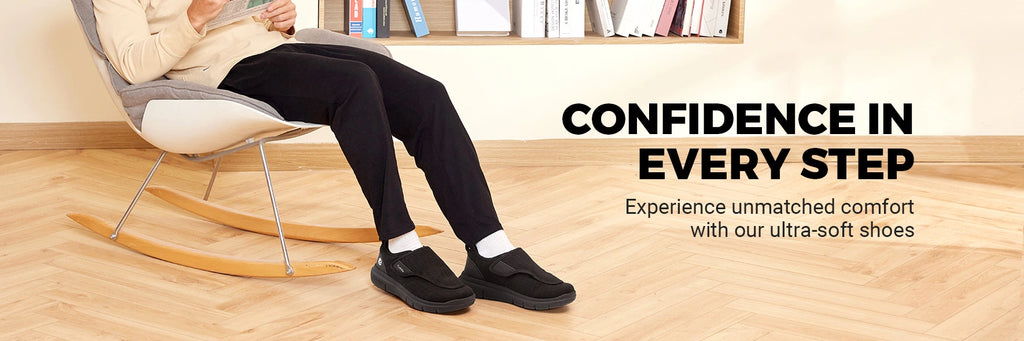
How to Wear Shoes With Wide Feet?
Wearing shoes with wide feet comfortably starts with buying width, not size. Once the shoe itself matches your measured width, three daily habits keep it comfortable: lace the lower rows loose, wear medium-thickness socks with flat toe seams, and give new pairs a short break-in on short walks before long days. If a shoe is genuinely narrow, no wearing technique fixes more than 2-5 mm — that gap is where wide feet shoes in the correct width do the work instead.
Wear the Right Width First
The most common mistake is sizing up one length to gain width. That adds roughly 8-10 mm of toe room but no forefoot width, so the toes slam forward and the heel lifts on every step. The correct order:
- Measure both feet standing, weight on them, at the end of the day when feet are widest.
- Keep your length, change your width — D to 2E to 4E — using the brand's own chart.
- Re-measure yearly. Width creeps with age, weight change, and swelling.
Daily Habits That Widen Any Shoe's Feel
- Lace the bottom two eyelets loose. The forefoot expands when the foot strikes; a tight lower row blocks that. Lock the top only.
- Choose medium-cushion socks with flat seams. Thin socks slide and thicken friction; bulky socks consume toe-box depth you already need.
- Break in over three short walks — 20 minutes, then 40, then an hour — before a full day. Uppers and midsoles both relax with heat and flex cycles.
- Re-lace mid-day if feet swell. On long days, take 30 seconds to drop the lower lacing one step looser instead of enduring the pinch.
Where Stretching Stops Working
A cobbler can stretch a leather upper 2-5 mm per side. Knit and synthetic mesh stretch less, and nothing stretches the sole platform. If you feel pressure as a hard edge under the outer forefoot, or numbness in the small toes after 30 minutes, the shell itself is narrow. At that point alternating between stretching and thick socks just trades pressure points; moving to footwear cut on a wide last — like the mens-wide-shoes range built in 2E-6E — resolves the pressure structurally instead of managing it.
FAQ
Should I buy half a size up for wide feet?
Only if the ball measurement sits just over the width limit and the brand lacks a wider option. Otherwise keep the length and take the next width up.
Do wide shoes look bulky?
Modern wide lasts are proportioned, not boxy. The visible bulk in old "comfort shoes" came from orthopedic overlays, which current knit uppers have replaced.
Can I stretch sneakers for wide feet?
Marginally. A cobbler can add 2-5 mm in leather sections; mesh and the sole platform barely move. Sneakers sold in true widths are the reliable fix.
References
- American Podiatric Medical Association — footwear fitting guidelines.
- Journal of Foot and Ankle Research — effect of shoe fit on foot health, 2023.
- FitVille — width measurement guide, 2026.
Related Questions
Further wide-feet answers on this site:




