


Choosing Shoes for Thick Medical Socks
Fit shoes while wearing the exact thick socks you have been instructed to use. Extra fabric or cushioning can reduce space above the toes and instep even when the shoe is wide enough. Do not change a prescribed sock, compression level or wearing schedule simply to make an existing shoe feel less tight.
Identify the sock before changing the shoe
The phrase medical sock covers different products. A padded non-binding sock is not the same as prescribed compression hosiery, and a thicker appearance does not tell you its purpose or pressure level. Bring the packaging or prescription to a fitting if you are unsure. Check that the sock itself is the intended size and sits smoothly, without a twisted toe seam or gathered fabric. Ask the prescribing clinician about problems with the sock; a shoe purchase should not substitute for checking whether the prescribed garment is being worn as intended.
Compare usable depth and closure range
With the required sock on, examine toe clearance, tongue pressure and the collar. A shoe with more depth or a different opening may accommodate the setup more effectively than a longer shoe. Test the complete combination with any prescribed insert, because each component uses interior space. Keep required components in place unless your clinician advises otherwise. If you have reduced sensation, do not use the absence of discomfort as proof of adequate space. Arrange a professional fit check and follow the skin-check guidance provided for your situation.
Check the garment and footwear together
| Check | What to observe | How to use it |
|---|---|---|
| Sock identity | Required type and size | Do not infer compression from thickness |
| Toe area | Smooth fabric and adequate height | Do not curl toes to make space |
| Instep | Comfortable closure over the full setup | Do not remove prescribed parts to gain room |
A practical example
At a fitting appointment, bring an unused example of the same sock if possible, along with any packaging and your usual inserts. Explain whether the sock is prescribed and whether there are restrictions on changing it. A sample of an ordinary sports sock is not a reliable substitute when the garment you need has a different seam, cushion pattern or compression construction.
FitVille options to discuss with your fitter
Compare a suitable standard-width model, a wider version and a different upper or closure construction where available. These represent different fitting approaches; none is automatically best for every foot. The following FitVille options provide starting points for that comparison. Neither model is verified here for your prescribed device or garment. Have the complete combination assessed before use; width options alone do not establish compatibility.

FitVille Women's Rebound Core V9
Compare the listed wide and extra-wide options as a starting point for women seeking more forefoot space. Confirm your selected size and width; the label does not establish internal depth or ankle clearance.

FitVille Men's EasyTop Wings V2
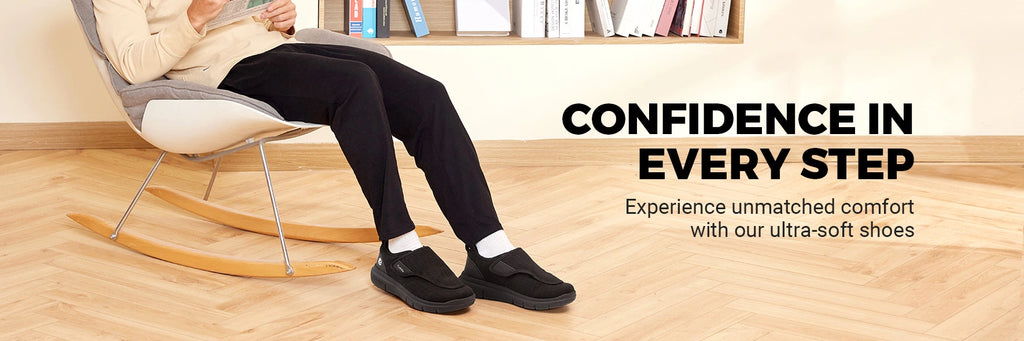
Consider the adjustable strap opening when closure adjustment is a priority. Check that the strap holds comfortably and that the interior suits your foot; it cannot compensate for insufficient length.
Check the exact size and width selector before ordering. Width choices do not establish usable interior depth; compare the actual pair with your intended socks and inserts. Availability varies by size, width and color.
FAQ
Are all compression socks thick?
No. Compression and thickness are different properties. Select prescribed hosiery according to clinical instructions and fit the shoe around the actual garment.
Can I replace a prescribed sock with a thinner one?
Check with the prescribing clinician first. Changing the garment to suit a tight shoe may change the intended use; another shoe shape may be the better option.
Should uncomfortable shoes need a break-in period?
Do not rely on painful wear to make a poor fit acceptable. Compare another size, width or shape if a short trial produces pressure or rubbing. Persistent symptoms merit professional advice.
Recommended reading
Best Shoes for a Wide Forefoot and Narrow Heel
Continue with practical guidance on width, heel hold and comfortable shoe selection.
How to Buy Shoes for Wide Feet
Continue with practical guidance on width, heel hold and comfortable shoe selection.
How to Lace Shoes for Wide Feet
Continue with practical guidance on width, heel hold and comfortable shoe selection.
Choose your next pair
Use the checks above to narrow your options, then compare the exact size and width you intend to buy. Explore FitVille Fresh Picks for current selections.




