


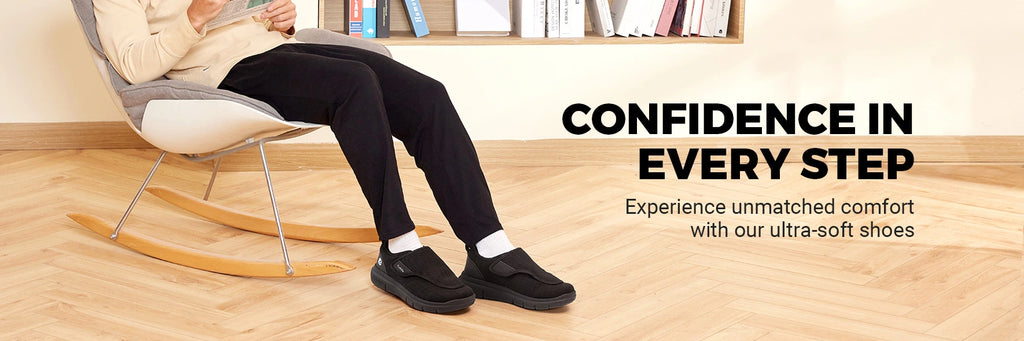
What Are the Best Shoes for People with Wide Feet?
The best shoes for people with wide feet provide space where the foot needs it and stay secure where it does not. A person with broad toes and a narrow heel may need a different shape from someone with a wide midfoot and high instep. Use those differences to guide your fitting.
Create a useful description of your feet
Start with your current shoes. Write down the first place that becomes uncomfortable and when it happens. Pressure that appears while standing is different from a heel that slips only as you walk.
Describe the location rather than diagnosing the cause. “The top edge presses across my instep” gives a fitter a useful starting point. “My feet hate all shoes” is understandable frustration, but it does not identify what to compare next.
Also list your ordinary use: commuting, standing at a counter, short errands, or longer walks. The right amount of structure and adjustment should support that routine.
Match the complaint to the next fitting
| Your main fit problem | The next comparison to make |
|---|---|
| Broad toes, secure heel | A less tapered front at a suitable width |
| Pressure through the middle | Another width or a differently shaped model |
| High instep and tight closure | More depth and a more adjustable opening |
| Forefoot fits but heel slips | A model that holds the back more securely |
| Insert makes the upper tight | Check depth and footbed compatibility |
| One foot needs more room | Fit the larger foot and assess security on the smaller one |
This approach helps you avoid buying progressively longer shoes for every problem. Added length may make the toe tips more comfortable without changing pressure where you actually need width.
A fitter can help you interpret measurements, but your experience while walking still matters. Give specific feedback instead of accepting a pair solely because a measurement device suggests the size.
Read width labels within the brand
Brooks and New Balance publish guides that explain their own width systems. Start there, then look at the options attached to the individual shoe. A general chart is not an inventory list.
Do not assume women's and men's width letters mean the same thing. Also avoid treating two brands' nominal wide sizes as identical inside. The shoe's shape and construction affect the result.
When a website uses only words such as standard, wide, or extra wide, check the associated measurements and product details. Save the exact selected size and width in your fitting notes so a later reorder is less ambiguous.
Use a repeatable try-on routine
Wear the socks you normally use, and bring any insert. Put on both shoes and fasten them at a comfortable tension. Stand, walk at your usual pace, turn, and check the areas that bothered you in your old pair.
Repeat the same sequence in the next candidate. Keep the comparison small enough to remember: two widths or two different shapes are often more informative than a pile of unrelated shoes.
Make the rejection rule simple
Reject a pair that persistently pinches, allows uncomfortable sliding, or presses on your toes. A pleasant cushion does not cancel those problems. If every candidate fails in the same location, explain that pattern to the fitter rather than just requesting another size up.
A short trial cannot promise comfort for an entire workday. It can still eliminate an obvious mismatch before you wear the shoes outside.
Consider adjustment as well as width
Laces can let you vary pressure along the upper. An adjustable strap may be easier to use for some routines. A slip-on can be convenient, provided the opening and heel fit without your toes gripping to keep it on.
For an everyday lace-up walking option, FitVille Rebound Core V9 women's walking shoes provide a wide toe box and 2E/4E sizes. Apply the same fitting checklist you would use with any candidate.
If your feet change noticeably in size through the day, think about when the shoe will be worn and whether its closure accommodates that routine. New or unexplained swelling, persistent numbness, or pain deserves professional advice rather than relying on shoe adjustments alone.
Keep a record of the successful fit
Save the model, generation, size, width, and sock combination once a pair works. Add a brief note about what made it successful, such as comfortable forefoot space with a secure heel.
This record becomes a reference for the next purchase. It is still worth checking a new generation, because a familiar name does not guarantee the same fit.
Shop Fresh Picks with code AFS25 to explore FitVille everyday options.
FAQ
Can two people with the same shoe width need different shoes?
Yes. Toe shape, instep height, heel shape, and intended use can differ even when the width measurement is similar.
Should the shoe feel loose to accommodate wide feet?
It should allow comfortable space without unwanted movement. Loose everywhere is not the same as well fitted.
What should I bring to a shoe fitting?
Bring your usual socks, any inserts, and your current shoes or their model details. Describe the location of pressure and the activity that triggers it.
Shop Fresh Picks and use code AFS25 for 25% OFF sitewide
References
- Ten points of proper shoe fit. FootCareMD
- Shoe width selection. Brooks
- Size and width guide. New Balance
- FitVille Women's Rebound Core V9 specifications. FitVille
Next read: What Shoes Are Best for Wide Feet? · Do Flat Feet Need Wide Shoes?




