


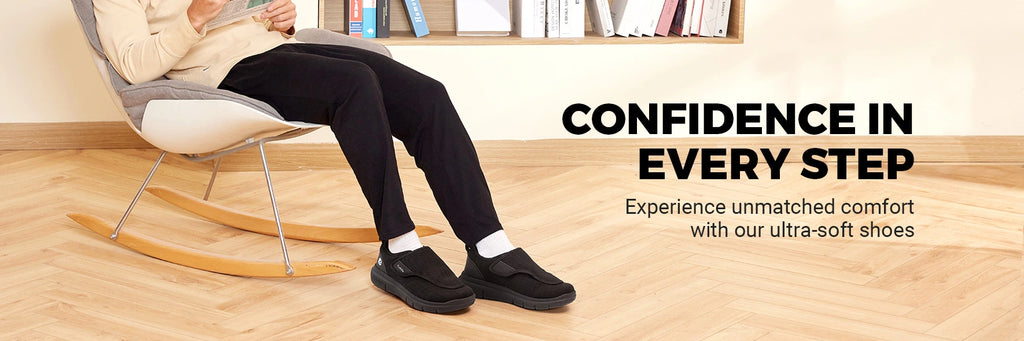
Are Wide Shoes Better for Your Feet?
Wide shoes can be better for your feet when standard-width footwear squeezes them. They are not automatically better for everyone: the goal is enough space for the forefoot and toes while the heel and midfoot remain secure. A pair that lets the foot slide may be too wide or simply the wrong shape.
Think of width as one fitting dimension, alongside length, depth, toe shape, cushioning and activity. Improving one dimension does not guarantee that the whole shoe fits.
What extra width can and cannot do
| Extra width may help with | It does not establish |
|---|---|
| Side pressure across a broad forefoot | That the shoe suits every foot |
| Space around the toe joints | That a pointed toe shape will stop squeezing |
| Accommodating a fuller foot shape | That the heel will stay secure |
| A comfortable alternative to a narrow pair | That the shoe changes your arches |
| Some insole setups | That the shoe has adequate depth for every insert |
When a narrow shoe presses from both sides, a suitably wider model can feel more comfortable. If the problem is insufficient length or a shallow upper, the same width change may leave the main problem unresolved.
Toe space matters as much as the label
A wide shoe can still narrow sharply at the front. Look at how the shape corresponds to your toes, particularly if the smaller toes feel pushed inward.
Guy's and St Thomas' footwear guidance discusses width and front shape together. Use that distinction when a shoe is labeled wide yet still feels uncomfortable near the toes.
A wide toe box should allow natural toe splay without demanding an oversized heel. You should not need to curl your toes to stop the shoe from moving, and the fastening should hold comfortably without extreme tension.
Wide does not mean minimalist
A shoe can have a wide toe box and a cushioned sole. Another can have a wide toe box with a thin, flexible sole and little heel-to-forefoot height difference. Those designs differ in more than width.
Ohio State's discussion of barefoot-style shoes addresses these distinctions. If your only problem is side pressure, you do not have to change every aspect of your footwear at once.
Choose cushioning and flexibility based on comfort, activity and any individual advice. A dramatic change in sole design should not be treated as an automatic benefit of choosing more toe space.
Notice when the wider pair is worse
Repeated heel lift, sideways sliding and bunching of the upper can indicate excess volume. If you tighten the laces more and more while the foot still moves, try another shape.
Also notice where pressure appears after adding an insole. The insole may raise the foot toward the upper or collar even in a wide shoe. Compare the whole setup.
For a fair decision, try the same model in standard and wide at the suitable length, or compare two different shapes with the same socks. Keep notes about the pressure point, rather than judging only how soft the shoe feels at first.
Choose an option for your real use
A comfortable standard-width shoe, a standard-width model with a less tapered front, and a dedicated wide version are all valid options. Begin with whichever addresses the fit issue you observe.
For everyday walking, the FitVille Women's Rebound Core V9 offers a wide toe box and labeled wider choices. Assess its fit in person when possible, or through a permitted indoor trial. Its width features are not a promise that every foot needs that design.
For sport or work, choose a suitable activity category before applying the width checklist. General walking comfort does not establish court performance or workplace suitability.
FAQ
Are wider shoes healthier even if my current pair fits?
There is no need to change solely because another pair is labeled wider. Comfortable space, secure hold and suitable use are the relevant checks.
Will wide shoes prevent all foot problems?
No. Foot symptoms have many causes, and footwear is only one factor. Seek advice for persistent pain, numbness or recurring skin damage.
Can wide shoes be too wide?
Yes. Extra space becomes unhelpful when it allows unwanted movement or makes the shoe difficult to secure.
Choose enough space without losing hold
The better shoe is the one that fits your foot and activity. Use width to remove pressure where needed, while keeping length, depth and heel fit in view.
Shop Fresh Picks and use code AFS25 for 25% OFF sitewide
References
- Wide toe boxes and minimalist shoe differences. Ohio State University Wexner Medical Center
- Shoe width, toe depth and fastening guidance. Guy's and St Thomas' NHS Foundation Trust
- Sneaker fitting guidance. Nike
- FitVille Women's Rebound Core V9 specifications. FitVille
Next read: Can You Wear Wide Shoes with Normal Feet? · Are Wide Shoes Better for Flat Feet?




