


Is Arch Support Good for Swollen Feet?
Is arch support good for swollen feet? It may improve comfort for some people, but adjustable width, depth, skin safety, and the cause of swelling matter more.
Arch support changes how the sole feels beneath the foot; it does not address the many possible reasons a foot becomes swollen. An insert can also take up space and make a tight shoe tighter. Start with safe fit and adjustable volume, then decide whether support feels useful.
Put Swelling Safety First
Foot and ankle swelling may follow long periods of standing, travel, pregnancy, an injury, medication changes, or an underlying health issue. Seek prompt professional advice when swelling is unexplained, severe, painful, starts suddenly, affects only one side, or comes with redness or warmth.
Call emergency services for swelling accompanied by shortness of breath, chest tightness or pain, coughing blood, faintness, confusion, or clammy skin. Footwear is not an appropriate response to those warning signs.
What Arch Support Can and Cannot Do
| Question | Practical answer |
|---|---|
| Can support improve underfoot comfort? | It may for some feet when the contour and firmness feel suitable |
| Does support create more shoe space? | No; an insert reduces internal volume |
| Does support address the cause of swelling? | No; the cause may require professional assessment |
| Can support work with fluctuating volume? | Only if the shoe remains adjustable, deep, and pressure-free |
If an arch contour creates a hard pressure point, raises the heel, or presses the top of the foot into the upper, it is not a suitable setup for that shoe. More support is not automatically better.
Build an Adjustable Fit
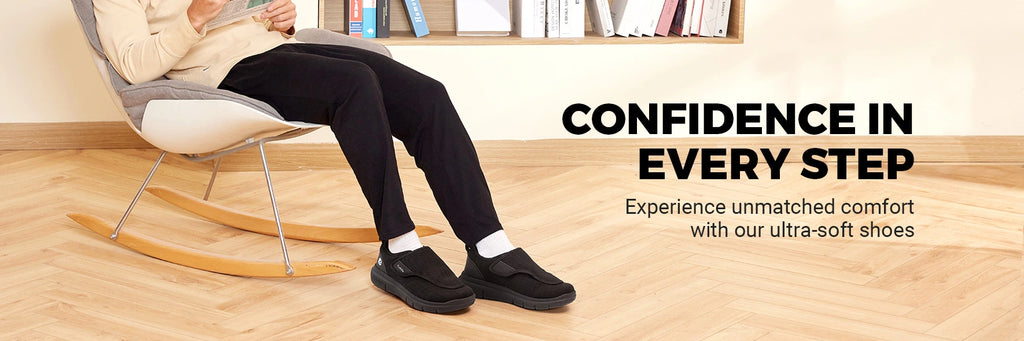
Look for laces, straps, or adjustable hook-and-loop closures that can accommodate volume changes. The shoe should have enough width and depth that the upper does not leave deep marks, cut into the skin, or make the foot feel numb.
A removable insole may provide flexibility when an insert is recommended, but do not stack multiple insoles in a crowded shoe. Check that:
- toes lie flat and move freely;
- the forefoot does not overhang the sole;
- the upper does not press swollen areas;
- the heel stays seated without a tight collar;
- the fastening can be loosened without making the shoe unstable;
- skin remains free of rubbing, blisters, or broken areas.
NHS guidance for swollen feet recommends wide, comfortable shoes with a low heel and soft sole and advises against tight shoes. Because foot volume may vary during the day, recheck fit rather than assuming morning tension remains suitable.
Compare Wide and Adjustable Options
FitVille's Men's Wide Shoes and Women's Wide & Extra Wide Shoes provide current widths and closure styles to compare. Review each product page because internal depth and adjustability vary.
The Women's Rebound Core V9 is one current wide toe box model. If considering it, assess the actual upper pressure, fastening range, heel hold, and space with any recommended insert.
Shop Fresh Picks and use code AFS25 for 25% OFF sitewide
FAQ
Should I buy a larger shoe when my feet swell?
Do not add length automatically. A longer shoe may create sliding. Compare appropriate width, depth, and adjustable fastening, and consider professional fitting if swelling changes substantially.
Can tight arch support make swelling worse?
Any setup that makes the shoe constrictive can increase pressure and skin risk. Remove the insert and seek guidance if it causes new pain, numbness, discoloration, rubbing, or marked indentation.
Should I wear compression socks?
Compression may be appropriate for some causes of swelling but not every situation. Ask a qualified professional before using it, especially with circulation concerns or unexplained swelling.
References
- Swollen feet and ankle guidance, including footwear and urgent signs. NHS
- Foot swelling, shoe pressure, and warning signs. Cleveland Clinic
- Current Women's Rebound Core V9 specifications. FitVille
Next read: Wide toe box shoes for hammertoes · Hammertoe arch support guide




