


2 Best Shoes for Pregnancy: How to Choose Comfort with Support

The best shoes for pregnancy are designed to provide comfort and support as the body changes. As weight increases and your center of gravity shifts, your feet carry extra load with every step — and the right footwear can ease fatigue, reduce swelling, and make daily life feel steadier.
During pregnancy, added weight and a forward-shifting center of gravity place noticeable pressure on the feet. Supportive, well-fitted shoes help relieve foot fatigue, accommodate swelling, and improve everyday comfort from the first trimester through the last. This guide walks through what to look for, the shoe types that work best at each stage, and two FitVille pairs worth considering.
Why Your Feet Change During Pregnancy
Pregnancy affects the feet in ways that are easy to underestimate. Research on 49 women found that arch height and rigidity dropped significantly between early pregnancy and five months postpartum, lengthening the foot by roughly 2–10 mm — changes that were often permanent, with the first pregnancy accounting for most of the difference.[^1] That's why so many people find their usual shoes suddenly feel tight, and why a half-size larger is often the more comfortable choice by the later months.
Why feet swell. Swelling (edema) is one of the most common foot complaints in pregnancy. Blood and fluid volume rise substantially to support the growing baby, and as the uterus expands it presses on the large veins that return blood from the legs, slowing circulation and letting fluid pool in the feet and ankles. Swelling is usually most noticeable in the third trimester, at the end of the day, and in warm weather — the exact moments when a roomy, adjustable shoe pays off most. Two more mechanisms are at work: the hormone relaxin loosens ligaments across the body (including the arch), while the arch itself flattens under added weight.
Balance shifts too. As the abdomen grows, the center of gravity moves forward, ligaments loosen, and postural sway increases — effects that measurably reduce postural stability, especially in the third trimester, and raise the risk of falls.[^2][^3] Studies estimate that roughly a quarter of pregnant women experience a fall, a rate comparable to adults over 70. Footwear that widens the base of support and grips the ground well is one simple, practical way to walk with more confidence.

What to Look For in the Best Shoes for Pregnancy
Wide Toe Box
Wide toe boxes provide extra room for feet that may become swollen during pregnancy. A roomy forefoot lets the toes spread naturally, reduces friction, and leaves space for the swelling that tends to build up as the day goes on.
Arch Support
Supportive footwear can improve stability and help maintain balance while walking. Structured arch support matters even more during pregnancy, when the arch tends to flatten and the body is already working harder to stay balanced.
Cushioned Midsole
Cushioned midsoles help reduce pressure on the feet, knees, and joints during pregnancy. Good shock absorption softens the impact of each step, which is especially welcome when you're carrying extra weight for months at a time.
Lightweight Construction
Lightweight designs make daily movement easier and reduce overall foot fatigue. A lighter shoe takes less effort to lift and swing forward, so walking, standing, and everyday errands feel less tiring.
Non-Slip Outsole
Slip-resistant outsoles provide better grip and confidence when walking. With balance already compromised, a dependable, grippy outsole is one of the most important safety features a pregnancy shoe can have.
Slip-On or Adjustable Fit
Adjustable straps or flexible uppers allow shoes to adapt to changing foot sizes. Easy on-and-off designs also spare you from bending down to tie laces — a real advantage in the later months when reaching your feet becomes difficult.
Types of Pregnancy Shoes
Different shoe styles suit different stages and needs. Here's a quick reference:
| Type | Best Stage | Key Strengths |
|---|---|---|
| Supportive Walking Shoes | Whole pregnancy | Balance of support and cushioning for daily wear |
| Wide-Fit Trainers | When feet swell | Generous toe-box space for wider or swollen feet |
| Slip-On Shoes | Third trimester | Easy on and off when bending is uncomfortable |
| Orthopedic Shoes | Arch or heel pain | Reinforced arch support and structure |
| Comfort Sandals | Summer pregnancy | Breathable and airy for warm weather |
What to Wear in Each Trimester
Foot needs evolve as pregnancy progresses, so the ideal shoe changes too:
- First trimester: Feet usually haven't changed much yet, so focus on building good habits early — a supportive, cushioned walking shoe you can wear daily. This is a good time to note your current fit as a baseline.
- Second trimester: Weight gain accelerates and the arch begins to flatten, making arch support and shock absorption more important. If your usual shoes start feeling snug, size up rather than squeezing in.
- Third trimester: Swelling and balance changes peak. Prioritize an extra-wide toe box, adjustable straps or slip-on ease (bending down gets hard), and a reliably grippy outsole. This is when a wide-fit or adjustable style earns its keep.
Our Top FitVille Picks
Both of these women's styles are built around a wide toe box, cushioned support, and slip-resistant outsoles — the core features that matter most during pregnancy.
FitVille Women's Rebound Core V1 — Best for the whole pregnancy
A supportive everyday walking shoe that balances cushioning and stability. Rebound Core V1’s dual-density EVA midsole absorbs impact while a U-shaped arch-support insole helps hold the foot steady — useful as the arch flattens and balance shifts. Available in Wide (2E) and Extra Wide (4E), so there's room as your feet change.
- Dual-density EVA midsole for shock absorption
- U-shaped arch-support insole for stability
- Wide / extra-wide toe box (2E & 4E)
- Lightweight at roughly 320 g (US 8)
- Rigid rubber, slip-resistant outsole

FitVille Women's EasyTop Wings V2 — Best for swelling & late pregnancy
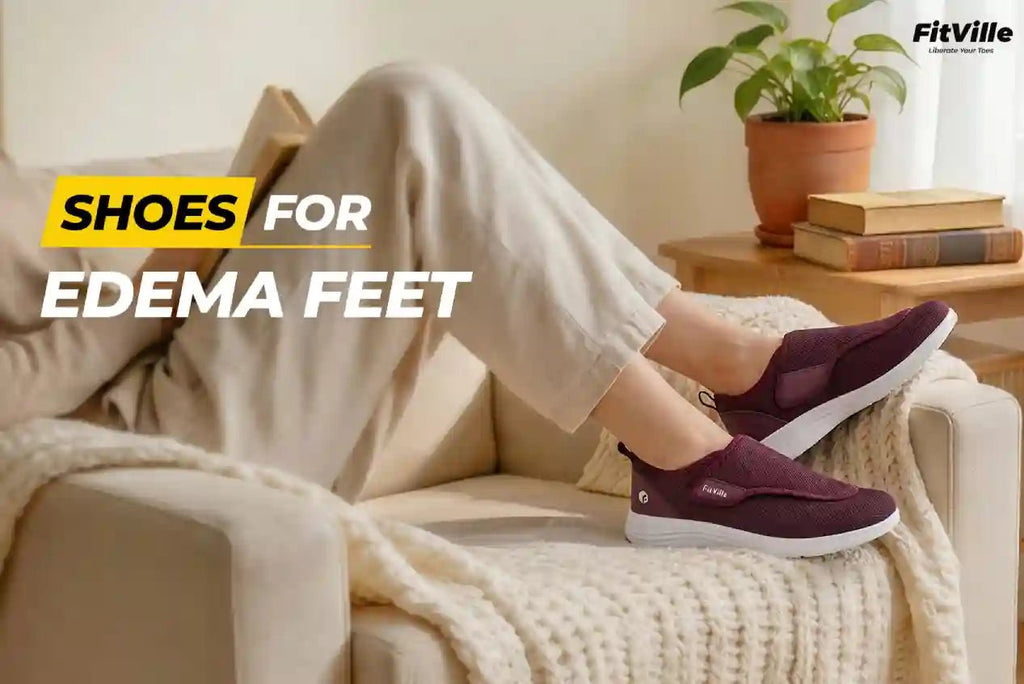
Designed for swollen, sensitive feet, EasyTop Wings V2 opens wide with an adjustable strap closure that adapts to changing foot size and high insteps — and makes slipping shoes on and off easy when bending down is a struggle. A seamless interior, padded collar, and U-shaped heel cup add all-day comfort, while a high-rebound EVA sole with a non-slip pattern keeps you steady.
- Wide-open adjustable straps for swelling & easy on/off
- Extra-wide toe box for sensitive, swollen feet
- Seamless, friction-free interior with padded collar
- U-shaped heel cup to distribute pressure
- Slip-resistant rubber outsole

Tips for Choosing the Right Pregnancy Shoes
A few simple habits make it much easier to land the right fit:
Re-measure your feet. Foot length and width can genuinely increase during pregnancy, so measure again rather than assuming your pre-pregnancy size still fits.
Try shoes on in the afternoon. Feet tend to swell as the day goes on, so a late-day fitting reflects your feet at their largest and gives you a more reliable fit.
Skip high heels and paper-thin flats. Both undermine stability — heels tip your balance forward, while flimsy soles offer no cushioning or support.
Favor adjustable designs. Straps, stretchy uppers, and roomy widths let a shoe keep fitting comfortably as your feet change week to week.
Sneakers vs. Sandals for Pregnancy
Both have a place, and the right choice often comes down to the season and the activity. Supportive sneakers are the stronger all-rounder: they wrap the foot, hold cushioning and arch support in place, and give you a grippy outsole for stability — ideal for walking, standing, and being on your feet. Comfort sandals shine in warm weather, when breathability helps with heat and swelling, but look for a contoured footbed and secure, adjustable straps rather than flat, unsupportive slides. A practical approach is to keep a supportive sneaker for active days and a well-built sandal for hot, low-key ones.
Running Shoes vs. Walking Shoes for Pregnancy
Running shoes and walking shoes are engineered differently. Running shoes tend to have more aggressive cushioning and heel-to-toe drop tuned for repeated high-impact strides, while walking shoes emphasize smooth, stable, flat-footed movement and a flexible forefoot. For most day-to-day pregnancy wear — errands, work, gentle exercise — a supportive walking shoe is usually the more comfortable and stable pick. A cushioned running shoe can still be a good option if you stay active, provided it offers a roomy toe box and a secure, adjustable fit. Whichever you choose, prioritize cushioning, stability, and a wide, accommodating fit over speed-focused features.
Conclusion
The best shoes for pregnancy share a clear set of qualities: support, cushioning, stability, and room to accommodate changing, swelling feet. Choosing the right pregnancy shoes can improve comfort, mobility, and everyday support throughout pregnancy — making walking, standing, and daily activities noticeably easier. Whether you reach for the supportive Rebound Core V1 for all-day wear or the adjustable EasyTop Wings V2 for swelling and the later months, prioritizing your feet is one of the simplest ways to feel more comfortable and steady on your way to meeting your baby.
Note: FitVille footwear is designed for comfort and support but is not intended for medical diagnosis or treatment. FitVille disclaims any responsibility for injuries or harm resulting from the use of this product.
Frequently Asked Questions
Should I buy a bigger shoe size during pregnancy?
Often, yes. Feet can lengthen by a few millimeters and widen with swelling, so many people are more comfortable going up a half size or choosing a wider width in the second and third trimesters. Re-measure rather than guessing, and leave a thumb's width of space at the toe.
When do feet swell the most during pregnancy?
Swelling is usually worst in the third trimester, at the end of the day, after long periods of standing, and in hot weather. Trying shoes on in the afternoon gives you the most realistic fit.
Are flat shoes or heels better during pregnancy?
Neither extreme is ideal. High heels shift your weight forward and worsen balance, while paper-thin flats provide no cushioning or support. A supportive shoe with a modest, stable sole and good arch support is the safer middle ground.
Do pregnancy foot changes go away after birth?
Some do and some don't. Swelling typically resolves in the weeks after delivery, but research suggests the loss of arch height — and the resulting increase in foot length — can be permanent, especially after a first pregnancy.[^1] Comfortable, supportive footwear helps during and after pregnancy.
When should I see a doctor about foot swelling?
Mild, gradual swelling is common. But sudden or severe swelling — especially in the face or hands, in one leg more than the other, or with headache or vision changes — should be checked promptly, as it can signal conditions that need medical attention.
References
[^1]: Segal NA, Boyer ER, Teran-Yengle P, Glass NA, Hillstrom HJ, Yack HJ. Pregnancy Leads to Lasting Changes in Foot Structure. American Journal of Physical Medicine & Rehabilitation. 2013;92(3):232–240.
[^2]: İnanır A, Çakmak B, Hisim Y, Demirtürk F. Evaluation of postural equilibrium and fall risk during pregnancy. Gait & Posture. 2014;39(4):1122–1125.
[^3]: Çakmak B, Ribeiro AP, İnanır A. Postural balance and the risk of falling during pregnancy. Journal of Maternal-Fetal & Neonatal Medicine. 2016;29(10):1623–1625.
About FitVille Footwear
Just Follow us on LinkedIn, Facebook, YouTube, Instagram, RSS feed and Pinterest to catch our brand news.





