


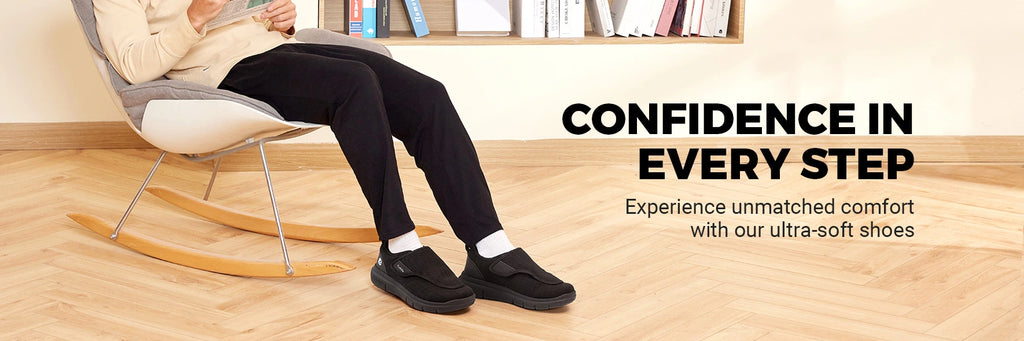
Best Walking Shoes for Stadium Ushers 2026
An usher works the whole event. You stand at an aisle or gate, climb and descend the seating-bowl stairs a hundred times, walk the concourse to guide guests, and stay on your feet through pre-event, the event itself, and load-out — often for eight hours or more, in a uniform. By the fourth quarter your feet, knees, and lower back know exactly how hard that concrete is. The right shoe will not change the schedule, but it can carry the standing, secure the stairs, and still look neat at the gate.
This guide is for the people stationed at the section, not the fans in it. If you usher, take tickets, work a gate, or staff a venue floor, here is what the job actually asks of a shoe — and how to choose one.
What an usher shift actually demands on your feet
Before shopping, it helps to name the loads. A typical event-venue usher shift includes:
- Standing at an aisle or gate for long stretches, mostly in one spot
- Climbing and descending seating-bowl stairs and ramps repeatedly, all event
- Walking the concourse to guide and reseat guests between standing posts
- A 6 to 10-hour event shift, including setup and load-out
- A uniform dress code that usually rules out running sneakers
- Foot, knee, and lower-back fatigue by the end of a long event
That combination is the whole problem. Most "comfortable shoe" advice solves one piece — cushioning for standing, say — and ignores that an usher also climbs stairs for hours and has to pass a uniform standard. You need a shoe that does all three.
The job that ushers do (and the jobs it is not)
It is easy to lump every venue worker together, but the loads are different, and so is the right shoe.
A caterer or event-staff worker (the food-running role) carries trays from kitchen to floor — their shoe is about quick movement and carrying. A roving security guard patrols and works posts, covering more ground. A seated spectator is simply a fan in the stands, and a tailgater spends the day in the lot. The usher is none of those. You are the worker who stands a station and works the stairs — guiding guests, holding a post, and moving up and down the bowl all event. If your day looks more like one of those neighbouring roles, the related occupational guides are the better read.
That distinction matters because it points to two specific demands that general standing-all-day advice misses: a shoe built for standing in place and for repeated stairs. Get those two right and the rest follows.
Stand at the aisle, then climb the stairs
Most usher shoes are sold on cushioning alone. Cushioning is real — concourse and aisle concrete is hard, and a well-cushioned midsole is essentially portable padding between your feet and that floor. But cushioning by itself does not handle the other half of the job.
Why the stairs change the shoe
Seating-bowl stairs and ramps are the part of usher work that wrecks a poorly chosen shoe. Going up and down hundreds of times rewards a secure, locked-in heel and a stable platform — a shoe that holds your foot in place so you are not sliding forward on the descent or rolling on a soft, mushy edge. Think of this as secure fit and a steady base underfoot, not as any kind of corrective or stability feature. A shoe that fits securely simply lets you place each step with confidence.
Why standing changes the shoe
Standing in one spot for an hour is its own kind of work. There is no stride to break up the load, so your forefoot and heel take a steady, unchanging pressure. Here the cushioned midsole earns its keep, and so does a roomy fit — when feet swell across a long event, a cramped toe box turns into a hot spot fast.
The honest takeaway: an usher shoe has to do both jobs at once. Cushioning for the standing, a secure and stable build for the stairs.
The uniform dress code
Plenty of venues have a grooming standard, and a bright running sneaker often will not pass it. The good news is that a clean, dark, neat walking shoe usually does. When you shop, favor:
- Dark, low-key colorways — black or charcoal that read as part of a uniform
- A clean upper without loud branding or flashy trim
- An easy-to-wipe surface for spills and a long, messy event
You do not have to choose between a shoe that looks right and a shoe that feels right. The two go together more often than the dress code makes it seem.
A note on slick floors and venue policies
Concourses see spilled drinks, and stairs and ramps can get wet. Secure footing genuinely matters. Be honest with yourself about your venue's rules, though: some employers mandate a certified slip-resistant or non-slip shoe for specific roles or areas. If yours does, follow the policy and choose a shoe that is certified to that standard. Do not assume a comfortable walking shoe meets a non-slip certification unless its spec sheet explicitly says so. Comfort and certified slip resistance are two different claims, and only the printed spec settles it — our slip resistance and traction explainer breaks down the difference.
Fit comes first — especially late in the event
Feet swell over a 6 to 10-hour shift. A shoe that fit at gate-open can feel a half-size too tight by the final whistle. That is why width matters as much as length:
| What you feel late in the shift | What helps |
|---|---|
| Toes cramped, pinching at the sides | A roomy toe box and a wider width |
| Pressure across the top of the foot | A secure but not constrictive lacing fit |
| Heel slipping on the stairs | A locked, secure heel counter |
| General aching across the sole | Steady, even cushioning underfoot |
If you have never measured your feet, do it before you buy — width is the variable most people get wrong, and it is the one that decides whether a long event ends in comfort or in hot spots.
Where the FitVille Rebound Core V9 fits
Plenty of uniform and duty-comfort shoes serve event-venue staff well, and it is worth trying a few. Described plainly, those options tend to lead with all-day cushioning and a work-appropriate look — sensible priorities for this job. The right pick is the one that fits your foot and passes your venue's standard.
The FitVille Rebound Core V9 ($79.99) is built around the exact double demand an usher faces. It pairs cushioning for the standing with a stable platform and a secure, locked heel for the stairs, in clean dark colorways that suit a uniform. Crucially for late-shift comfort, it comes in standard, 2E, and 4E widths, so swollen feet have room instead of a pinch, and its durable, easy-to-wipe upper holds up across a long, messy event.
A fair caveat: it is a comfort walking shoe, not a certified non-slip or protective-footwear product. If your venue mandates a certified slip-resistant shoe, route to one that carries that certification. For the standing, the stairs, and the concourse miles where a comfortable walking shoe is the right tool, the Rebound Core V9 is built for the shift.
See the lineup and find your width →
FitVille also runs a standing 25% off sitewide with code AFS25, which brings a pair into easier reach for a shoe you will wear for hundreds of hours a season. No countdown, no fake expiry — just the everyday code.
FAQ
What are the best shoes for stadium ushers?
Look for a shoe that does two things at once: cushions hours of standing on concrete and stays secure and stable on repeated stadium stairs. A locked heel, a stable platform, a roomy fit in your correct width, and a clean dark color that passes a uniform standard cover the job. The FitVille Rebound Core V9 in standard, 2E, or 4E width is built for that combination.
What shoes are good for standing and climbing stadium stairs all event?
You want a secure, locked heel and a stable base so your foot does not slide on the descent, paired with cushioning for the standing in between. Avoid soft, mushy shoes that feel unstable on stair edges. A roomy toe box helps once your feet swell late in the event.
What shoes pass a venue uniform dress code?
Most dress codes accept a clean, dark, low-key walking shoe — black or charcoal, no loud branding. The trick is finding one that also feels right for a long shift. Confirm your specific venue's standard, and if it mandates a certified slip-resistant shoe, choose one carrying that certification.
Why do my feet and knees hurt after an event shift?
It is the job, not a diagnosis: hard concourse and aisle concrete, hours of standing in one spot, and repeated stairs all stack up over a 6 to 10-hour event. Better cushioning, a secure stable shoe for the stairs, and a properly fitted width reduce the load. If pain is persistent or sharp, see a clinician.
Stand the aisle, work the stairs, walk the concourse — and finish the event without your feet quitting first.




