


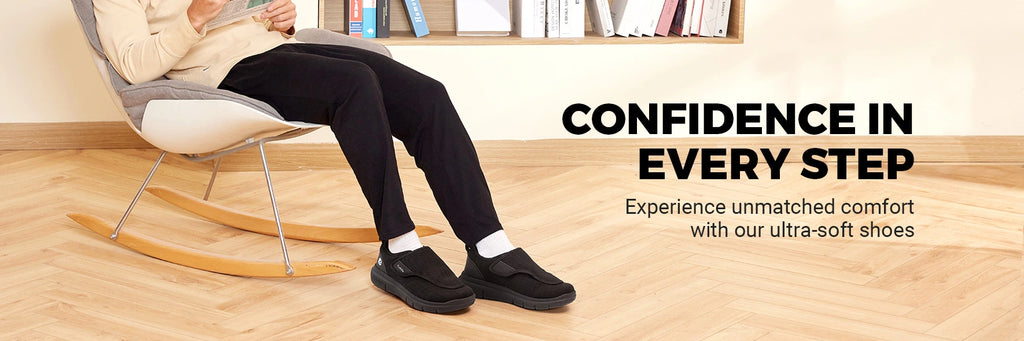
Best Walking Shoes for Ramp Agents 2026
The ramp doesn't close for weather, and the bags don't get lighter. Below-wing crews stand and lift on the tarmac in rain, snow, and summer heat — and most of them are required to wear certified safety footwear on the apron, for good reason. This guide is honest about that line: wear the rated boot where it's mandated, and let a cushioned walking shoe carry the gate, the bag room, and the commute.
If you work the apron, sling bags onto belt loaders, climb in and out of cargo holds, or stand through turns in every kind of weather, your feet are not asking for a fashion shoe. They are asking for a stable platform that survives a loaded shift, traction that holds on a wet apron, and a fit that still works after hours on concrete. Here is how to choose, where the safety boundary sits, and where the FitVille Rebound Core V9 ($79.99) actually fits.
Shop comfortable wide-fit walking shoes at FitVille →
What a ramp shift actually demands
Before any shoe, know the job. A typical below-wing shift puts these demands on your feet:
- Outdoor tarmac in all weather — rain, snow, summer heat radiating off asphalt, and wind; the ramp never closes
- A heavy-bag loaded carry — slinging 50-lb-plus bags and cargo all turn
- Walking between gates, carts, and aircraft across the apron
- Climbing in and out of belt loaders and cargo holds through every turn
- Long hours standing on apron concrete and asphalt, often on a rotating shift
- Feet, knee, and lower-back fatigue that builds across the shift — an occupational consequence of the loaded carry, the hard apron, and the weather, not a diagnosis
If most of that list describes your day, you are looking for a stable, supportive, weather-resistant shoe with width options — but first you need to read the next section, because on the apron the rules may take the choice out of your hands.
The honest safety boundary: read this before you buy
This matters more than any cushioning spec, so it goes at the top, not buried at the bottom. The ramp is a regulated, hazardous environment. Most airlines and ground handlers MANDATE certified protective footwear on the apron: safety-toe (steel or composite), frequently a metatarsal guard, and high-visibility footwear, with foreign-object-debris (FOD) rules applied across the airfield. A dropped bag, a rolling cargo cart, or a belt loader does not forgive an unprotected foot.
If your ramp role requires any of that, you must wear a certified product that carries the rating. A comfortable walking shoe is not a substitute for required PPE footwear on the apron, and this guide does not pretend otherwise.
So where does a cushioned walking shoe like the FitVille Rebound Core V9 fit? It is a walking shoe — it is not a safety-toe boot, it carries no metatarsal guard, and it makes no certified slip-resistant, high-visibility, or puncture-resistant claim. It belongs to the side of the operation that does not mandate protective footwear:
- The gate-agent and ticket-counter side of the same operation
- The indoor bag room and sorting room where the rule is not in force
- The operations office and supervisor roles
- Roles where safety footwear is genuinely not mandated
- The commute and the off-shift shoe you change into when the boots come off
If your role mandates protection, route to certified safety footwear and treat the V9 as your gate, office, or after-work pair. If your role allows staff choice, read on.
Ramp agent vs. flight attendant: not the same shoe
This is a distinction the generic "airport shoes" lists miss. A flight attendant works above-wing, in the cabin aisle, on a soft galley floor, in a styling-conscious in-flight environment — closer to a server's day than a loader's. A ramp agent works below-wing, outdoors on the apron, with a heavy loaded carry and all-weather exposure.
Those are different specs entirely. If you are actually cabin crew, our companion guide to walking shoes for flight attendants is the right read — and if you are a traveler facing a long connection rather than a shift, the airport-layover guide is yours. This article is for the below-wing crew and the indoor-and-commute side of ground handling.
The all-weather tarmac problem
The ramp never closes. You work the same gate in a July heat shimmer off the asphalt, a January sleet line, and a gusting headwind, sometimes all in one rotation. That puts two demands on a non-apron or commute shoe: weather resistance so a downpour or a slush puddle doesn't soak the shift, and dependable traction on a wet apron so a loaded carry across a slick surface stays controlled.
Weather resistance is not the same as waterproof, and the two pull in opposite directions from breathability. If you are weighing a sealed waterproof build against a quick-drying water-resistant one, the waterproof vs. water-resistant explainer walks through the trade-off so you pick for your climate rather than the marketing.
The heavy loaded carry: support beats plush
Slinging 50-lb-plus bags onto a belt loader, restacking a hold, and bracing under a load all turn is closer to a mover's day than a stroller's. That changes what "comfortable" means. A stable, supportive, secure-fitting platform matters more than plush cushioning here. A soft, squishy midsole feels great in the store and then bottoms out under a loaded shift, leaving you standing on a dead pad over concrete. A supportive, resilient platform keeps the foot planted and braced when you lift.
This is the same logic that governs the walking-shoes-for-movers pick: when the carry is heavy, you want stability under load, not bounce. Look for a build that holds its shape from the first lift to the last.
Find your width — standard, 2E, or 4E — at FitVille →
The long-on-feet-on-concrete reality
Apron concrete and asphalt are among the hardest standing surfaces you can be assigned to, and you stand on them through turns and between them. Every hour returns the load straight back into your feet, knees, and lower back, and there is no anti-fatigue mat on a ramp.
That is why a supportive platform plus a secure fit beats softness that fades. The dominant complaint from ground crews — sore feet, tired knees, and an aching lower back at the end of a loaded shift — is a hard-surface-plus-loaded-carry-plus-weather consequence. It is occupational, not medical. A supportive, well-fitted shoe helps you manage that load, but if pain is persistent or severe, see a clinician.
Climbing, pivoting, and secure fit
Belt loaders, cargo carts, and hold doorways mean you are constantly stepping up, ducking in, and pivoting under a load. That repetitive in-and-out asks for two things: a secure, locked heel so the foot stays anchored through every step-up and pivot, and a roomy toe box so toes have room to splay and brace without crowding. A heel that slips on the loader steps and a toe box that pinches turn a long turn into a longer one.
Fit after a loaded shift: why width matters
Feet swell across a long shift on concrete, and a heavy carry accelerates it. A shoe that fits at the start of the morning can feel a half-size too tight by the end of the rotation. That is why width options are not optional for ground work.
The Rebound Core V9 comes in standard, 2E, and 4E widths with a roomy toe box, so the foot has room as it swells late in the turn rather than getting squeezed. If you have never measured your width, it is worth doing once — many people who think they need a longer shoe actually need a wider fit.
Being fair to the work-footwear brands
Plenty of established brands are worn below-wing every day for good reasons. Red Wing and Timberland PRO build durable certified safety-toe work boots; Carhartt and Wolverine offer rugged work footwear, including rated safety lines. If your ramp role mandates a safety-toe, met-guard, or high-visibility rating, those certified lines are exactly where you should be looking — and nothing here changes that.
FitVille is not pretending to replace a rated boot. The Rebound Core V9 is positioned as the cushioning-plus-width-plus-value walking-shoe alternative for the indoor, commute, and non-mandated side of the operation — the gate, the counter, the bag room, the office, the supervisor walk-around, and the shoe you change into after the boots come off. Pick the tool that matches the rule on your ramp.
Rebound Core V9 at a glance (for the non-apron, indoor, and commute side)
- Cushioning plus a stable, supportive platform for standing and the loaded carry on the gate-and-bag-room side
- Secure locked heel and roomy toe box for stepping, pivoting, and end-of-shift swelling
- Weather-resistant, wipeable upper for rain, slush, and apron grit
- Grippy multi-surface outsole for the walk between the bag room, the gate, and the car
- Standard / 2E / 4E widths for feet that swell across a long shift
- Clean, work-appropriate colorways that hold up around an airport
- $79.99 — and remember, it is a walking shoe, not certified PPE footwear for the apron
FAQ
What are the best shoes for ramp agents?
It depends entirely on where you are working. On the apron, the best footwear is whatever certified product your carrier or ground handler mandates — typically a safety-toe (steel or composite) boot, often with a metatarsal guard and high-visibility features. No walking shoe substitutes for that. For the gate-agent, indoor bag-room, operations-office, supervisor, and commute side, where safety footwear is not mandated, a stable, supportive, weather-resistant wide-fit walking shoe like the FitVille Rebound Core V9 is a strong, comfortable option.
Do baggage handlers need steel-toe shoes?
On the apron at most carriers, yes. The ramp is a regulated, hazardous environment, and most airlines and ground handlers mandate certified safety-toe (steel or composite) footwear, frequently with a metatarsal guard and high-visibility, plus FOD rules. Where that rule applies you must wear a certified product — there is no walking-shoe substitute. The non-apron roles — gate, counter, indoor bag room, office, supervisor — and your commute are where staff choice and a comfortable walking shoe come in. Check your employer's footwear policy and job hazard analysis first.
What shoes are good for the gate, bag room, and commute?
Look for a stable, supportive platform over plush, bottoming-out foam, a secure locked heel and a roomy toe box for stepping and pivoting, a weather-resistant wipeable upper for all-weather airport exposure, a grippy multi-surface outsole, and width options so the fit still works as your feet swell across the shift. That profile carries the indoor and commute side comfortably without pretending to be PPE for the apron.
Why do my feet and knees hurt after a ramp shift?
Standing and lifting on hard apron concrete and asphalt for a full turn, in all weather, while slinging heavy bags is one of the harder things you can ask of your feet, knees, and lower back. The surface gives back no relief, the loaded carry compounds the strain, and there is no anti-fatigue mat on a ramp — so fatigue builds across the shift. That is an occupational consequence of the loaded carry, the apron, and the weather, not a diagnosis. A supportive, stable, well-fitted shoe helps you manage the load. If pain is persistent or severe, see a clinician.
Ready for a more comfortable shift? Shop FitVille walking shoes →




