


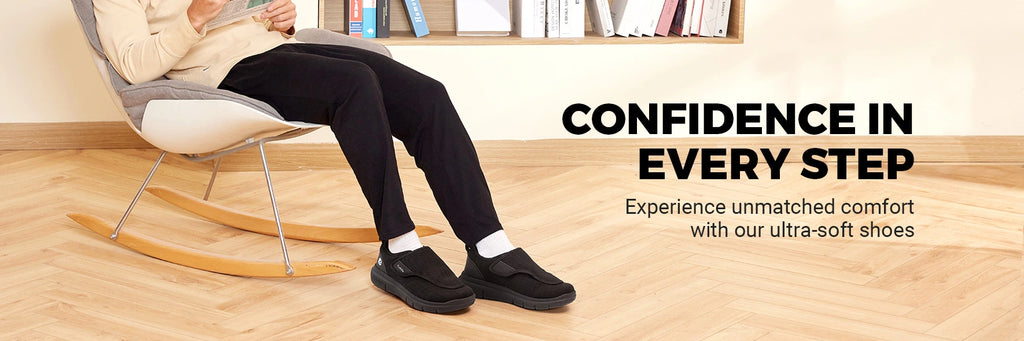
Best Walking Shoes for Land Surveyors 2026
A survey field day is not a walk on a finished sidewalk. You cross overgrown lots, drop down into ditches, push through brush, balance on a road shoulder, and set up gear on ground that was never meant to be stood on. Then you carry a tripod, a total station, a rod, and a bag of GPS equipment to the next shot — and do it again. Your shoes are the one piece of kit between you and the terrain all day long.
This guide breaks down what to look for in walking shoes for land surveyors and survey crews in 2026, how field-walking differs from other on-your-feet jobs, and where a comfort-built, wide-fit walking shoe like FitVille fits into your day. We will also be honest about one thing up front: some job sites mandate protective and hi-vis footwear, and that is employer-issued territory, not something a general walking shoe replaces.
Ready to look now? You can browse FitVille's wide-fit walking range at https://thefitville.com/collections/fresh-picks.
What a Survey Field Day Demands From Your Shoes
Before picking footwear, it helps to name exactly what the work puts your feet through. A typical land survey field day involves:
- Walking rough, overgrown, uneven ground — undeveloped lots, easements, raw construction sites, brush, and tall grass.
- Carrying equipment — tripod, total station, prism poles, rod, and GPS gear, often on uneven footing.
- Standing to take shots — holding position while you sight, level, and record.
- Roadside and shoulder work — gravel edges, drainage ditches, and sloped grass next to traffic.
- All-weather exposure — dew-soaked mornings, mud, dust, heat, and cold, sometimes in the same shift.
- Feet, ankle, and lower-back fatigue — the cumulative result of rough ground plus carrying plus standing, then a drive to the next site.
If your footwear handles those six things well, the rest of the day gets easier. If it does not, you feel it by mid-afternoon — and again the next morning.
How Surveying Differs From Other On-Your-Feet Jobs
It is tempting to grab whatever a landscaper or a tradesperson wears, but the demands are not identical. A few honest distinctions:
- Surveyors vs landscapers. Landscapers mow, dig, and haul, with a lot of pivoting and load-bearing in one zone. Surveyors cover more raw ground per day and carry precision equipment across it, so a stable, secure, grippy walking platform matters more than heavy digging protection.
- Surveyors vs home inspectors. A home inspector walks the house — attics, crawlspaces, finished floors. A surveyor walks the lot, the easement, and the shoulder. Inspectors need agility in tight built spaces; surveyors need confidence on brush and broken ground.
- Surveyors vs mail carriers. Mail carriers cover serious mileage, but mostly on paved, predictable routes. Surveyors trade some mileage for unpredictable terrain — the surface, not just the distance, is the challenge.
- Surveyors vs recreational rail-trail walkers. A groomed rail-trail is flat and clean. A survey site is none of those things, and you are carrying gear, not strolling hands-free.
The short version: a surveyor is on rough, undeveloped ground all day, carrying equipment, moving between brush, ditches, and road shoulders — then driving to do it again. That blend is what your shoe needs to be built for.
An Honest Note on Mandated Protective Footwear
Here is the boundary we will not blur. Many active construction sites, DOT roadside zones, and industrial clients require protective-toe footwear and hi-vis gear to set foot on site. That requirement is real, and it is non-negotiable where it applies.
A FitVille walking shoe is not a certified safety-toe, puncture-resistant, slip-rated, or hi-vis product, and we will not pretend otherwise. If your site mandates protective or high-visibility footwear, that should be employer-issued gear chosen to meet the site standard. For roadside visibility, lean on reflective gear and the hi-vis your employer provides.
Where a comfort walking shoe earns its place is the rest of your day: the general field-walk on private and undeveloped lots that do not mandate PPE, the office and survey-house side, the drive between sites, and your commute. Plenty of survey work happens on ground where a stable, cushioned, wide-fit walking shoe is exactly the right tool — just know which sites call for the other kit.
What to Look For in Walking Shoes for Survey Work
With that boundary set, here are the features that actually matter for all-day field-walking.
A stable platform and a grippy, versatile outsole
Rough and overgrown ground rewards a shoe that keeps your foot level and planted. Look for a stable platform that does not roll on uneven footing and a versatile outsole pattern that bites on grass, dirt, gravel, and hard surfaces alike. You move between all of those in a single setup, so you want grip that is not specialized for only one.
Cushioning that survives a carrying day
Carrying a tripod and instrument adds load to every step, and your feet absorb it. Underfoot cushioning that holds up across a full shift takes the edge off the standing-and-carrying combination far better than a thin, flat sole.
A secure, locked-down heel
When you are stepping down into a ditch or balancing on a slope with gear in hand, a heel that slips inside the shoe undermines your footing. A secure heel hold keeps your foot connected to the platform so the shoe goes where you go.
All-weather upper — with honest limits
Mornings are wet, sites are muddy, and dust gets into everything. A breathable-but-protective, water-resistant-leaning upper that wipes clean is a practical choice. Be realistic, though: water-resistant is not the same as fully waterproof submersion-proof, and we will not overstate it beyond the confirmed spec. For standing water, wet brush, or stream crossings, dedicated waterproof field boots are the honest answer.
Width and fit for feet that swell
Feet spread and swell over a long field day, especially in heat. A shoe that fits at 7 a.m. can feel tight by 4 p.m. Roomy width options — standard, 2E, and 4E — and a true toe box let your foot breathe and spread without pinching, which matters more after eight hours than it does in the first hour.
Where FitVille Fits a Surveyor's Day
FitVille builds wide-fit comfort walking shoes around its Rebound Core v9 platform. Mapped to survey field-walking, here is the honest picture:
- Grippy, versatile outsole — for the mixed grass, dirt, gravel, and paved surfaces of a typical field day.
- All-day cushioning — built for the standing-and-carrying load of moving equipment across a site.
- Stable platform — to keep your foot level on uneven and overgrown ground.
- Secure, locked heel — so the shoe stays with you stepping down banks and shoulders.
- Durable, easy-clean upper — water-resistant-leaning and made to wipe down after a muddy lot.
- Standard, 2E, and 4E widths — room for feet that swell across a long shift.
And the note that keeps it honest: for any site that mandates protective-toe or hi-vis footwear, use employer-issued gear. FitVille is built for the general field-walk, the office, the drive between sites, and the commute — not as a substitute for certified safety footwear.
If that matches your day, see the current wide-fit lineup at https://thefitville.com/collections/fresh-picks.
A quick equipment note: brand names like Trimble, Leica, and Topcon describe the gear you carry, not the footwear — your shoes just have to keep you stable while you run it. And to be fair, quality work and outdoor footwear brands all have their place; the right pick depends on whether your day is PPE-mandated, all-terrain field-walk, or somewhere in between.
FAQ: Walking Shoes for Land Surveyors
What are the best shoes for land surveyors?
The best shoes for survey field work give you a stable platform on uneven ground, a grippy versatile outsole, all-day cushioning for carrying equipment, a secure heel, and a wide-enough fit for feet that swell. For non-PPE field-walking, office time, and driving between sites, a wide-fit comfort walking shoe like FitVille covers it. For mandated sites, follow the protective-footwear rule below.
Do surveyors need protective footwear?
Sometimes, yes — and you have to be honest about it. Many active construction, industrial, and roadside sites mandate protective-toe and hi-vis footwear to enter. Where that applies, use employer-issued gear chosen to meet the site standard. On private, undeveloped, or non-PPE ground, a general comfort walking shoe is a reasonable choice. Always default to the stricter site requirement when in doubt.
What shoes are good for walking rough ground all day?
Look for a stable, non-rolling platform, a versatile outsole that grips grass, dirt, and gravel, cushioning that survives a full shift, and a secure heel so your foot stays planted on slopes and in ditches. Width matters too — roomy standard, 2E, and 4E fits keep swollen feet comfortable late in the day.
Why do my feet and ankles hurt after a field day?
It is usually the job, not just the shoe: hours of rough, uneven ground, carrying a tripod and instrument, and standing to take shots all stack up, and the drive home keeps your feet inactive afterward. Footwear with a stable platform, real cushioning, a secure heel, and enough width to let your feet spread reduces how hard that combination lands. Rotating pairs and loosening laces during long drives helps too.
The Bottom Line
Surveying puts your feet through rough ground, carried loads, and long standing stretches that most jobs never see. The right walking shoe — stable, cushioned, secure at the heel, and wide enough for a full-day swell — makes that workload more manageable on every site that does not mandate protective gear. Where PPE and hi-vis are required, that stays employer-issued; everywhere else, comfort and stability are the priority.
To explore FitVille's wide-fit walking shoes for your field, office, and drive-between-sites day, visit https://thefitville.com/collections/fresh-picks.




