


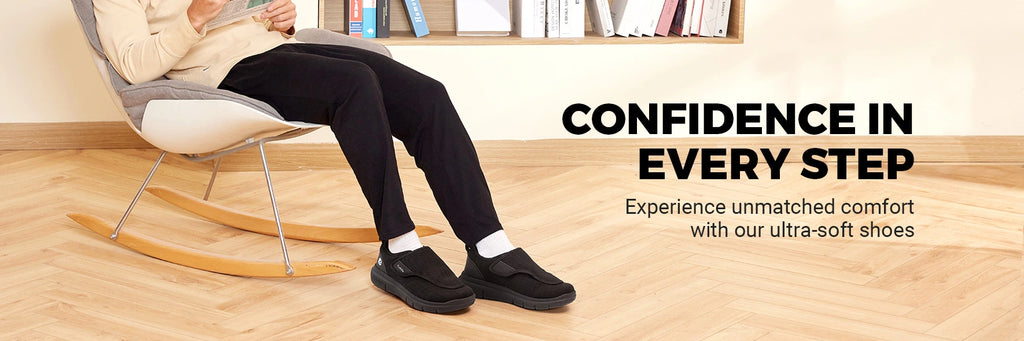
Best Walking Shoes for Gate Agents 2026
A gate agent's day is the podium and the concourse — boarding flight after flight, then walking to the next gate when the board changes, on terminal floors that never give. You stand the podium through boarding and customer service, you cover real distance between gate assignments, and you do it in a uniform that has to read polished the whole time. The right cushioned, stable, professional shoe carries the whole shift, even when the 6:10 slips to 9:40.
If your feet, knees, and lower back are aching by the end of a delay-stretched day, the shoe you choose is doing more work than most people give it credit for. This guide is about that choice — what a gate shift actually asks of your feet, how the gate agent's footwear problem differs from the rest of the airport, what to look for, and where a cushioned walking shoe honestly fits.
What a gate-agent shift actually demands on your feet
Before any specific shoe, it helps to name the load. A working gate shift asks your feet to do several things at once:
- Standing at the podium through boarding and customer service — long static stands in one spot
- Walking the concourse between gates as assignments shift across the terminal
- Hard terminal floors — tile, polished concrete, and long carpeted runs that never give
- The jet-bridge and boarding rush — quick bursts of movement and steps
- Long and irregular shifts — early, late, split, and delay-extended
- The result: feet, knee, and lower-back fatigue by the end of the day
Notice the shape of it. A gate shift is not one motion — it is podium-standing plus terminal walking, stacked across hours that often run longer than the schedule promised. That combination is exactly why a comfortable, cushioned, stable, professional-looking shoe matters here, and why grabbing whatever looks tidy is not enough.
Shop the FitVille collection →
You work the gate — you are not the rest of the airport
The airport searches all blur together, so it is worth drawing clean lines. The gate agent's footwear problem is its own thing.
- The in-cabin flight attendant works a pressurized aircraft cabin — a narrow aisle, a galley, and a different surface and motion than a terminal floor. That is a different role with its own demands.
- The ramp agent works the tarmac, moving baggage and gear in a job that often calls for the employer's required protective footwear. The gate agent works inside the terminal, not on the ramp.
- The TSA officer stands the security checkpoint — a fixed-post, screening role, again with its own employer policy.
- The paying layover traveler is passing through for a day; the gate agent works that same concourse, shift after shift, all season.
You are the gate agent who works the boarding gate and walks the terminal between gates. Your defining load — stand-the-podium hours plus walk-the-concourse mileage on hard floors across long, irregular shifts — is heavier and more repetitive than the traveler's, and different from the flight attendant's, the ramp agent's, and the screener's. That is exactly why the shoe choice deserves its own thinking. (And a reminder: footwear rules at the gate are set by your airline's uniform policy — that policy is the employer's, so check it first.)
What to look for in a gate-shift shoe
Cushioning for both standing and walking
A gate shift is split work: you hold the podium, then you cover the concourse to the next gate. That mix — long static stands plus real walking mileage — is hard on feet, knees, and lower back. Look for cushioning that handles the steady compression of standing in one spot and the repetitive load of walking. It is the same demand as any stand-all-day job, with terminal distance added on top.
A stable, grippy outsole for hard terminal floors
Tile and polished concrete are unforgiving, and a polished floor can be slick. A stable platform and a grippy outsole help you feel sure-footed at the podium, down the jet bridge, and across the concourse. If you want to understand how tread and rubber compounds affect grip on hard, smooth surfaces, the outsole basics are a useful primer. Be honest about the limit, though — outsole grip is one input, not a guarantee.
A clean, professional, uniform-appropriate look
You are representing the airline at the gate, so the shoe has to read polished with the uniform. The good news is that comfort and a dress-code-friendly look are no longer at odds — a clean, professional walking shoe can do both. If a more dressed-up profile is what your policy calls for, the same thinking carries over to professional comfort footwear.
Durability and a second pair for long, irregular shifts
Early, late, split, and delay-stretched shifts add up fast, and they punish a shoe. Look for a durable build, and consider a two-pair rotation so one pair can air out and recover while you wear the other. Alternating two pairs is the simplest upgrade most on-feet workers make, and it stretches the life of both.
A secure heel and the right width
Feet swell across a long shift — and a delay-stretched gate day can run hours past plan. A shoe that fits at sign-in can feel tight by the last boarding. Two things help: a secure, locked heel so your foot is not sliding around during the boarding rush, and the right width so there is room to swell without pinching. If you are between sizes or have never checked, it is worth measuring your feet before you buy.
How the FitVille Rebound Core v9 fits
With that framing in place, here is where the FitVille Rebound Core v9 lands for the gate-and-concourse side of the job — podium hours, terminal walking, the boarding rush, breaks, and the commute.
| Gate-shift demand | Rebound Core v9 feature |
|---|---|
| Stand the podium and walk the concourse | Cushioning tuned for both standing in place and walking mileage |
| Hard terminal floors | Stable platform and grippy outsole for tile and polished concrete |
| Uniform, dress-code look | Clean professional colorways that read polished at the gate |
| Long, irregular, delay-stretched shifts | Durable build meant to hold up shift after shift |
| Feet swell across the day | Secure, locked heel plus standard / wide / X-wide widths |
| Back-to-back assignments | Pairs well with a two-pair rotation to keep a fresh pair ready |
The widths matter for this crowd specifically. Between long shifts and end-of-day swelling, a lot of gate staff find a standard width runs tight by the last boarding — wide and X-wide options give swelling feet somewhere to go. None of this is a medical or anti-fatigue claim; it is comfort and fit built for the hours you actually work.
A quick, honest note: a comfortable, professional shoe will not shorten a delay, but it will let you work the whole gate-and-concourse shift without your feet calling the shots — and that is the real win when the 6:10 becomes a 9:40.
FAQ
What are the best shoes for gate agents?
For the gate-and-concourse side of the job — standing the podium, the boarding rush, walking between gates, and the commute — look for a cushioned, stable, professional walking shoe with a grippy outsole and a secure heel, in a width that fits your feet when they swell. The combination of standing and walking on hard terminal floors is the load you are dressing for, so prioritize cushioning that handles both.
What shoes are comfortable AND uniform-appropriate for airline staff?
You no longer have to choose. A clean, professional walking shoe in a tidy colorway can meet most airline dress codes while still cushioning a long shift. Always confirm against your airline's own uniform and footwear policy first — that policy is the employer's — then pick the most comfortable, supportive option it allows.
How do I survive a long delay-stretched gate shift on my feet?
Cushioning is the foundation: a shoe built for both standing and walking softens the hours when a delay turns one boarding into three. Beyond that, a two-pair rotation helps — alternating pairs lets each one air out and recover, so you are never finishing a 12-hour day in a shoe that has been flattened by the last one. Choosing the right width so your feet have room to swell makes the back half of a long shift far more bearable.
Why do my feet hurt after a gate shift?
Usually it is the stack: long static stands at the podium, real walking mileage between gates, and doing both on hard, unforgiving terminal floors across a shift that ran long. That combination loads up the feet, knees, and lower back. Cushioning and a proper fit help with the comfort side of that. If pain is sharp, persistent, or more than ordinary end-of-shift tiredness, that is a question for a clinician, not a shoe.
References
- FitVille Rebound Core v9 and the full footwear collection. FitVille
- Occupational Safety and Health Administration — general guidance on workplace foot protection and slip, trip, and fall hazards. OSHA
- Centers for Disease Control and Prevention — general information on standing, walking, and on-the-job ergonomics. CDC
This guide covers footwear comfort and fit for the gate-and-concourse side of airline work only. Follow your airline's uniform and footwear policy, and for any persistent foot, knee, or back pain, consult a qualified clinician.




