


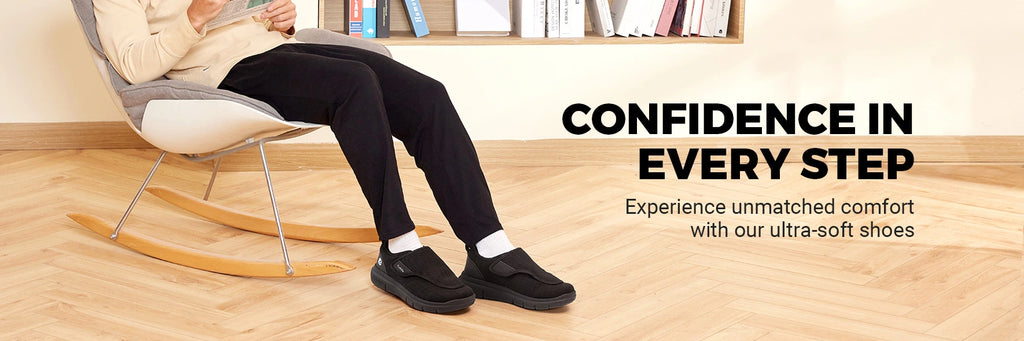
Best Walking Shoes for Estheticians & Spa Staff 2026
An esthetician stands perfectly still for a 60-minute facial, then resets the room and does it again — all day, on a floor slick with product. The right shoe is the difference between leaving relaxed and leaving wrecked. If your feet and lower back are aching by your last appointment, or if your spa's grooming standard just ruled out your old sneakers, this guide is for you.
Estheticians, facialists, waxers, lash and brow technicians, and skincare and treatment-room staff don't have a "walking" job in the usual sense. You have a standing-and-leaning job — long, still stretches at the treatment table, broken by quick pivots to a product cart or steamer. That's a different demand from a shoe than running or even retail pacing, and it's why most "best work shoe" advice misses the mark for spa work.
What a spa and esthetics shift actually demands from a shoe:
- Long static standing-and-leaning at the treatment table or facial bed — hours rock-steady, not striding
- Back-to-back appointments with little time to sit between
- Product-slick floors — oil, wax, water, and lotion underfoot
- A clean, quiet spa dress code — soft, neutral footwear that fits the calm aesthetic
- Fine-motor stillness — standing dead-still through precise work is its own kind of fatigue
- Feet and lower-back fatigue by the end of a long appointment day
This page walks through what to look for, how spa work differs from the salon chair and the massage table, the honest truth about slick floors, and where the FitVille Rebound Core V9 ($79.99) fits. There's an honest 25% off sitewide with code AFS25 at the end, too.
Quick start: Shop clean, wide-fit spa-floor shoes →
Standing still is its own workout — cushion for it
Here's the thing most footwear guides get wrong for spa staff: they recommend running-style shoes built for long strides. But you're not striding. You're standing in one place, often leaning slightly forward over a facial bed, holding that posture through an entire treatment.
Cushioning built only for soft, bouncy walking can actually feel mushy and unstable when you stand in one spot for an hour. What an esthetician needs is cushioning paired with a stable platform: enough give to take the edge off a hard treatment-room floor, but a base steady enough that your foot isn't quietly fighting to balance the whole time. That stability is what keeps a 60-minute facial from leaving your arches and lower back tired.
This is occupational fatigue, plain and simple — the natural result of standing still on a hard floor through back-to-back appointments. It is not a diagnosis, and the right shoe is a comfort tool, not a treatment. If pain is persistent or sharp rather than just end-of-day tiredness, that's a conversation for a clinician, not a shoe.
Spa work isn't the salon chair — or the massage table
Spa and beauty roles get lumped together, but the footwear demand is genuinely different across them. Getting this distinction right is how you avoid buying for the wrong job.
- Esthetician vs. hairstylist. A hairstylist moves around a styling chair and station — small, constant repositioning all day. An esthetician stands and leans at a treatment table doing fine, still, precise work. Your load is prolonged stillness, not constant micro-movement, so a stable standing platform matters more than nimble walking cushioning.
- Esthetician vs. massage therapist. A massage therapist applies real body force and works the edges of the table, shifting weight and bracing. The esthetician's load is prolonged static standing-and-leaning — quieter on the feet, but unrelenting. Both need stability; the esthetician leans harder on all-day standing comfort and a secure, locked fit.
If you split your week across roles — a little front-desk, a little lash work, the occasional body treatment — buy for the role you spend the most hours doing. For most estheticians and facialists, that's standing at the table.
The product-slick floor: an honest note on footing
Spa floors get oil, wax, water, and lotion on them. That's just the reality of the room. Secure footing genuinely matters here, and it should factor into your choice.
But here's the honest part: a grippy, well-designed outsole helps with everyday traction, and that's what the Rebound Core V9 offers. It is not marketed with a certified slip-resistant (SR) rating, and we won't pretend otherwise. If your spa specifically requires certified SR footwear for a particularly wet treatment room, ask your employer what standard they need and choose accordingly. For a fuller breakdown of how outsole traction works and what "slip resistance" actually means on a spec sheet, see our slip resistance and traction guide.
The practical takeaway: look for a genuinely grippy outsole, wipe spills promptly, and don't let any shoe — ours or anyone's — talk you into a false sense of security on a floor with wax on it.
The clean, quiet dress code
Many spas hold a deliberately calm aesthetic, and footwear is part of it. Loud, scuffed, or aggressively athletic-looking sneakers can clash with the room — and some spas simply don't allow them. A good spa shoe reads soft, neutral, and quiet: clean lines, muted colors, nothing that pulls focus from the treatment.
This is where a lot of estheticians get stuck. The shoes that look right are often thin and unsupportive, and the shoes that feel right often look like gym trainers. The goal is a shoe that does both — clean enough for the dress code, supportive enough for the shift. The Rebound Core V9 comes in neutral colorways (black, soft grey, neutral taupe) chosen to sit quietly in a spa setting.
Fit and width — feet swell across back-to-back days
This is the spec most people overlook. Feet spread and swell across a full day of appointments, and a shoe that fit at your first client can feel like a vice by your last. Sizing for the start of the day is a common mistake.
| What to look for | Why it matters for esthetics work |
|---|---|
| True width options (standard / 2E / 4E) | Real room as feet swell across back-to-back appointments — not a "wide" that's just longer |
| A roomy toe box | Lets toes spread naturally during hours of static standing |
| A secure, locked heel | Keeps your foot seated so cushioning works all shift instead of your foot gripping to compensate |
| An easy-clean upper | Wipes down after the inevitable splash of oil, wax, or lotion |
If you've never been sure of your true size, our how-to-measure-your-feet guide takes five minutes and often explains why an old pair felt tight by closing. Some estheticians also like to fine-tune fit with an aftermarket insole — the right width plus the right insole is often the difference between a tolerable day and a painful one.
A fair look at the spa-clog brands
Plenty of estheticians work in clogs, and several brands make solid ones. To be straight with you:
- Crocs make a light, easy-clean, ventilated clog that many spa staff like for wipe-down convenience.
- Birkenstock offer contoured cork footbeds and a clean, professional clog silhouette.
- Dansko are known for a stiff, supportive rocker clog popular in standing professions.
- Calzuro make a fully washable molded clog favored where hygiene and easy cleaning matter most.
These are real options, and for some estheticians a clog is exactly right. Where the Rebound Core V9 aims to compete is the combination many clogs trade off: stable standing cushioning, true width range, a secure enclosed heel for all-day footing, a clean neutral look, and honest value. If you want a closed, sneaker-style shoe rather than an open clog — without giving up support or a tidy appearance — that's the gap it's built for.
The all-day spa workhorse: FitVille Rebound Core V9
The Rebound Core V9 ($79.99) maps directly onto the esthetics spec:
- Standing-tuned cushioning on a stable platform — soft enough to ease a hard treatment-room floor, steady enough to stand and lean on for a full facial
- Secure, locked heel to keep your foot seated through back-to-back appointments
- Standard / 2E / 4E widths with a wide toe box for feet that swell across the day
- Easy-clean upper that wipes down after a splash of product
- Grippy outsole for everyday traction on hard spa floors (not a certified SR rating — see the footing note above)
- Clean neutral colorways (black, soft grey, neutral taupe) that read quiet against a calm spa palette
It pairs naturally with the rest of our on-your-feet-all-day professions collection — the same standing spec holds across spa, salon, clinical, and floor work.
Make the next shift easier: Shop the Rebound Core V9 and apply AFS25 →
How to get 25% off (AFS25)
There's an honest, standing 25% off sitewide with code AFS25 — no countdown clock, no fake "ends tonight." Add your Rebound Core V9 (in your width) to the cart, enter AFS25 at checkout, and the discount applies. The cart confirms your final price. Use it when you're ready.
Frequently asked questions
What are the best shoes for estheticians?
Look for cushioning tuned for standing in place on a stable platform, a secure locked heel, true width options (so feet have room as they swell across appointments), an easy-clean upper, a grippy outsole for slick floors, and a clean, quiet look that fits a spa dress code. The FitVille Rebound Core V9 is built around exactly that — and it's 25% off with code AFS25.
What shoes are good for standing at a treatment table all day?
The key is standing-tuned cushioning on a stable platform — not bouncy running cushioning, which can feel unstable when you stand still for an hour. Pair that with a locked heel and a width that fits your feet at the end of the day, not the start, so back-to-back appointments don't leave your feet cramped.
Are sneakers okay for spa work?
It depends entirely on your spa's dress code. Many spas keep a calm, quiet aesthetic and don't allow loud, scuffed, or athletic-looking sneakers — but they're fine with a soft, neutral, clean-lined shoe. Check your spa's standard first, then choose footwear that reads quiet against the room while still supporting an all-day shift.
Why do my feet and back hurt after a spa shift?
Most likely it's occupational fatigue: standing and leaning rock-steady on a hard floor through back-to-back appointments is genuinely tiring, even though you're not moving much. A shoe with standing-tuned cushioning, a stable platform, and the right width can take a lot of the edge off. If the pain is persistent or sharp rather than ordinary end-of-day tiredness, see a clinician — that's beyond what any shoe can address.
You stand still so your clients can relax. The right shoe — clean enough for the room, supportive enough for the shift — should make that easier, not harder. Shop now with code AFS25 →




