


Best Walking Shoes for Casino Dealers 2026
A casino dealer stands at one table for an entire shift, barely takes a step, and does it on carpet that hides a hard floor — often through the night. With no walking to relieve the pressure, the shoe has to do all the work, and it has to pass the dress code. That combination is unusual, and it is exactly why so many dealers, croupiers, and gaming-floor staff end up searching for a better pair after a brutal run of stand-at-the-table shifts.
This guide breaks down what a dealing shift actually demands, why static standing is harder on your feet than walking, and how to choose a comfortable, dress-code-appropriate shoe. We will be honest about where a strict formal dress shoe is required and a walking shoe will not qualify — no false equivalence here.
Ready to look now? Browse comfortable, wide-friendly dark colorways at the FitVille Fresh Picks collection.
What a casino-dealing shift actually demands
Before you compare any shoes, it helps to name the job in plain terms. A dealing shift is not like a courier's day or a nurse's mileage-heavy floor. Here is what it really asks of your feet:
- A 6-8 hour shift, frequently overnight on a 24/7 floor
- Standing nearly still at one table for nearly the whole shift
- Casino carpet laid over a hard subfloor — plush to the eye, hard underfoot
- Minimal walking, which means almost no movement relief between hands
- A dress code that usually requires a clean, dark, dress-appropriate, often quiet and non-marking shoe
- End-of-shift heavy-leg, tired-foot fatigue from hours of static standing
If that list matches your shift, the rest of this guide is written for you.
Why static standing is the real challenge
Here is the counterintuitive part: standing still all shift is harder on your feet than walking all shift. When you walk, every step shifts the load, pumps your lower legs, and gives different parts of the foot a turn to rest. A dealer gets almost none of that. You hold a fixed position at the table, your weight stays planted, and the same structures carry the load hand after hand, hour after hour.
That makes a dealing shift closer to a surgeon at the operating table or a bartender behind the well than to a delivery courier covering miles. The takeaway for footwear is direct: because there is no walking to relieve the pressure, the cushioning and a supportive footbed have to do all the work. Long-stride running cushioning is tuned for impact and roll-through you simply will not produce at the table. What you want instead is a stable supportive platform with standing-tuned cushioning that stays comfortable when you are barely moving.
This is an occupational reality, not a medical condition. The heavy-leg, tired-foot feeling at clock-out comes from hours of static standing on a hard surface — not a diagnosis. If you have persistent pain, swelling that does not settle, or circulation concerns, that is a conversation for a clinician, not a shoe-shopping guide.
The casino carpet is hiding a hard floor
Walk onto most gaming floors and the carpet feels plush and generous. It is also a trap for your feet. That patterned carpet is typically laid over a hard subfloor — concrete or a similarly unforgiving base. The surface looks forgiving, but your foot still loads against something hard every minute you stand on it. The thin cushion of the carpet pile does very little once you have been planted on it for six hours.
Combine that with the no-walking pattern and you get the worst of both worlds for a foot: a hard surface and no movement to relieve it. This is why the shoe matters so much for dealers specifically. On a job with lots of walking, the shoe shares the work with your stride. At the table, the shoe is almost the only thing standing between you and that hard subfloor. A genuine supportive footbed and a stable midsole are not luxuries here; they are the whole point.
The overnight and graveyard reality
A large share of casino floors run 24 hours a day, so dealing is full of overnight and rotating shifts. Anyone who has worked graveyard knows that fatigue hits differently at 4 a.m. — your body is fighting its own clock, and tired legs feel tired sooner. That is exactly when cheap, worn-out, or under-supported shoes give up.
Choose a shoe whose cushioning and stable platform are still doing their job at the end of a long overnight, not one that feels great for the first hour and flattens out by the last. Durability and a midsole that holds its support over months of shifts matter more for a graveyard dealer than for almost anyone else.
The dress code: be honest about the limit
This is where casino footwear gets genuinely tricky, and where a lot of guides oversell. Most casinos enforce a dress code on the gaming floor: a clean, dark, dress-appropriate shoe, often required to be quiet and non-marking, sometimes spelled out as a "black dress shoe" or "professional footwear." Dealers are on a watched floor and are expected to look tidy and polished.
A clean, dark walking shoe with an unobtrusive profile can satisfy many of these dress codes — especially the ones that ask for "clean black closed-toe, comfortable, non-marking" rather than a literal formal shoe. FitVille's cleanest dark colorways are built with this in mind: low-key, professional, and not loud.
But here is the honest part. Where your property requires a strict formal dress shoe — a polished leather oxford or derby — a walking shoe is not the same thing, and no amount of marketing makes it one. If your dress code says formal dress shoe and a supervisor enforces it, you need an actual dress shoe, and you should route accordingly. Always check your specific property's policy before you buy. We would rather you read your dress code carefully than buy a comfortable shoe you are not allowed to wear at the table.
Find dress-code-friendly dark options: see the comfortable picks at the FitVille Fresh Picks collection.
Dealer vs. casino visitor: a different shoe problem
It is worth drawing a clean line, because a lot of "best shoes for the casino" content is written for the wrong person. A casino visitor spends the day and night walking — the resort floor, the restaurants, the shows, the long carpeted corridors between everything. That person wants a walking shoe tuned for distance and a clean look for a night out.
A casino dealer is the opposite. The worker stands at one table almost the entire shift and barely walks at all. The visitor's problem is mileage; the dealer's problem is static standing. If you are planning a trip rather than working the floor, the visitor-side guidance is what you want. This article is for the person on the working side of the table.
A clean, polished, watched-floor appearance
On a gaming floor, your appearance is part of the job, and your shoes are in view all shift. Scuffed, beat-up, or sloppy footwear reads poorly under the lights. Two practical things help: a clean dark colorway that does not show wear loudly, and a wipeable upper you can keep tidy between shifts. A quiet, non-marking outsole also keeps you from squeaking across the floor or leaving marks — small details that matter when you are watched all night.
Fit after a long stand
Feet swell across a long static-standing shift — that is normal, and it is worse when you barely move. A shoe that fits perfectly at clock-in can feel tight by the last hour. The fix is buying for the foot you have at the end of the shift, not the start: choose a roomy toe box and the right width. If your foot runs wide, or swells wide by 4 a.m., a standard-width shoe will pinch when you need comfort most. Width options are not a nice-to-have for a dealer; they are part of getting the fit right.
Being fair to the brands you already know
Plenty of dealers swear by names like Clarks, Rockport, Ecco, Skechers, and Dansko, and for good reason. These are established comfort and service brands, and several offer clean dark styles that pass many casino dress codes. None of that is in dispute here. The honest framing is simply this: those are real options, and FitVille positions itself as the cushioning-plus-width-plus-value comfortable-work-shoe alternative for dealers whose dress code allows a clean, dark, athletic-leaning or dress-casual walking shoe. Where your code demands a formal dress shoe, a dedicated dress brand may serve you better — pick the tool that fits the rule.
How the FitVille Rebound Core V9 maps to the table stand
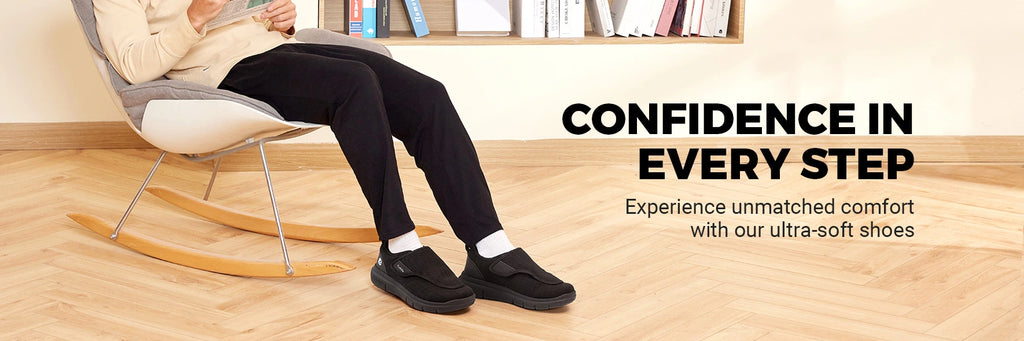
The Rebound Core V9 ($79.99) was built for exactly the static-standing, hard-surface demands a dealing shift creates. Here is the honest feature mapping:
- Stable supportive platform plus standing-tuned cushioning — for static, all-shift standing, where there is no stride to do the work. This is the core spec for a dealer.
- A supportive footbed — because the dealer barely walks, the footbed has to carry the load against that hard subfloor under the carpet.
- Clean dark, dress-code-appropriate colorways — low-key and professional for a watched gaming floor (always confirm your property's policy first; a formal-dress-shoe code needs a formal shoe).
- A quiet, non-marking outsole — to keep you tidy and unobtrusive on the floor.
- Standard, 2E, and 4E widths — for feet that swell across a long shift and for naturally wide feet.
A wipeable upper helps keep the pair looking clean shift after shift. If you want to add extra support on top of the footbed for an especially hard subfloor, an aftermarket insole is an option many standing workers use.
FAQ
What are the best shoes for casino dealers?
The best shoes for casino dealers are comfortable, dress-code-appropriate shoes built for static standing rather than walking: a stable supportive platform, standing-tuned cushioning, a supportive footbed, a clean dark colorway, a quiet non-marking outsole, and wide-width options for end-of-shift swelling. The FitVille Rebound Core V9 covers this profile for dress codes that allow a clean dark walking shoe.
What shoes can casino dealers wear under a dress code?
Most casinos require a clean, dark, dress-appropriate, often quiet and non-marking shoe. A tidy dark walking shoe satisfies many of these codes. But if your property specifically requires a strict formal dress shoe — a polished oxford or derby — a walking shoe will not qualify, and you should wear an actual dress shoe. Always check your specific property's written policy before buying.
What are good comfortable shoes for standing still all shift?
For standing nearly still all shift, prioritize a supportive footbed and a stable platform with standing-tuned cushioning over plush, long-stride running cushioning. Because you barely move, the shoe and footbed do all the work — so support and a midsole that holds up over a long shift matter most. Wide widths and a roomy toe box help with the swelling that builds during static standing.
What shoes work for an overnight casino shift?
For overnight and graveyard shifts, choose a shoe whose cushioning and supportive platform are still working at the end of the shift, not just the first hour. Durability and a midsole that holds its support over months of late-night shifts matter most, since fatigue hits harder when you are working against your body clock. A clean dark colorway keeps you dress-code-ready around the clock.
Standing at one table all night on carpet that hides a hard floor is one of the toughest comfort challenges in any job — and the right shoe carries most of the load. If your dress code allows a clean dark walking shoe, the FitVille Rebound Core V9 is built for the table stand. Explore comfortable, wide-friendly dark colorways at the FitVille Fresh Picks collection.




