


Best Walking Shoes for Bellhops & Concierge 2026
A bellhop walks the property a dozen times a shift, wheels a luggage cart across marble, stands at the bell stand between runs, and does it all in a polished dress shoe. The right shoe walks the miles, carries the load, and still looks sharp at the door. If your feet and lower back ache by the end of a front-of-house shift — or your favorite sneakers just got ruled out by a grooming standard — this guide is for you.
Here is what a bellhop, concierge, or hotel porter shift actually demands on your feet:
- Walking the whole property: lobby to room to entrance to garage and back, all day
- Carrying and wheeling luggage between the curb, the desk, and the elevator
- Standing at a bell stand or concierge desk between runs
- Working on hard, polished marble and tile floors that go slick when wet at the entrance
- Meeting an upscale dress code — usually a clean, dark, non-sneaker shoe
- Feet and lower-back fatigue building across an 8-to-10-hour front-of-house shift
That is a different job from most "best shoes for standing all day" lists assume. You are not standing in one spot, and you are not free to wear whatever is comfortable. You need a shoe that does three things at once.
The hospitality shoe has to do three jobs at once
Most footwear advice solves for one demand. Front-of-house hotel work stacks three on top of each other, and a shoe that nails only one of them still leaves you sore or out of dress code.
It has to cushion the miles. Concierges and bellhops cover real distance — lobby laps, corridor runs, trips to the garage and the loading entrance. That is steady, all-day walking on unforgiving floors, so underfoot cushioning matters as much as it would for any walking shoe.
It has to stay stable under a load. When you are wheeling a luggage cart or carrying bags, your stance changes and your balance shifts. A secure, stable platform helps you move confidently with weight in your hands. (We frame this as secure fit and a stable base — not a medical or corrective claim.)
It has to pass a dress code. Hotels hold front-of-house staff to a grooming standard, and a bright running sneaker rarely clears it. The shoe needs to read as clean, dark, and professional from across the lobby.
Get one of these wrong and the shoe fails the shift. The goal is a single shoe that covers all three.
How the bellhop role differs from the desk, the lot, and the rooms
If you have read a generic "hotel staff shoes" article, it probably blurred four very different jobs together. They are not the same, and the right shoe is not the same.
| Role | Dominant demand | What the shoe prioritizes |
|---|---|---|
| Concierge / bellhop / porter | Walking the property and carrying luggage | Cushioning for miles, stable platform under load, dress-code look |
| Front-desk clerk | Standing mostly in one place | Standing comfort and arch feel over walking mileage |
| Valet / parking attendant | Sprinting on garage concrete | Quick-step traction and durability outdoors |
| Housekeeper | Bending, lifting, pushing a cart in rooms | Support for repeated bend-and-lift, easy-clean upper |
The bellhop and concierge sit in the first row: a walk-the-property, carry-the-luggage, look-sharp role. That is why a stay-at-the-desk recommendation (more standing, less walking), a run-the-lot valet recommendation (outdoor sprinting), or a room-cleaning housekeeper recommendation (bend-and-lift indoors) does not quite fit your shift. If your day looks more like one of those, those are the guides to read instead — but if you are the one walking guests to their rooms with their bags, keep reading.
The marble-floor reality (and an honest note on slick footing)
Hotel lobbies are designed to impress, which usually means polished marble or hard tile. Those floors are unforgiving underfoot for hours, and they get genuinely slick near entrances when it rains or snows and guests track water in. Secure footing on a wet lobby floor is a real, practical concern.
Here is the honest part: a comfortable walking shoe with a grippy outsole helps, but we are not going to claim a certified slip-resistant rating unless a specific FitVille style is confirmed and labeled for it. If your employer mandates certified non-slip footwear for a wet zone, follow that policy and choose a shoe rated for it. For the general walk-the-property side of the job, prioritize a stable platform and a grippy outsole, and stay alert at wet entrances. Our slip resistance and traction explainer covers what the ratings actually mean.
The fatigue you feel at the end of a marble shift is occupational, not a diagnosis — it comes from hard floors plus walking plus carrying. The fix is portable cushioning and a secure fit, not a medical product. (If pain is persistent, that is a conversation for a clinician, not a shoe review.)
The dress code: clean, dark, and not a sneaker
A hospitality shoe has to look the part. Most front-of-house standards want a dark, polished, low-key shoe — black or deep neutral, minimal flash, nothing that screams gym. The trick is finding that look without giving up the cushioning your feet need.
Several established dress-comfort brands serve this market, and they are worth knowing: Rockport, Cole Haan, Clarks, Ecco, and Florsheim all make walkable, professional-leaning shoes. Each makes a credible front-of-house option, and you should compare them factually for your dress code, your budget, and your fit. FitVille's angle in this group is cushioning plus genuine width options plus a clean, dark look at a fair price — useful if you have a wider foot or want a more cushioned walking platform under a professional upper. If a dressier silhouette matters, our guide to walking shoes that don't look like sneakers is a good companion read.
Fit, width, and what happens to your feet across a shift
Feet swell over a long front-of-house shift — that is normal after hours of standing and walking. A shoe that fit fine at clock-in can feel tight by hour six, which is where width and toe-box room earn their keep.
What to look for:
- A roomy toe box so your toes are not pinched as feet swell late in the shift.
- True width options, not just a longer shoe. A genuine wide fit is built roomier through the forefoot, not simply scaled up in length.
- A secure, locked heel so the shoe stays planted when you walk fast or carry a load.
- An easy-clean, durable upper that survives lobby traffic and the occasional scuff.
If you have never measured your feet for length and width, it is worth doing before you buy — many people are wearing the wrong width without realizing it. Our measure-your-feet guide walks through it.
Where the FitVille Rebound Core V9 fits
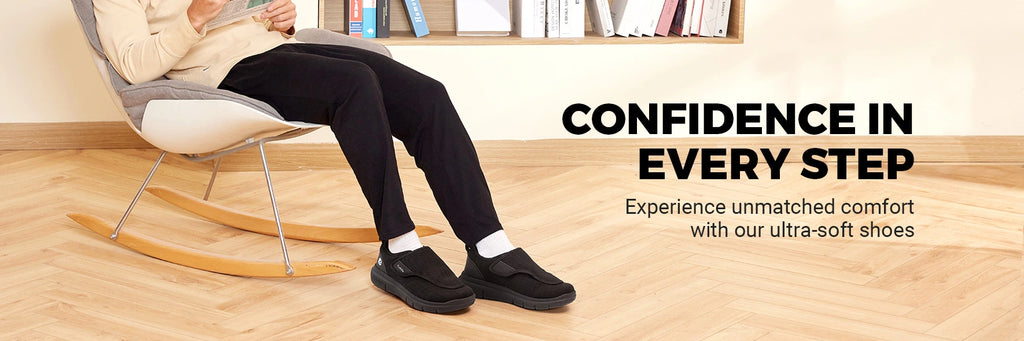
The FitVille Rebound Core V9 ($79.99) is built for exactly the walk-and-carry-and-look-sharp profile this job demands. Here is how its features map to the shift:
- Clean, dark, professional colorways that read as a hospitality shoe rather than a running sneaker — friendly to most front-of-house dress codes.
- Cushioning for property miles, so the lobby laps and corridor runs stay comfortable late into the shift.
- A stable, secure platform that keeps you planted while wheeling a cart or carrying bags (secure fit, not a medical claim).
- A locked-in heel for confident, fast movement across hard floors.
- Standard, 2E, and 4E widths so wider feet get true room instead of a cramped squeeze as they swell.
- A durable, easy-clean upper for everyday lobby wear.
To be clear about the limits: this is a comfortable walking shoe, not a certified non-slip shoe (unless a specific style confirms that rating), and it is not a safety shoe. For the general lobby-to-luggage side of your shift, though, it is a strong, fairly priced option.
See FitVille's comfort walking shoes →
A quick buyer's checklist
Before you buy any front-of-house shoe, run it past this list:
- Does it clear my hotel's dress code — dark, clean, non-sneaker?
- Is it cushioned for steady all-day walking, not just brief standing?
- Does it feel stable when I imagine carrying a load?
- Does it come in my true width, with room for swelling?
- Is the outsole grippy enough for a marble lobby — and does my employer require a certified non-slip rating I need to match?
If you can answer yes down the line, you have a shoe that will survive the shift.
FAQ
What are the best shoes for bellhops and hotel porters?
Look for a cushioned walking shoe with a stable platform, a secure heel, and a clean dark upper that passes a dress code. You walk the property and carry luggage all shift, so prioritize walking comfort plus a secure fit over a pure standing-still shoe. The FitVille Rebound Core V9 and dress-comfort options from brands like Rockport, Cole Haan, and Clarks are worth comparing.
What shoes can a hotel concierge wear with a dress code?
Most front-of-house dress codes want a dark, polished, low-profile shoe — black or deep neutral, minimal flash. A clean, dark cushioned walking shoe usually clears it while keeping your feet comfortable. Check your property's specific grooming standard before buying.
What shoes are good for walking marble lobby floors all day?
Choose a shoe with solid underfoot cushioning and a grippy, stable outsole, since marble is hard and gets slick when wet at entrances. If your employer requires certified non-slip footwear for wet zones, follow that policy. Otherwise, focus on cushioning, a stable base, and a secure fit.
Why do my feet and back hurt after a hotel shift?
It is almost always occupational: hours on hard floors, plus walking the property, plus carrying and wheeling luggage. Portable cushioning, a secure fit, and the right width help reduce that end-of-shift fatigue. If the pain is persistent or sharp, see a clinician — a shoe is comfort gear, not medical care.
Front-of-house work is its own kind of marathon. Walk it in something that cushions the miles, carries the load, and still looks sharp at the door.




