


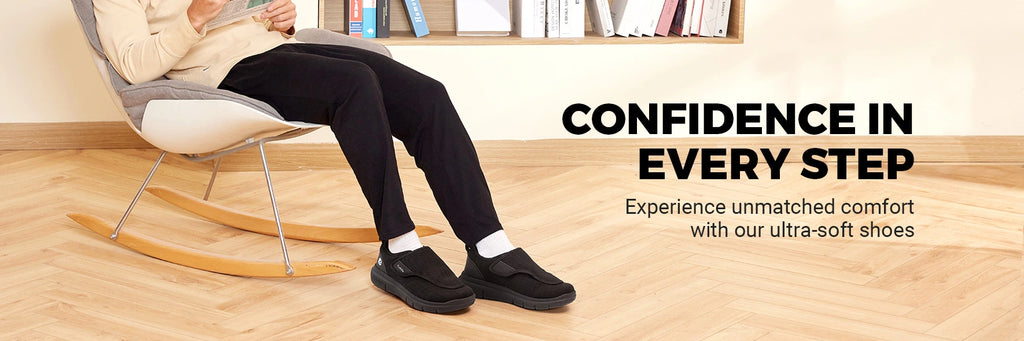
Softest Comfort Shoes 2026: Cushioning That Lasts
You buy a pair of cloud-soft shoes. Day one feels like walking on a marshmallow. Day two-hundred? The midsole has packed down a quarter-inch, your heel sits lower, the bounce is gone, and that "soft comfort shoe" now feels like a flat insole inside a worn-out upper. This is the trap of plush-foam marketing — softness on the showroom floor is easy; softness that survives 1,000 miles is engineering.
If you're shopping for soft comfort shoes in 2026 — whether you're standing all day, recovering from a procedure, or just have feet that protest hard surfaces — the question isn't "how soft does it feel new?" It's "how soft does it feel six months in?" This guide breaks down the foam science, the five features that separate plush-but-flat from plush-and-supportive, and a head-to-head survey of the models most shoppers compare.
Why soft cushioning packs out — and how to spot durable foam
Every midsole is a foam matrix: tiny gas-filled cells held together by a polymer skeleton. When you step, the cells compress and the skeleton flexes back. "Pack-out" happens when the skeleton fatigues — cell walls collapse permanently, the foam thins, and the rebound disappears. The rate at which this happens depends almost entirely on the polymer.
Here are the four foam families you'll see on spec sheets:
- EVA (ethylene-vinyl acetate) — the cheapest and most common. Light, shapes well, can be tuned soft. Pack-out is the highest of the four; expect noticeable compression at 300-500 miles in a daily walker.
- PEBA (polyether block amide) — the foam that took over performance running. Remarkable rebound and very low pack-out. Expensive, and a softer-than-EVA feel only when blown thick. You'll see it in flagship trainers.
- PU (polyurethane) — denser, heavier, but the most fatigue-resistant of the bunch. PU midsoles in classic walking shoes routinely outlast their uppers.
- Proprietary blends — most major brands now layer or blend (EVA + nitrogen infusion, PEBA + EVA carriers, PU cores under EVA topsoles). The marketing names matter less than the durometer (foam hardness) and the geometry.
There is a tradeoff buyers rarely hear about: density vs softness is not the same as density vs durability. A low-density, soft EVA can pack out in months. A medium-density PU can feel softer over time because it never loses its rebound. Marshmallow-soft on day one is often a warning sign, not a feature.
How to read a spec sheet, fast: - Stack height in millimeters and drop (heel-to-toe) tell you how much foam is between you and the ground. - Foam name (look for PEBA, "supercritical," nitrogen-infused, or PU references). - Outsole rubber coverage — exposed midsole foam wears faster. - Weight — extremely light shoes with thick stacks usually use lower-density foam, which packs faster.
5 features that separate plush-but-flat from plush-and-supportive
A soft shoe with no structure is a hammock for your foot — and over a long day, hammocks fatigue the very tissues you're trying to protect. Here's the checklist that separates a soft comfort shoe from a soft sponge.
- Layered midsole, not single-density. Look for shoes with a softer top layer (next to the foot) and a firmer carrier or rim underneath. The soft layer absorbs impact; the firmer layer keeps the foam from collapsing sideways.
- A meaningful heel counter. Soft cushioning needs a stable rear cradle. If you can crush the heel of the shoe by pinching it between your fingers, the shoe will not hold your heel in place once the foam softens with body heat.
- Wide, stable platform. A flared midsole base resists tipping. Narrow-bottomed plush shoes feel tippy at first, then dangerous as the foam asymmetrically packs down on the side you push off harder.
- Wide toe box. Plush midsoles already swell foot volume; a narrow last over thick foam is how blisters and big-toe pain start. A wide toe box also lets the foot splay naturally on impact, distributing load instead of concentrating it.
- A thoughtful rocker. A subtle forefoot rocker (the upturned toe) helps roll the foot through the gait when the foam is soft enough that you'd otherwise sink and have to lift out of every step. Without it, plush shoes feel sluggish.
If a shoe checks four of these five, it's a contender. Three or fewer and you're buying day-one feel that won't hold up.
Brand survey: five soft comfort shoes to compare in 2026
Below are the five models most shoppers cross-shop in this category. None of these is "best for everyone" — fit, foot shape, and use case all matter — but understanding how each one is built will sharpen your shortlist.
FitVille Rebound Core V9
A daily walker built around a layered midsole — softer top deck for impact absorption, firmer carrier underneath for shape retention. Wide toe box across all widths (standard, wide, extra-wide), substantial heel counter, and a flared platform. Designed to stay supportive across long standing days, not just feel cloud-like out of the box.
HOKA Bondi 9
The benchmark plush trainer. Maximalist stack, soft EVA-based midsole, signature meta-rocker. Day-one feel is exceptionally soft, and the rocker geometry is excellent. Trade-off: the soft EVA does compress over high mileage, and the standard width runs narrow for some feet (a wide variant exists).
Brooks Glycerin 22
Plush all-rounder using Brooks' DNA Tuned nitrogen-infused foam — softer at the heel, slightly firmer at the forefoot for push-off. Engineered mesh upper, stable platform. Generally regarded as one of the more durable plush trainers in this group, though stack height is less extreme than the Bondi.
Skechers GO WALK 7
A walking-specific shoe (not a runner). Lighter, lower stack, more flexible. Soft EVA-derivative midsole with the brand's Arch Fit insole option in some variants. Excellent for short-to-medium walks and easy on/off; less midsole material to pack out, but also less protection on long surfaces.
New Balance Fresh Foam X 1080v14
Soft, neutral trainer with a wide platform and roomy fit (multiple widths up to 4E available). Single-density Fresh Foam X tuned for plush impact. Strong choice for wide-foot wearers who want plush feel; durability sits between the Brooks and the HOKA.
Comparison table
| Model | Foam type | Stack (heel) | Pack-out resistance | Support structure | Width options |
|---|---|---|---|---|---|
| FitVille Rebound Core V9 | Layered EVA blend over firmer carrier | ~32 mm | High | Layered midsole + reinforced heel counter | Standard / Wide / X-Wide |
| HOKA Bondi 9 | Soft EVA (compression-molded) | ~42 mm | Medium | Meta-rocker + flared platform | Standard / Wide |
| Brooks Glycerin 22 | DNA Tuned nitrogen-infused | ~38 mm | Medium-High | Tuned-density midsole + saddle upper | Standard / Wide |
| Skechers GO WALK 7 | Soft EVA-derivative | ~24 mm | Medium | Light shank, low-profile | Standard / Wide |
| NB Fresh Foam X 1080v14 | Single-density Fresh Foam X | ~38 mm | Medium | Wide platform + saddle | Standard / Wide / X-Wide (4E) |
Numbers are drawn from each brand's published specs as of 2026; always confirm on the product page for the size and gender you're buying.
Use cases: matching softness to your day
Standing all day (retail, kitchen, healthcare). You need foam that won't be crushed flat by hour eight. A layered midsole with a firmer carrier — like the Rebound Core V9 — outperforms single-density plush over long shifts. Pure max-stack runners are softer at minute one and noticeably less so at hour ten.
Walking for fitness or daily errands. Stack height matters less than rocker geometry and outsole grip. The GO WALK 7 wins for short, frequent walks; the Glycerin 22 and 1080v14 are better when you're logging real distance.
Sensitive feet (supportive of those managing arthritis, diabetes-related foot care, or neuropathy). Prioritize a wide toe box, a roomy forefoot, and a soft top deck. Avoid narrow lasts and aggressive arch shaping. Rebound Core V9 and 1080v14 are typically the better-fitting picks for swollen or sensitive feet.
Post-surgery recovery walking. Stability is as important as cushioning here. Look for a flared platform, a strong heel counter, and a moderate rocker. A subtle rocker reduces the work of lifting through each step while you're rebuilding strength.
Plantar fasciitis discomfort. A softer top deck is comfortable; a firmer carrier underneath is what keeps the heel from collapsing. This is the layered-midsole argument in one sentence.
Where FitVille fits
FitVille uses cushioned midsoles tuned to hold shape over hours — soft at the foot, structurally supported underneath, and built on a flared, stable platform. The Rebound Core V9 pairs that midsole with a wide toe box and a reinforced heel counter, so the soft feel on day one is still there on day two-hundred. It's a buyer's-guide answer to a category that often optimizes for showroom feel.
For sitewide 25% off — including FitVille's most-cushioned models — use code AFS25 at checkout.
FAQ
Soft cushioning vs firm support — which is better for plantar fasciitis?
Neither extreme alone. The most supportive shoe for plantar fasciitis discomfort pairs a soft top deck (so heel strike isn't punishing) with a firm enough underlying carrier and heel counter to keep the rear of the foot from collapsing inward. Pure plush, no structure, often makes symptoms worse over a long day; pure firm support without any cushion can feel jarring. Layered midsoles split the difference.
How long does soft foam last?
It depends on the polymer. Standard EVA in a daily walker typically shows noticeable pack-out at 300-500 miles. PEBA and PU formulations resist compression longer — 600-800+ miles is realistic. Real-world clues that your foam is done: visible creasing along the midsole sidewall, a heel that feels lower than it used to, and that "flat" sensation on hard floors that a fresh pair didn't have.
Are soft shoes bad for posture?
Excessively soft shoes with no structure can be — they let the foot collapse and the ankle drift, which over hours of standing fatigues the chain above. The fix isn't firmer shoes; it's structured soft shoes. A flared platform, a real heel counter, and a layered midsole keep the foot aligned while the soft layer still absorbs impact. That combination is supportive of good standing posture rather than working against it.
Do soft cushioned shoes work for wide feet?
Yes — but only if the last is genuinely wide. Plush foam can swell perceived foot volume, so a "regular" width over a thick midsole often feels tighter than expected. Look for true wide and extra-wide options (the Rebound Core V9 and NB 1080v14 are strong picks here) and a wide toe box that lets the forefoot splay.
Should seniors choose the softest shoe available?
Not necessarily. The most useful shoe for older adults is usually one that combines moderate cushioning with strong stability — flared platform, firm heel counter, secure midfoot lockdown. Maximum-soft shoes can feel tippy when balance is already a concern. A layered midsole over a wide platform tends to be a better fit than the single softest shoe on the wall.
References
- FitVille Rebound Core V9 product page. FitVille
- HOKA Bondi 9 product specifications. HOKA
- Brooks Glycerin 22 product specifications. Brooks Running
- Skechers GO WALK 7 product page. Skechers
- New Balance Fresh Foam X 1080v14 product specifications. New Balance




