


Best Restaurant Work Shoes for Women (2026 Guide)
It's hour eleven of a Saturday double. The pass is backed up, the bar is three deep, and you've just stepped through a slick of olive oil that the dishwasher hasn't gotten to yet. Your feet stopped feeling like feet around hour seven. The shoes you bought because they were cheap and "non-slip enough" are neither anymore — and tomorrow you do it all over again at brunch.
Restaurant work is its own footwear category. Nurses log miles on smooth vinyl. Warehouse pickers walk concrete in steel toes. But restaurants combine the worst of both: hard tile, grease, water, dropped knives, hot oil, and shifts that routinely run twelve hours without a real sit-down. This guide breaks down what actually works for women on the floor and on the line in 2026 — across servers, bartenders, line cooks, hosts, and dishwashers — and where each major brand fits.
Restaurant shoe culture is split down the middle
Walk into any kitchen in the US, UK, Canada, or Australia and you'll see the same divide. Back of house — line cooks, prep, dish — runs almost entirely in Shoes for Crews or Crocs Bistro. Both are cheap, replaceable, and absolutely committed to slip resistance. Front of house — servers, hosts, bartenders — leans Dansko Professional, Birkenstock, or whatever black sneaker the manager will tolerate.
The split exists because the jobs are different. BOH tolerates a clog because no guest ever sees the cook's feet. FOH needs something that reads as "shoe" rather than "kitchen clog" while still surviving a wet floor. Almost no shoe bridges both worlds well. That's the gap this article — and FitVille's positioning — is built around.
FOH vs BOH: what each role actually needs
The demands on a server's shoe are not the demands on a line cook's shoe. Buy for your role, not for the kitchen as a whole.
| Role | Hours on feet | Primary hazards | Shoe priority |
|---|---|---|---|
| Server / waitress | 8–12 | Wet floors, dropped glassware, fast cornering | Cushioning, slip resistance, looks acceptable on the floor |
| Host | 6–10 | Standing in one spot, polished entryways | Comfort, presentable, no clog look |
| Bartender | 8–12 | Standing on rubber mats over wet floor, constant pivot | Slip resistance, arch support, easy to clean |
| Line cook | 10–14 | Grease, hot oil splash, dropped knives, hot pans | Slip resistance, full upper coverage, easy to wipe |
| Dishwasher | 8–10 | Standing water, soap, constant spray | Waterproof or quick-dry, slip resistance, no fabric mesh |
| Cocktail server | 6–10 | Wet bar floors, long walks across rooms | Slip resistance with cushioning, looks polished |
A server can get away with a cushioned slip-resistant sneaker. A line cook generally cannot — fabric uppers absorb grease and a dropped chef's knife points are not theoretical. A cocktail server needs slip resistance plus enough cushioning to walk fifteen miles a shift across a hotel restaurant floor.
Slip-resistance certifications, briefly explained
"Non-slip" on a shoebox means almost nothing on its own. Here's what to look for:
- ASTM F2913 — the US standard test. A shoe is rubbed across a wet steel surface; the coefficient of friction is measured. A reading of 0.3 or higher is generally considered slip-resistant for restaurant use. ASTM F3445 is the newer follow-on standard for testing on contaminated surfaces.
- SATRA TM144 — the European/UK equivalent, widely used by Shoes for Crews and other professional brands.
- Oil-resistant vs water-resistant outsoles — these are different. An oil-resistant outsole uses a softer rubber compound that grips through a thin film of grease; a water-resistant outsole grips wet tile but may slide on grease. For BOH, you want oil-resistant. For FOH front-of-house with mostly water spills, water-resistant is acceptable.
- Tread depth and pattern — small, multi-directional sipes channel liquid out from under the shoe. A flat or worn outsole is not slip-resistant regardless of what the box claims.
If a shoe lists ASTM F2913 or SATRA TM144 testing on its product page, that's a verifiable claim. If the brand only says "slip-resistant," it may still grip well — but you're trusting their judgment, not a lab's.
Five-feature checklist for restaurant shoes
Before you buy, run any candidate through these five filters:
- Slip-resistant outsole — preferably with a published test result (F2913 or SATRA). Multi-directional siping. Replace when the tread visibly smooths out.
- Full upper coverage — closed toe and a non-mesh upper for BOH. Mesh wicks grease and offers zero protection from a dropped knife or splash.
- Cushioning calibrated for hard floors — kitchen tile and sealed concrete are unforgiving. Look for an EVA midsole at minimum, ideally with a removable insole so you can swap to a custom orthotic.
- Width options — feet swell across a twelve-hour shift. A 2E or 4E width and a wide toe box prevent the toe-box pinch that turns into bruised toenails by week three.
- Black colorway available — most front-of-house dress codes require black. If the shoe only comes in white or gray, it's a non-starter for FOH.
Brand survey: where each one fits
Below are the specific models that dominate restaurant work in 2026, with honest notes on where each one belongs.
Shoes for Crews Mighty Step
The default BOH workhorse. Closed-toe sneaker silhouette, ASTM F2913-tested outsole, available in regular widths. Sells in pairs at a price most line cooks can replace every six months. Not the most cushioned, and the upper feels stiff for the first week. Best for: line cooks, dishwashers, prep.
Skechers Work Squad SR
Slip-resistant version of the Skechers Squad. Lightweight, generous cushioning, available in women's widths up to wide. Sneaker styling makes it acceptable for FOH if the dress code allows black sneakers. Mesh-adjacent uppers are a downside in a heavy-grease BOH. Best for: servers, bartenders, hosts.
Skechers Work Sure Track
A more BOH-leaning Skechers — leather upper, slip-resistant outsole, slightly stiffer build than Squad SR. A common bridge shoe for cooks who want a sneaker look without the fabric upper. Best for: line cooks who walk between line and floor (open kitchens), prep.
Crocs Bistro Pro
The cult BOH clog. Enclosed top, easy to hose down, Croslite footbed that's surprisingly forgiving for the price. The 2026 Pro version has a more aggressive outsole than the original Bistro. Looks like a kitchen clog and reads as one — fine in BOH, generally not allowed on the floor. Best for: line cooks, dishwashers, prep.
Dansko Professional
The FOH classic for a reason. Stapled clog construction, rocker sole, leather upper, available in narrow and wide. Most servers either swear by them or can't break them in. Heavy. Not the most slip-resistant outsole on this list — Dansko's grip is decent but not lab-tested for restaurant floors. Best for: experienced servers who've already broken in a pair.
Birkenstock Tokyo Super-Grip
Birkenstock's restaurant-targeted model. Cork footbed (the Birkenstock signature), closed toe, slip-resistant outsole rated for professional kitchens. Beloved by FOH staff who already wear Birkenstocks off the clock. Footbed needs break-in. Best for: servers, bartenders.
FitVille Rebound Core V9
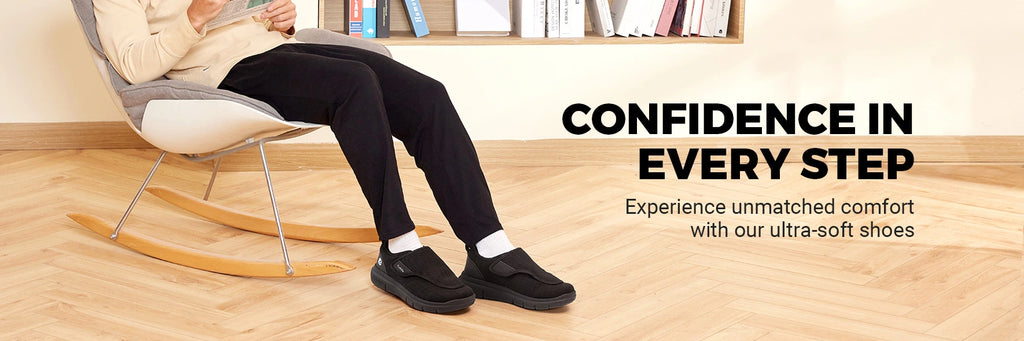
FitVille's wedge in restaurant work is the bridge case: a slip-resistant outsole on a walking-shoe last, available in 2E and 4E widths and in black colorways that don't read as a kitchen clog. Cushioning is calibrated for all-day hard-floor standing rather than for treadmill miles, which is what most "comfort" sneakers are tuned for. Not certification-tested for restaurant floors — call it slip-resistant rather than ASTM-rated. Best for: servers, bartenders, hosts, cocktail servers, and BOH staff who want a sneaker over a clog.
Comparison table
| Model | Best for | Width range | Slip rating | Black available |
|---|---|---|---|---|
| Shoes for Crews Mighty Step | BOH (cooks, dish) | Standard, some wide | ASTM F2913 | Yes |
| Skechers Work Squad SR | FOH (servers, hosts) | Standard, wide | Slip-resistant (brand-tested) | Yes |
| Skechers Work Sure Track | BOH/FOH bridge | Standard, wide | Slip-resistant (brand-tested) | Yes |
| Crocs Bistro Pro | BOH (cooks, dish) | Standard | Crocs Lock tread | Yes |
| Dansko Professional | FOH (servers) | Narrow, standard, wide | Slip-resistant (not lab-rated) | Yes |
| Birkenstock Tokyo Super-Grip | FOH (servers, bartenders) | Narrow, regular | Super-Grip outsole | Yes |
| FitVille Rebound Core V9 | FOH and BOH crossover | 2E, 4E | Slip-resistant outsole | Yes |
What kitchen floors actually do to your shoes
A kitchen tile is engineered to be cleanable, not walkable. Quarry tile under a fryer station is essentially a low-friction surface coated in a thin film of vaporized oil. By the end of a Saturday shift it has a layer of grease, a pool of water near the dish pit, a pile of dropped lemon wedges by the bar, and at least one shard of glass nobody has spotted.
The hazards your shoe has to manage:
- Grease — the single biggest slip hazard. An oil-resistant outsole with sipes is the only real defense.
- Standing water — common at the dish station and behind the bar. Mesh uppers wick this into your socks; closed leather or synthetic uppers don't.
- Dropped equipment — chef's knives, prep tongs, hot pans. A closed toe is non-negotiable for BOH; open-toe shoes are banned in most professional kitchens for this reason.
- Hot oil splash — fryers spit. A closed upper without mesh is genuinely safer than a perforated sneaker.
- Cleaning chemicals — degreasers and sanitizers can break down certain rubber compounds over time. This is one of the reasons restaurant shoes wear out faster than walking shoes.
Care guide: cleaning and deodorizing
Restaurant shoes don't last as long as gym sneakers. They take more abuse and they take it from substances designed to be hard on rubber and leather. A care routine extends life and keeps you from being the person nobody wants to share a hood vent with.
Nightly (or after every shift): - Wipe the upper with a damp cloth to remove visible grease and food residue. - Pull out the insole. Let both the insole and the shoe air out overnight. A closed locker is the worst-case scenario. - Sprinkle baking soda inside if odor is building up. Dump it out before the next shift.
Weekly: - Scrub the outsole with a stiff brush and a kitchen degreaser. Grease in the tread sipes kills slip resistance fast. - Wipe the upper with a leather conditioner (for leather shoes) or a mild soap solution (for synthetic).
After a brutal shift (Saturday-night dinner rush, holiday party, fryer incident): - Remove insoles, wipe down with diluted vinegar, and let them dry fully before reinserting. - For severe odor, a UV sanitizing shoe dryer cuts bacteria load and dries the lining overnight.
Replace your shoes when the outsole sipes are visibly smooth, when you've started slipping on floors you used to handle, or roughly every 6–12 months depending on hours.
Where FitVille fits
Restaurant work has always forced a choice: the slip-grade outsole that looks like a clog (Crocs Bistro, Dansko) or the comfortable sneaker that wasn't built for grease (most "comfort" walking shoes). FitVille's restaurant-relevant pitch is narrow and specific: slip-resistant outsoles and 2E/4E widths in colorways — including black — that work on the floor without reading as kitchen footwear.
FitVille shoes are not certified to ASTM F2913 and the brand doesn't claim they are. The outsole is built for slip resistance on hard surfaces; the cushioning is tuned for long shifts on tile and sealed concrete; the wide toe box accommodates the foot swelling that happens around hour eight. For a server who wants something more polished than a clog, or a line cook who wants a sneaker silhouette without giving up grip, it's a reasonable bridge option to test alongside the Shoes for Crews and Dansko mainstays.
Shop FitVille Fresh Picks — 25% off with code AFS25 →
FAQ
Are non-slip shoes required in restaurants?
Most US, UK, Canadian, and Australian restaurants require slip-resistant footwear as a condition of employment, and many list a specific brand or specification in the employee handbook. The legal floor varies by jurisdiction, but workplace safety guidance across these markets generally treats slip-resistant footwear in commercial kitchens as standard. Check your operator's policy — some reimburse a portion of the cost.
How long do restaurant shoes last?
Six to twelve months for full-time staff is typical. The outsole tends to wear out before the upper does, and once the sipes smooth over, the shoe is no longer slip-resistant even if it still looks fine. If you've started catching yourself on wet floors you used to handle without thinking, replace them.
Can I wear sneakers as a server?
It depends on your dress code. Many casual and bar restaurants allow black sneakers as long as they're slip-resistant and presentable. Fine dining typically requires a leather upper — Dansko, Birkenstock, or a polished black work shoe. Always check before you buy; a returning a shoe that doesn't match the dress code is a hassle nobody needs.
What's the difference between oil-resistant and water-resistant outsoles?
Oil-resistant outsoles use a softer rubber compound that grips through grease films — important for BOH and bar floors. Water-resistant outsoles are tuned for wet tile but can slip on heavy grease. If you work the line, prioritize oil resistance. If you only work the dining floor, water resistance is usually enough.
Are wide-width shoes worth it for restaurant work?
If your feet swell during a shift — and most do, after eight or nine hours on tile — a 2E or 4E width prevents the lateral pinch that causes blisters and bruised toenails. A wide toe box also lets toes splay naturally for balance, which matters when you're carrying a four-top order across a wet floor.
References
- Shoes for Crews Mighty Step product page. Shoes for Crews
- Skechers Work Squad SR product page. Skechers
- Skechers Work Sure Track product page. Skechers
- Crocs Bistro Pro Clog product page. Crocs
- Dansko Professional product page. Dansko
- Birkenstock Tokyo Super-Grip product page. Birkenstock
- ASTM F2913 standard test method for slip resistance. ASTM International
- FitVille Fresh Picks collection — 25% off with code AFS25. FitVille




