


Best Outdoor Work Shoes for Women 2026: All-Weather Picks
If you spend your shift on gravel, in wet grass, on mail-route pavement, or knee-deep in spring mud, you already know the drill: most "women's work shoes" lists are scaled-down men's lasts in a smaller box, dressed up with a softer color. That doesn't help when you're nine hours into a route, your shoes are soaked through by 10 a.m., and the toe box pinches every time you crouch to a meter.
This guide is for women in trades — landscapers, USPS and parcel carriers, agricultural workers, utility techs, park staff, and construction-adjacent crews. We'll cover what outdoor work actually demands, a five-point checklist you can use in any store, job-by-job recommendations, a brand survey of specific models you can put hands on this week, weather rotations, and a sock-and-insole pairing that stops the cold-and-sweat cycle.
What outdoor work actually demands
Indoor "work shoes" optimize for slip resistance on tile and standing comfort. Outdoor work is a different problem entirely. Across a single week you may walk on:
- Wet grass and dew (early-morning landscaping, parks)
- Loose gravel and crushed stone (rural routes, utility yards)
- Hot asphalt (summer mail and parcel routes)
- Mud and standing water (spring fieldwork, drainage jobs)
- Snowmelt slush and salt (winter routes north of the Mason-Dixon)
- Rough concrete, loading docks, truck steps (delivery)
The shoe has to keep water out, grip on wet and loose surfaces, absorb 15,000–25,000 steps without bottoming out, and not chew up your toes when you're climbing into a truck cab forty times a day. That's a different spec sheet from a sneaker, a hiking shoe, or a tile-floor slip-resistant.
The trade-tested 5-feature checklist
Use this in any aisle, online or in store.
| Feature | What to look for |
|---|---|
| Waterproof rating | Membrane (GORE-TEX, KEEN.DRY, M-Select Dry) for full waterproofing; leather + DWR for water-resistant. Membrane shoes run hotter in summer. |
| Traction grade | Lugged rubber outsole, 4mm+ depth, with siping for wet pavement. ASTM F2913 slip-resistance rating is a plus. |
| Toe protection | Reinforced toe bumper for landscaping/agriculture; soft toe is fine for mail and delivery unless your employer requires safety toe. |
| Ankle support | Mid or 6" boot for uneven ground and ankle-rolling risk; low-cut for paved routes where speed matters. |
| Cushioning | EVA midsole 18mm+ in heel, with a removable insole so you can swap in your own. Look for a rock plate if you walk gravel. |
A note on width: women's feet are not just smaller versions of men's feet — they're often proportionally wider in the forefoot relative to heel. If standard D-width shoes feel like the toe box pinches by mile three, you likely need a 2E (wide) or 4E (extra wide) last, not a half-size up.
Job-specific picks
Landscaping and grounds crew
You need waterproof, lugged outsoles, and a reinforced toe. Wet grass at 6 a.m. is the single most common soak-through scenario, and mowing, edging, and stone work all involve toe-strike risk. A 6" leather boot with a Goodyear welt or direct-attach construction holds up to repeated wet/dry cycles better than a synthetic upper. Consider boots like the Timberland Pro Direct Attach 6" or Carhartt Romeo Wedge as your baseline.
Mail carrier and delivery driver (USPS, Amazon, FedEx, UPS)
This is a high-mileage, low-impact job — the priority is cushioning and a quick on/off, not a heavy boot. USPS routes average 8–12 miles a day on foot; Amazon DSP drivers do 150–250 stops per shift with constant truck cab in/out. Look for a low-to-mid cut, a waterproof or water-resistant membrane, and a full-EVA midsole. Skip the steel toe unless your contract requires it. The Merrell Moab 3 Work WP and Skechers Work Squad SR are common picks here.
Agriculture and farming
Mud, manure, irrigation runoff, and uneven row work. A pull-on rubber-shafted boot is often more practical than a lace-up for the wettest parts of the day, but for general fieldwork and equipment handling, a 6" waterproof leather boot with an aggressive lug pattern works. Wide widths matter here — feet swell in the heat.
Utilities and park ranger
Mixed terrain — pavement, trail, rough access roads, the occasional creek crossing. A waterproof hiker-meets-work-boot like the Keen Utility Reno KBF (if it fits the dress code) or a mid-cut work hiker gives you traction without the weight of a full boot.
Construction-adjacent (estimating, supervision, surveying)
Site visits, not pouring concrete. A water-resistant work hiker with a reinforced toe bumper is usually enough; check whether the GC requires a defined-impact toe before buying soft-toe.
Brand survey: specific models, not just logos
Comparing brands without comparing specific models is how you end up with a shoe that doesn't fit your job. Here are six women's-specific models, each chosen because it actually exists in women's sizing — not just a pink colorway of a men's last.
| Model | Waterproofing | Cushioning | Width options |
|---|---|---|---|
| Carhartt Romeo Wedge (women's) | Water-resistant leather | Cushioned EVA, wedge sole for pavement | Standard |
| Timberland Pro Direct Attach 6" (women's) | Waterproof leather + membrane | Removable PU insole | Medium, Wide |
| Merrell Moab 3 Work WP (women's) | M-Select Dry waterproof membrane | Air-cushion heel, contoured EVA | Medium, Wide |
| Keen Utility Reno KBF (women's) | KEEN.DRY waterproof membrane | Removable PU footbed | Medium |
| Skechers Work Squad SR (women's) | Water-resistant synthetic | Memory-foam-style insole | Medium, Wide |
| FitVille work-ready outdoor styles (women's) | Water-resistant uppers | EVA midsole, removable insole | 2E and 4E available |
A few honest caveats: not every colorway of every model is offered in every width — confirm at checkout. Membrane-waterproof shoes (GORE-TEX, KEEN.DRY, M-Select Dry) run hotter than leather-and-DWR water-resistant shoes; in July on asphalt, that matters. And "waterproof" only protects up to the lowest seam — step into a puddle deeper than the collar and the membrane traps water in.
Weather rotation: what to wear when
Hot summer (75°F+ pavement)
A membrane boot will cook your feet by 11 a.m. Switch to a low-cut water-resistant work shoe with mesh panels and a moisture-wicking insole. Reapply DWR spray monthly. If your route includes wet grass, pack a quick-dry sock change for lunch.
Fall transition (40–65°F, leaves, drizzle)
The peak season for waterproof-membrane shoes — wet ground, but not yet hot. A mid-cut waterproof hiker-work hybrid like the Merrell Moab 3 Work WP is the workhorse here.
Winter cold-wet (below freezing, slush, salt)
You need a 6" waterproof boot with a tall enough collar to stop slush at the ankle, plus an insulated liner if you're standing still (utility, mail collection point). Pair with a midweight merino sock. Salt destroys leather — wipe boots down nightly with a damp cloth.
Spring mud
The wet season nobody plans for. Lugged outsoles with self-cleaning channels (lugs spaced wide enough to shed mud) outperform fine-tread soles by a wide margin. A pull-on rubber boot in your truck for the worst sites is worth the cubic foot of cargo space.
Sock and insole pairing: stop the cold-and-sweat cycle
The single biggest comfort upgrade isn't usually the shoe — it's what's inside it.
Socks. A merino blend (60–80% merino, the rest nylon and a touch of elastane) regulates temperature in both directions, resists odor for multi-day wear, and dries faster than cotton. Crew height for boots, no-show is fine for low-cut shoes. Avoid 100% cotton work socks — they hold sweat against the skin and get cold the moment you stop moving.
Insoles. Most stock work-shoe insoles are thin foam. If you have a long route or a history of arch fatigue, swap in a contoured EVA or cork insole with a defined heel cup. Women in trades who report arch fatigue or plantar fasciitis discomfort often find that combining a wider last with a contoured insole gives more relief than either change alone — the foot needs room to spread before arch support actually does its job. (We're not making medical claims here; talk to a clinician for diagnosis.)
Liner sock for cold-wet days. A thin synthetic liner under a merino crew adds a slip layer that reduces blister risk and pulls moisture off the skin. Cheap, and the difference at hour eight is real.
Where FitVille fits in
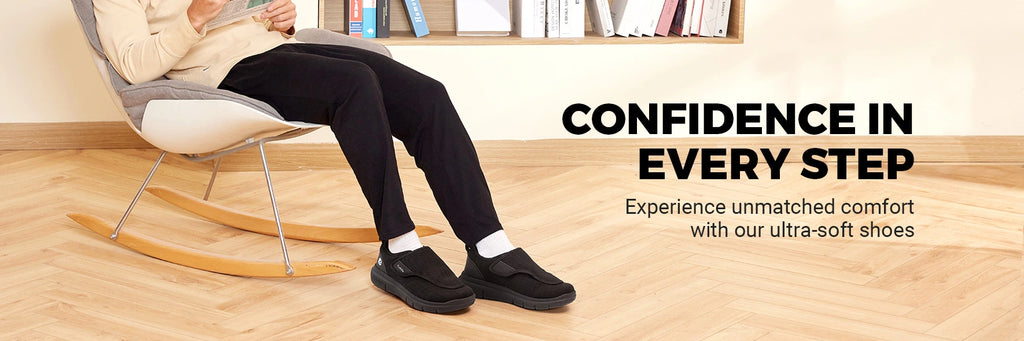
FitVille builds women's outdoor work shoes around a wide toe box on a women's-specific last — not a downsized men's mold — and offers genuine 2E and 4E widths in women's sizing, which is rare in the category. The outdoor-ready styles use water-resistant uppers (we describe them as water-resistant rather than fully waterproof; treat them like leather + DWR rather than a sealed membrane), an EVA midsole tuned for all-day standing and walking, and a removable insole so you can swap in your own orthotic.
If your current rotation is pinching by mile three or you've been sizing up half a size to fake width, a true 2E/4E last is worth trying. Use code AFS25 for 25% off at Fresh Picks.
FAQ
Are work shoes different from hiking shoes?
Yes — and the difference matters more than marketing suggests. Hiking shoes prioritize torsional flex for trail variability and a softer outsole compound for rock grip. Work shoes prioritize a stiffer platform for ladder rungs and truck pedals, a harder rubber compound for abrasion, and (often) a reinforced toe bumper or safety toe. A hiker will wear out faster on pavement; a work shoe will feel clunky on a real trail. For most outdoor trades work that mixes pavement, gravel, and uneven ground, a work-hiker hybrid like the Merrell Moab 3 Work WP splits the difference well.
Are waterproof shoes worth it for outdoor work?
For most jobs, yes — but not every day of the year. A waterproof membrane is genuinely transformative in spring mud, fall drizzle, and winter slush. In peak summer on asphalt, the same membrane traps heat and slows drying when you do get wet. The pragmatic answer is a two-shoe rotation: a waterproof mid-cut for cool wet seasons, and a water-resistant low-cut with mesh panels for hot months.
How long should outdoor work shoes last?
A reasonable expectation for women working full-time outdoor trades is 6 to 12 months per pair, depending on mileage and conditions. Mail carriers walking 8–12 miles a day often hit the lower end of that range; supervisors and inspectors walking 3–5 miles a day reach the upper end. Signs to retire a pair: outsole lugs worn smooth, midsole creasing visibly with each step, water leaking through previously dry seams, or persistent foot fatigue you didn't have when the shoes were new. Rotating two pairs daily roughly doubles the lifespan of each by giving the foam 24 hours to decompress.
Ready to try a 2E or 4E women's last?
If standard widths have been pinching your forefoot all season, FitVille's outdoor-ready women's styles in 2E and 4E are worth a look. Use AFS25 for 25% off sitewide at Fresh Picks.
References
- Carhartt Romeo Wedge product page. Carhartt
- Timberland Pro Direct Attach 6" women's product page. Timberland Pro
- Merrell Moab 3 Work WP women's product page. Merrell
- Keen Utility Reno KBF women's product page. Keen Utility
- Skechers Work Squad SR women's product page. Skechers Work
- FitVille Fresh Picks collection. FitVille




