


Exclusive Footwear Collection: DTC Drops, No Resell Tax
The word "exclusive" used to mean something specific in footwear: a shoe you couldn't get just anywhere. In 2026, it means at least four different things — and only one of them actually benefits the person paying retail.
If you've typed "exclusive footwear collection" into a search bar, you're probably trying to figure out which kind you're looking at. Is it a numbered capsule? A region-locked release? A members-only tier? A drop-app exclusive that 90% of buyers will never see in their size? The label is the same. The buying experience is wildly different.
This guide unpacks what "exclusive" really signals in modern footwear retail, why so many "exclusive" drops end up costing more on the secondary market than at retail, and what a different kind of exclusive — the direct-to-consumer kind — looks like when scarcity isn't the selling point.
What "exclusive footwear" actually means in 2026
The footwear industry uses "exclusive" as a catch-all, but the underlying structures are different enough that it's worth separating them.
Drop-app exclusives. Releases handled through dedicated apps like Nike SNKRS or Adidas Confirmed. Inventory is allocated through raffle, queue, or first-come-first-served logic. Demand routinely outpaces supply by 10x or more on the most-hyped silhouettes, which is why "L" (loss) screenshots are their own genre on social media.
Brand collaborations. Co-branded releases — designer x sportswear, artist x brand, athlete x brand. These are usually intentionally short-run because the partnership itself is short-run. A collaboration that ran for 3,000 pairs ten years ago will never be re-issued in that exact form, which is part of the appeal for collectors.
Region-locked releases. A model sold only in a specific country or region — Japan-only, EU-only, Asia Pacific–only. These exist for cultural-marketing reasons (testing a colorway in one market) and inventory-management reasons (limiting parallel imports).
Members-only or tiered collections. Brands that gate certain styles behind a loyalty program, app login, or paid membership. The selection itself isn't always rare — what's "exclusive" is the access path.
DTC-only collections. Shoes a brand sells direct, with no third-party retail or marketplace presence. You won't find them at Foot Locker, on Amazon, or in a mall outlet. They aren't necessarily small runs — they just bypass the wholesale channel entirely. This is the model FitVille uses, and we'll come back to it.
These categories overlap. A drop-app release is often also a collaboration. A members-only collection might also be region-locked. But the headline word — exclusive — covers all of them.
Why "exclusive" so often ends up meaning "resell markup"
Drop-app and collaboration models work on a structural mismatch: a brand intentionally produces fewer pairs than the market wants. That's not a criticism — it's a marketing strategy that's worked for thirty years and supports an entire culture of sneaker collecting that has its own genuine craft and community.
The side effect, though, is that retail price stops being the price most buyers actually pay. The market price is the secondary-market price.
Consider what that looks like at the buying end. You enter a raffle. You don't win. The shoe lists at $190. By Friday, it's $480 on a resell platform. If you want the shoe, your real-world cost is $480 plus authentication fees plus shipping, not $190.
For collectors, this is a known and accepted tradeoff. They follow the drops, factor the markup, and budget accordingly. Resell platforms have become genuinely useful — authentication has improved, condition grading has standardized, and for many high-value pairs the secondary market is the only practical channel.
For the everyday buyer who saw a colorway they liked, the equation is harder to justify. You're paying a 100–200% premium on a shoe whose marginal cost to manufacture is roughly the same as a non-exclusive model. The "exclusive" tag is doing a lot of pricing work.
None of which is a knock on the brands or the buyers who participate in this. It's a description of what the system produces.
A different kind of exclusive: DTC-only
There's another version of exclusive that gets less press because it doesn't generate the same hype cycle: a shoe that's exclusive because it's only sold direct.
A DTC-only collection isn't on Amazon. It isn't at Famous Footwear or DSW. It isn't on Zappos. It isn't at any third-party retailer at all. The only place to buy it is the brand's own site.
That's "exclusive" in a literal sense — exclusive to one channel — but the experience for a buyer is the inverse of a drop. Inventory is sized to demand rather than capped below it. Pricing is set by the brand, not by an aftermarket. If the shoe you want is in stock, you can buy it. If your size is in stock, you can buy your size.
What you give up: the cultural cachet of having beaten 50,000 other people to a raffle slot. What you get: a fit, a price, and a return window that aren't determined by who else wanted the same pair.
| Exclusive type | Pricing reality | Fit reality | Effort to buy |
|---|---|---|---|
| Drop-app exclusive | Retail for winners, 100–200% markup for everyone else | Standard widths only, narrow lasts common | Raffle / queue / refresh-spam |
| Collaboration capsule | Often higher MSRP + secondary markup | Standard widths only | Same as drop-app, plus shorter window |
| Region-locked release | Retail if you're local; import fees + reseller margin if you're not | Sized for the local market | Travel or proxy services |
| Members-only tier | Retail with membership fee/loyalty gate | Brand-dependent | Sign up, wait for drop |
| DTC-only collection | Retail, set by brand | Often broader width and size run | Visit site, add to cart |
This isn't a values judgment. People who chase drops know exactly what they're doing and often enjoy the chase. The point is just that all of these get called "exclusive" and they aren't comparable buying experiences.
What to actually look for in an exclusive collection
If "exclusive" matters to you because you want a shoe that isn't on every other person's foot, here's what to filter for — independent of which brand you're considering.
- Distribution footprint. Is it sold through more than one channel? A model on Amazon, on the brand's own site, and at three big-box retailers is "exclusive" in branding only.
- Width and size availability. A drop that's only cut in D-width medium isn't really sold to the entire foot-having population. If width matters to you (and it should if you wear above a D), confirm before falling for the marketing.
- Restock pattern. Will the shoe come back in your size? "Limited-edition" silhouettes often won't. Standard DTC collections usually will.
- Return policy. Drops frequently have shorter or no-return windows because of resell-game concerns. DTC-only collections often run longer return windows because the channel is set up for direct-buyer relationships.
- Secondary market price. If a shoe is trading for 2x retail on a resell platform, you're not really shopping at retail — you're competing with bots and resellers for the few pairs that surface at MSRP.
A shoe being "in" an exclusive collection tells you almost nothing about whether it's a good shoe. It tells you something about distribution. Worth keeping those two questions separate.
Where FitVille fits in this
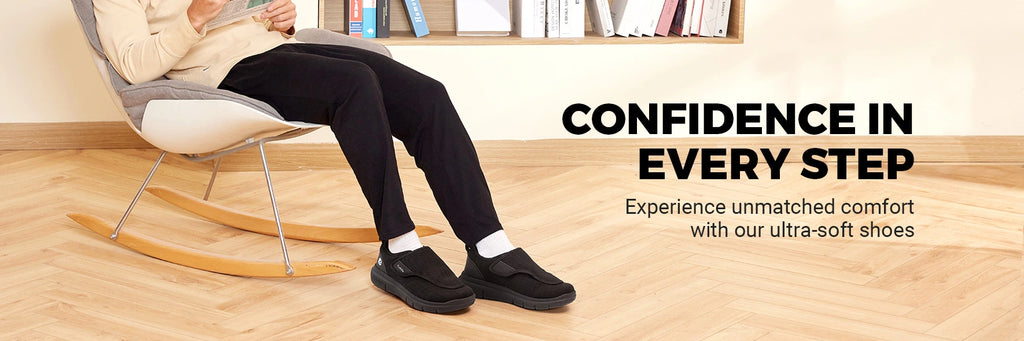
FitVille's fresh-picks collection is exclusive in the DTC-only sense. You won't find it on Amazon, in a mall, at a department store, or on a resell platform. The only place to buy it is fitville.com. We don't run drop-app raffles, we don't release numbered capsules, and we don't position scarcity as the value.
What we do is sell direct. The fresh-picks lineup is sized in 2E, 4E, and 6E widths as a default — not as an "extended" line — across men's and women's silhouettes. If your foot is 4E and the shoe you want is in stock, you can buy it. The buying experience is the opposite of a drop: it's just a shoe you can put in a cart and check out.
For shoppers who care about the "exclusive" framing because they want a shoe that isn't on every coworker's foot, the DTC-only model does that quietly. For shoppers who want fit they can't get from mainstream sneaker retail, the wide-width default does that more usefully.
If you're considering trying the collection, the current sitewide promo is straightforward — code AFS25 at checkout takes 25% off everything, no minimums, no scarcity timer. Browse the fresh-picks collection.
When drop-app exclusives are still the right call
It would be a stretch to argue that DTC-only is right for every buyer. There are real reasons to engage with drop-app and collaboration exclusives.
You're buying for a collection rather than for daily wear. You value the cultural moment a release represents. You want a piece of footwear history — a specific collaboration, a specific colorway, a specific year. You enjoy the community around the chase. You're a reseller and the system is your business.
For those use cases, Nike SNKRS, Adidas Confirmed, and the major resell platforms exist for a reason and do their job well. The authentication infrastructure that's built up around resale is genuinely impressive, and collectors have legitimate, well-developed reasons for valuing what these channels offer.
The mistake is mixing the two buying contexts. If you're shopping for a shoe to wear every day to work, a drop-app exclusive at 2x markup is solving a problem you don't have. If you're shopping to add to a curated collection, a DTC commodity-priced wide-width walking shoe isn't what you came for.
Knowing which buyer you are on a given purchase saves money and matches expectation to outcome.
FAQ
How do I get notified about exclusive shoe drops?
For drop-app exclusives, install the official brand app (SNKRS, Adidas Confirmed) and enable notifications. For collaboration drops, follow the brands and the collaborator; most release dates are announced 1–4 weeks ahead on official channels. For DTC-only collections from smaller brands, email signup is usually the most reliable channel — these brands typically don't have the same media-coverage cycle.
Are DTC-exclusive shoes worth it?
Depends on what you're optimizing for. If you want a shoe that isn't on every retailer shelf, fits widths most retail brands don't carry, and is priced without secondary-market inflation, DTC-only is a good fit. If you want a piece of footwear culture or a collectible release, you're better served by drop-app and collaboration exclusives.
What's the difference between "limited edition" and "DTC-only"?
Limited edition means the brand intentionally caps how many pairs are made. DTC-only means the brand controls where the shoe is sold (their own site only) without necessarily limiting how many pairs they make. A shoe can be both, one, or neither. The marketing label "exclusive" gets applied to all of them, which is why it's worth checking which kind you're looking at.
Why do exclusive shoes resell for so much more than retail?
When demand exceeds production by a wide margin, the secondary market sets the real price. For high-hype drops, that markup can run 100–300% above MSRP. The retail price is the price for buyers who win the raffle or hit refresh at the right second. Everyone else either passes or pays the secondary-market price.
Does FitVille run limited drops?
No. The fresh-picks collection is DTC-only — sold exclusively through fitville.com — but it isn't intentionally scarce. We restock standard sizes and widths and don't release numbered capsules or raffle-only colorways. The "exclusive" part is the channel, not the count.




