


Diabetic-Friendly Footwear 2026: What to Look For
There are two kinds of "diabetic shoes" out there — the kind your doctor can prescribe and that Medicare can help cover, and the kind that just fits the way diabetic feet need shoes to fit. They're not the same product, and the difference matters more than most shoe pages will tell you.
This guide walks through the distinction in plain language, lays out the footwear features that suit diabetic foot needs, points out what to avoid, and is honest about where FitVille fits in that picture (and where it doesn't).
Quick answer: diabetic shoes vs. comfort shoes
Prescribed diabetic shoes (sometimes called therapeutic shoes for persons with diabetes) are a regulated category in the US. They're billed under specific HCPCS codes (the A5500 family), generally require a prescription from the physician managing your diabetes, are fitted by a qualified provider such as a pedorthist, and — when the eligibility criteria are met — Medicare Part B typically covers one pair plus inserts per calendar year. They're aimed at people with documented diabetic foot risk (for example, peripheral neuropathy, prior foot ulceration, foot deformity, or poor circulation).
Diabetic-friendly comfort footwear is something different. It's commercial comfort shoes designed with features that suit diabetic foot needs — wide toe boxes, soft uppers, cushioned footbeds, wide-width options — but it is not a medical device, not prescribed, and not Medicare-billable. It's the shoe many people with diabetes wear day to day, especially those who don't currently qualify for the prescribed category, or who need a second pair beyond their prescribed pair.
Both have a place. Neither replaces medical care.
Why diabetic feet need different footwear
Diabetes can change feet in a few ways that footwear has to respect:
- Reduced sensation (peripheral neuropathy). When the nerves in the feet are less sensitive, pressure points, hot spots, and small rubs can go unnoticed for hours. A shoe that quietly digs into a toe joint or seam-rubs the side of a foot is a real problem if you can't feel it happening.
- Impaired circulation. Blood flow to the feet can be slower, which means small skin injuries — a blister, a cracked callus, a friction rub — take longer to heal and have more time to become a bigger issue.
- Foot shape changes. Diabetes is associated with a higher rate of foot deformities (bunions, hammertoes, Charcot changes in advanced cases). Shoes that assume an "average" foot shape can crowd or pressure these areas.
- Higher stakes on small injuries. A blister most people would ignore deserves more attention on a diabetic foot. Footwear that avoids creating blisters in the first place is genuinely useful.
None of this means a shoe prevents complications. It means the wrong shoe can create the very pressure points and friction that diabetic feet are least equipped to tolerate — so the goal of "diabetic-friendly" footwear is mostly about not causing problems.
Footwear features that suit diabetic feet
Whether the shoe is prescribed or off-the-shelf comfort, the fit principles overlap. Look for:
- Wide toe box. Toes should sit flat and uncrowded, with wiggle room front-to-back and side-to-side. No forefoot squeeze.
- Soft, stretchable upper. Knit, soft mesh, or stretch synthetics accommodate foot shape changes and bunions or hammertoes without creating pressure points.
- Seamless or soft-seamed interior. Internal seams are a classic friction source. The smoother the interior, the less risk of seam-rubs you can't feel.
- Cushioned footbed. A footbed that distributes impact across the whole foot reduces concentrated pressure under the heel and forefoot.
- Wide-width availability. Standard "D"/"medium" widths often pinch laterally. 2E, 4E, and equivalent women's wide options give the foot room to sit naturally.
- Removable insole. Useful if a podiatrist has prescribed custom orthotics — the original insole comes out, the orthotic goes in, without crowding the toe box.
- Low, stable heel. Flat to low heels keep weight from concentrating on the forefoot, where pressure-related issues are most common.
- Secure, non-binding closure. Laces, hook-and-loop, or stretch laces that hold the foot without digging across the instep.
- Slip-resistant outsole. Falls are a separate but real concern; grip matters.
What to avoid
The mirror image of the list above:
- Narrow or pointed toe boxes that crowd the forefoot
- Rigid internal seams across the toe box or heel
- Stiff, unforgiving uppers that don't accommodate bunions or swelling
- Lace setups that concentrate pressure in one band across the instep
- Very stiff, flat outsoles with no cushioning at all
- Hot, non-breathable synthetic linings that trap moisture
- Heels above roughly an inch, especially anything narrow or pointed
- Shoes bought without trying them on later in the day, when feet are at their largest
Prescribed diabetic shoes: how the category actually works
In the US, the prescribed-diabetic-shoe category is fairly specific. At a high level — and this is the cautious framing because exact rules change and your provider is the authority — Medicare's Therapeutic Shoes for Persons with Diabetes benefit generally requires:
- A documented diagnosis of diabetes
- A physician (typically the one managing the diabetes) who certifies the need based on at least one qualifying foot condition (history of ulceration, neuropathy with callus, foot deformity, poor circulation, or amputation, among others)
- A prescription from a qualified prescriber
- Fitting and dispensing by a qualified provider — often a pedorthist, orthotist, or podiatrist enrolled in Medicare for this benefit
- Footwear and inserts that meet the program's specifications (depth shoes or custom-molded shoes, plus multiple pairs of inserts per year)
When all of that lines up, Medicare Part B typically helps cover one pair of shoes and a set of inserts per calendar year. Private insurance, the UK's NHS, Canadian provincial programs, and Australian schemes each have their own rules — the underlying idea (medical eligibility, professional fitting, specified footwear) is broadly similar, but the paperwork and coverage differ. Ask your care team.
Brands you'll encounter in this prescribed category include Orthofeet, Propet, Drew, and Apex, among others. They make Medicare-coded depth shoes and partner with pedorthists who handle fitting and billing. This is a neutral observation — those are the brands designed and coded for the prescribed track, and if that's the track you're on, they're the ones to talk to your fitter about.
Honest FitVille positioning
This needs to be on the page, plainly:
FitVille is not a Medicare-eligible therapeutic shoe provider. FitVille shoes are not A5500-coded. They are not prescribed footwear, and they cannot be billed to Medicare under the Therapeutic Shoes for Persons with Diabetes benefit. If your doctor or podiatrist has prescribed therapeutic shoes, follow that prescription and work with the qualified fitter they refer you to.
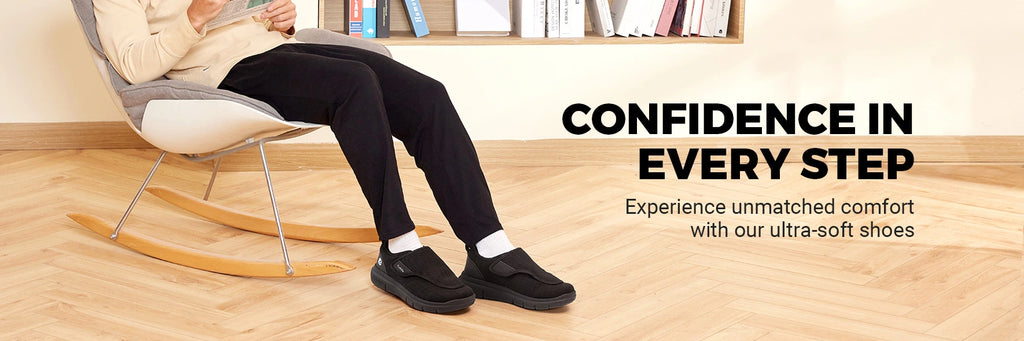
Where FitVille does fit is the diabetic-friendly comfort footwear segment — a second pair to wear around the house or on lighter days, an off-shift pair beyond your prescribed pair, or everyday footwear for people with diabetes who don't currently qualify for the prescribed category. FitVille's defaults — wide toe boxes, 2E and 4E width options across many styles, soft uppers, cushioned footbeds, slip-resistant outsoles — align with the fit features that suit diabetic feet. That's a fit story, not a medical claim.
If you're not sure which category applies to you, that's a question for your care team, not a shoe website.
When to see a podiatrist (read this part)
Footwear is not a substitute for foot care. If you have diabetes:
- See a podiatrist on a regular schedule — most care teams recommend at least an annual diabetic foot exam, more often if you have neuropathy, prior foot issues, or other risk factors. Your physician can refer you.
- Check your feet daily — top, bottom, between the toes, and the heels — for anything new: redness, blisters, cuts, cracks, calluses, swelling, color change, or warmth.
- Any of the following is a podiatrist visit, not a shoe-store visit: a new pressure point, blister, callus, corn, ingrown toenail, skin crack, persistent redness, numbness change, or any wound that isn't healing within a couple of days.
- Don't self-treat calluses or corns with blades or strong over-the-counter acids if you have diabetes. That's a clinic task.
- If something looks infected — warmth, swelling, drainage, fever — call your care team the same day, not next week.
A great-fitting shoe makes daily life more comfortable. It does not replace the foot exam, and it does not heal anything. Both things are true at once.
Prescribed diabetic shoes vs. diabetic-friendly comfort footwear
| Prescribed diabetic shoes | Diabetic-friendly comfort footwear | |
|---|---|---|
| Regulated medical device? | Yes (HCPCS A5500 family in the US) | No |
| Who it's for | People with diabetes meeting documented foot-risk criteria | People with diabetes wanting comfort fit; second-pair use; those who don't qualify for the prescribed category |
| Prescription required | Yes | No |
| Fitted by | Qualified provider (pedorthist, orthotist, podiatrist) | Self-fitted, with general sizing guidance |
| Cost coverage | Medicare Part B may cover one pair plus inserts per year if eligible; private/NHS/provincial rules vary | Out-of-pocket retail |
| Typical brands | Orthofeet, Propet, Drew, Apex (among others) | General comfort-footwear brands, including FitVille |
| Custom orthotics | Designed to accept them; multi-density inserts often included | Many styles have removable insoles to make room for orthotics |
| What it does | Meets a regulated specification for at-risk diabetic feet | Offers fit features (wide toe box, soft upper, cushioned footbed, wide widths) that suit diabetic foot needs |
FAQ
What's the difference between diabetic shoes and regular comfort shoes? "Diabetic shoes" in the strict sense are a regulated, prescribed category — A5500-coded in the US, fitted by a qualified provider, billable to Medicare for eligible patients. "Comfort shoes" — including diabetic-friendly comfort shoes — are commercial footwear with fit features that suit diabetic feet (wide toe box, soft upper, cushioned footbed, wide widths) but are not prescribed and not medical devices.
Are FitVille shoes diabetic shoes? No, not in the prescribed sense. FitVille is not a Medicare-eligible therapeutic shoe provider, and FitVille shoes are not A5500-coded or prescribed. FitVille is a comfort-footwear brand whose design defaults — wide toe boxes, 2E/4E width availability on many styles, soft uppers, cushioned footbeds — align with the fit features many diabetic feet need. If you've been prescribed therapeutic shoes, follow that prescription.
Do I need a prescription for diabetic shoes? For Medicare-covered therapeutic diabetic shoes in the US, yes — a physician prescription and qualifying foot conditions are required, and the shoes are fitted by a qualified provider. For diabetic-friendly comfort footwear bought at retail, no prescription is needed, but you should still talk to your care team about what to look for given your specific feet.
Can people with diabetes wear regular comfort shoes? Many people with diabetes — particularly those without documented foot complications — wear well-fitted comfort shoes day to day. The key is well-fitted: wide enough toe box, soft upper, cushioned footbed, wide widths if needed, no internal seams or pressure points, and daily foot checks regardless. If your podiatrist has prescribed therapeutic shoes, that prescription takes precedence over any off-the-shelf option.
For related fit guides, see our notes on best shoes for women with wide feet, orthotic-friendly sandals, and thoughtful comfort-footwear gifts for seniors.
The honest closing
Shoes don't replace care. They don't prevent, treat, heal, or cure anything related to diabetes — and any page that suggests otherwise is overselling. What good footwear can do is fit the way diabetic feet need shoes to fit: roomy at the toes, soft against the skin, cushioned underfoot, wide enough on both sides, and stable on the ground. That's a real, useful job, and it's the only job we'd ever claim for it.
If you've been prescribed therapeutic shoes, follow that prescription with your qualified fitter. If you're looking for diabetic-friendly comfort footwear — for a second pair, off-shift wear, or as everyday shoes when the prescribed category doesn't apply — browse our latest comfort-footwear picks and look for the features above. And whatever you wear, keep that podiatrist appointment on the calendar.




