


Best Comfort Slippers with Arch Support (2026 Guide)
You spent eight hours yesterday in your "comfortable" house slippers — the soft fleece pair you wear from the moment you wake up until you climb into bed. By 4 p.m. your heels were burning. By 8 p.m. your arches felt bruised. The next morning, that first step out of bed sent a jolt through your foot that almost dropped you.
The slippers aren't the whole story. But for a lot of people over 40, they're a bigger part of it than anyone tells you. This guide covers what to look for in comfort slippers with arch support, how the leading brands compare, and how to extend your "good shoe" habits into the hours you spend at home.
Why most slippers make foot pain worse
The slipper aisle has been optimized for one thing: feeling soft when you step into the showroom (or open the box). That's not the same as feeling good after eight hours on a hardwood floor.
Three design choices in standard slippers work against your feet:
A flat footbed. Most slippers have a uniform layer of foam or fleece from heel to toe. Your foot's arch sits over a void with nothing pushing back. After a few hours of standing or walking, the plantar fascia — the long band of tissue running from your heel to your toes — does all the work that an arch should be sharing.
No heel cup. A heel cup is the slight bowl shape that cradles the back of your foot and keeps the fat pad under your heel where it belongs. Slippers with no heel cup let that pad spread out sideways with every step, which exposes the heel bone to harder impact.
A slick, flexible sole. Bedroom-style slippers often have a thin felt or suede underside that twists with every step. On hardwood or tile, your foot is constantly making micro-corrections to stay stable. Multiply that by 8,000 steps a day and you get the calf tightness, arch fatigue, and morning heel pain so many people blame on age.
The fix isn't to wear running shoes inside. It's to recognize that house shoes are still shoes, and they should be built like shoes.
Arch support and heel cups: the biomechanics that actually matter
A contoured footbed under your arch does two useful things. It shortens the lever arm the plantar fascia has to manage, which lowers the tension load with every step. And it keeps the midfoot from collapsing inward (overpronation), which reduces the twist that travels up into the knee and hip.
A deep heel cup adds a second layer of support. By keeping the heel's natural fat pad compressed and centered, it acts like a built-in shock absorber. Walk barefoot on tile and your heel slaps. Walk in a slipper with a sculpted heel cup and that slap turns into a controlled landing.
The third piece is a structured midsole — usually EVA foam or cork — that doesn't just compress flat the moment you step on it. Soft is fine on the surface. Underneath, you want something that holds its shape.
A 5-feature checklist for arch-support slippers
When you're shopping, look for these five things together. Any one alone won't be enough.
| Feature | Why it matters |
|---|---|
| Contoured footbed | Fills the arch and supports the midfoot through every step |
| Deep heel cup | Cradles the heel pad and reduces impact on hardwood and tile |
| Structured midsole | Holds shape over hours of wear; cork and dense EVA are most reliable |
| Washable upper | Slippers see more skin contact than any other footwear; hygiene matters |
| Indoor-outdoor outsole | Lets you grab the mail or walk the dog without changing shoes |
If a slipper checks four out of five, that's a real candidate. If it checks one or two, it's a sock with a sole.
Brand survey: who is making supportive slippers in 2026
The comfort-slipper category has split into two camps. Traditional slipper brands (Acorn, UGG) have started borrowing from orthopedic playbooks. Orthopedic-specialty brands (Vionic, Orthofeet) keep refining their indoor lineups. Here's how the most-searched models compare.
Vionic Indulge Relax. Vionic's signature contoured footbed sits inside a plush microfiber upper. The arch shape is firm — noticeably firmer than most plush slippers — and there's a defined heel cup. Best for: someone who wants traditional slipper softness on top with engineering underneath.
Orthofeet Charlotte (women's) / Asheville (men's). Orthofeet leans hardest into the support side. Removable orthotic insole, anatomical arch, padded heel seat, and a more substantial outsole than most slippers. Best for: chronic arch fatigue, people who want to swap in their own custom insoles.
Acorn Spa Wrap. A long-time comfort favorite, the Spa Wrap pairs a memory-foam top layer with a contoured EVA arch beneath. The heel cup is moderate rather than deep. Best for: lighter support needs, cooler indoor environments where the warm wrap-around upper shines.
UGG Tasman Arch. UGG's arch-focused refresh of the iconic Tasman silhouette adds a sculpted footbed and heel cradle to the wool-lined slip-on. Best for: lifestyle wearers who want the UGG look with structure that previous Tasmans didn't offer.
Glerups Slip-On with Rubber Sole. A felted-wool slipper with a leather or rubber outsole. Arch shaping is subtle but the dense wool body holds its form well. Best for: minimalist support, durable wool warmth, indoor-outdoor crossover.
Comparison at a glance
| Model | Support level | Heel cup | Best use case |
|---|---|---|---|
| Vionic Indulge Relax | Moderate–high | Defined | Plush feel with structured arch |
| Orthofeet Charlotte | High | Deep | Strongest support; orthotic-friendly |
| Acorn Spa Wrap | Moderate | Moderate | Cozy wrap with cushioned arch |
| UGG Tasman Arch | Moderate | Moderate | Lifestyle look with new structure |
| Glerups Slip-On Rubber | Light–moderate | Light | Minimal, durable, indoor-outdoor |
Indoor-outdoor outsoles: the mailbox and the dog walk
If you've ever stood on the porch in your slippers waiting for the dog to finish, you already know why a real outsole matters. Felt and thin suede grip almost nothing on wet concrete. They also pull moisture and grit straight back inside.
A proper indoor-outdoor outsole has shallow tread, a defined heel-to-toe rocker, and rubber that's stiff enough to resist puncture but flexible enough that it doesn't feel like a clog. Glerups, Orthofeet, and the Vionic Mercer line all do this well. The functional test: can you walk to the mailbox in light rain without slipping, and can you wipe the sole at the door without leaving a streak? If yes, you have an indoor-outdoor slipper. If no, you have an indoor-only slipper that's about to become an outdoor slipper anyway.
Materials guide: what your slipper is made of matters
The upper and lining of a slipper affect foot health more than people assume. A quick rundown of the four most common materials.
Wool (merino or boiled). Naturally moisture-wicking, temperature-regulating, and antimicrobial. Stays drier than synthetic linings, which matters if you wear slippers all day. Downside: not all wool is washable; check the label.
Suede (upper). Breathable and shape-retaining. Wears in beautifully but stains easily. Best paired with a wool or shearling lining for moisture control.
Memory foam (footbed). Comfortable on day one. The catch: most memory foam compresses permanently after 60–90 days of daily wear, at which point the arch shaping you paid for is gone. Look for memory foam layered over a structured cork or EVA base, not memory foam alone.
Cork (footbed). Holds its shape for years, molds gently to your foot over weeks of wear, and provides natural arch support. Heavier than foam and stiffer at first. The long-term winner for support.
If you're shopping for slippers you'll wear daily, prioritize cork or layered EVA over pure memory foam, and prioritize wool over synthetic fleece.
A note on plantar fasciitis at home
If you've been told you have plantar fasciitis, you already know that the worst pain is usually that first step in the morning. What surprises a lot of people is that the slippers they wear right after that first step can extend the strain through the whole day.
A slipper supportive of plantar fasciitis recovery shares features with a supportive walking shoe: a defined arch, a deep heel cup, a midsole that doesn't bottom out, and an outsole stable enough to keep your foot tracking straight. None of that is a replacement for whatever your clinician has recommended — it's the home-environment piece of the puzzle that flat slippers ignore entirely.
This guide makes no claims about resolving plantar fasciitis. It's about choosing footwear at home that's supportive of the same posture and loading patterns your daytime shoes already encourage.
Where FitVille fits in
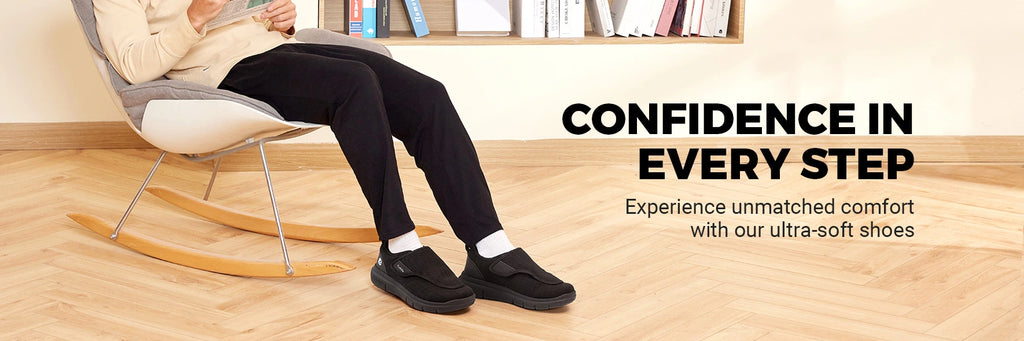
FitVille's lineup has always been built around contoured footbeds, structured arch support, and roomy fits — the same priorities that drive arch-support slipper design. While our core focus is supportive walking shoes and casuals, FitVille's at-home and recovery footwear lineup applies that same engineering to the hours you spend off your feet (or on them, indoors). Look for FitVille's recovery slides and arch-supported casuals you can comfortably wear inside the house: contoured footbeds, defined heel cups, and outsoles that work on hardwood without marking it up.
If you've been investing in supportive shoes for the gym, the office, or the daily walk, extending that investment to your indoor hours is the next logical step. The FitVille Fresh Picks collection is the easiest place to see the styles that fit this use case.
Shop FitVille Fresh Picks — 25% OFF with code AFS25 →
FAQ
Can wearing slippers cause plantar fasciitis?
Slippers don't cause plantar fasciitis on their own, but flat, unsupportive slippers worn for many hours a day can contribute to the strain pattern that aggravates it. If you already have heel or arch pain, switching from flat slippers to a contoured pair with a defined arch and heel cup is one of the simpler home adjustments to make.
Should I wear slippers around the house, or go barefoot?
For most adults over 40, especially on hardwood, tile, or concrete floors, supportive slippers are easier on the feet than going barefoot. Barefoot walking on hard surfaces offers no shock absorption and no arch support. The exception is short stretches on carpeted floors, where barefoot is fine.
How long do arch-support slippers last?
Quality slippers with cork or dense EVA footbeds typically hold their shape for 12–18 months of daily wear. Pure memory foam slippers tend to flatten out at 3–4 months. If you notice the arch feels lower than it did when new, that's the slipper telling you it's done.
Are arch-support slippers worth it for men and women equally?
Yes. The biomechanics don't differ by gender — flat footbeds and missing heel cups create the same problems for everyone. Most major brands, including Vionic, Orthofeet, and FitVille, offer arch-supported house shoes in both men's and women's sizing.
Can I use my own orthotic insoles in slippers?
Some slippers — Orthofeet most prominently — have removable insoles specifically so you can swap in custom orthotics. Most plush slippers do not. If you wear custom orthotics in your daytime shoes, look for a slipper that explicitly lists a removable insole.
The short version: house shoes are still shoes. If you wouldn't wear a flat, slick, structureless shoe to the grocery store, you probably shouldn't wear one for eight hours on your kitchen floor either. A contoured footbed, a real heel cup, and a sole that works indoors and out — that's the spec that turns slippers into recovery footwear.
Shop FitVille Fresh Picks — 25% OFF with code AFS25 →




