


Collar Height in Walking Shoes Explained 2026
When you shop for walking shoes, you encounter terms like "low-top," "mid-cut," and "high-top" on product listings without much explanation of what they mean or why they matter. These labels describe collar height — one of the more practical but underexplained specifications in footwear.
Collar height affects more than aesthetics. It influences how freely your ankle moves, how the shoe feels on different surfaces, and how well the design suits a given activity. This guide explains what collar height means, how the three main categories differ, and which one makes the most sense for daily comfort walking.
What Is Collar Height?
Collar height refers to where the shoe's opening — called the collar — sits relative to your ankle bone. The collar is the top edge of the shoe where your foot enters. Depending on the design, that edge can sit below, at, or above the ankle.
Think of it as a measurement of how much of your ankle and lower leg the shoe surrounds. A shoe with a low collar leaves your ankle largely uncovered above the heel. A shoe with a high collar wraps well above the ankle bone.
This measurement affects how the shoe interacts with your ankle during movement, which is why it matters for activity selection, not just personal style.
The Three Collar Heights
Low-Top (Collar Below the Ankle)
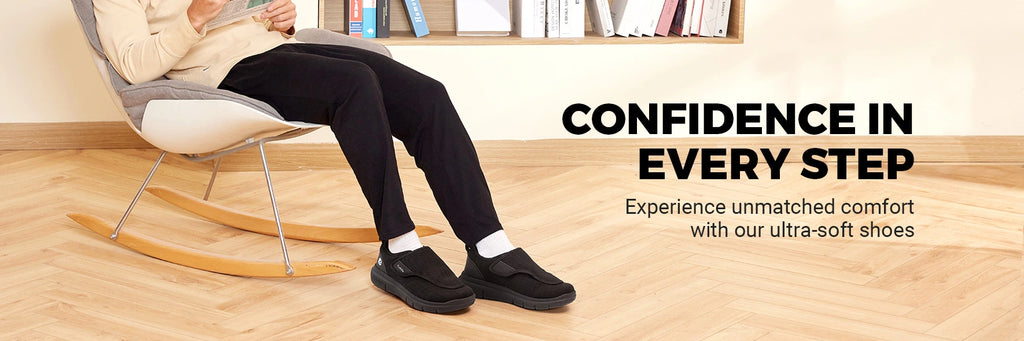
A low-top shoe has a collar that sits noticeably below the ankle bone — typically at or below the top of the heel cup. Your ankle is fully exposed above the shoe's upper, which means unrestricted range of motion in every direction as you walk.
Low-top shoes are the standard for comfort walking, casual wear, and daily use on flat or paved surfaces. Because the collar does not wrap around the ankle, there is no material pressing against the ankle during movement. Most people find this significantly more comfortable for extended wear.
The practical trade-off is that a low-top collar provides no lateral coverage at the ankle. On genuinely uneven or off-road terrain, there is no collar material to limit sideways ankle movement. For walking on sidewalks, shopping center floors, and flat outdoor paths — the primary use case for comfort walking shoes — this is not a meaningful concern.
Low-top shoes are also lighter than mid-cut or high-top designs because there is simply less material involved. Over the course of a long walk, less weight per step adds up in a tangible way.
Mid-Cut (Collar at or Just Above the Ankle)
A mid-cut shoe has a collar that reaches the ankle bone or sits just above it. The collar wraps around the ankle, which affects the feel of the shoe during movement.
Mid-cut collars are common in trail running, light hiking, and cross-training footwear — activities where lateral direction changes or uneven terrain are a routine part of the experience. The collar adds a degree of lateral structure: it is there, you notice it, and it gives the ankle something to contact during side-to-side movement.
Mid-cut shoes are heavier than low-top equivalents. The additional material adds weight, and the construction around the ankle typically involves more rigid panels or padding to give the collar its structure. This is a real trade-off: slightly more lateral coverage at the cost of added weight and reduced ankle mobility during the full stride cycle.
For daily flat-surface walking, most adults find mid-cut collars unnecessary. The ankle mobility restriction becomes noticeable quickly, and the extra weight registers over a long walk.
High-Top (Collar Well Above the Ankle)
High-top collars rise well above the ankle — into the lower calf in some designs. This is the territory of hiking boots, technical trail footwear, and work boots built for specific industrial or outdoor conditions.
High-top construction is not part of FitVille's walking shoe range, and the reason is straightforward. For comfort walking on everyday surfaces, a collar that restricts ankle mobility and adds significant weight is counterproductive. High-top designs are specialized tools for specific terrain or occupational requirements — not comfort walking.
Low-Top vs Mid-Cut: Key Differences
| Feature | Low-Top | Mid-Cut |
|---|---|---|
| Collar position | Below ankle bone | At or just above ankle bone |
| Ankle mobility | Full, unrestricted | Slightly limited by collar contact |
| Weight | Lighter | Heavier |
| Lateral collar coverage | None | Some collar contact during side movement |
| Best surface | Pavement, flat terrain, daily walking | Light trails, uneven terrain, cross-training |
| All-day flat-surface comfort | High | Can feel restrictive over long flat walks |
Which Collar Height Is Right for Walking?
For daily comfort walking on pavement, sidewalks, retail floors, and flat outdoor surfaces, low-top is the right choice for most adults. The full ankle mobility, lighter construction, and absence of collar contact make low-top shoes consistently more comfortable over extended periods of flat-surface use.
Mid-cut makes practical sense when the walking surface is genuinely irregular — light gravel, mixed outdoor terrain, or surfaces that involve frequent direction changes. If that is your primary use case, a mid-cut design is worth considering.
High-top designs belong in hiking and work environments. They are not the right tool for comfort walking.
FitVille's walking shoe range is built around the low-top design because it aligns with what most comfort walkers actually need: full ankle mobility, cushioning underfoot, and a roomy fit — especially in the toe box — that stays comfortable across miles of flat-surface walking.
Browse current low-top walking shoes at https://thefitville.com/collections/fresh-picks.
FAQ
Does higher collar mean more ankle support?
Not in a simple one-to-one way. A higher collar surrounds more of the ankle, which creates more contact between the shoe's material and the ankle during side-to-side movement. Whether that contact is useful depends entirely on the activity. For walking on flat surfaces where ankle movement is primarily forward and back, a higher collar adds weight and restricts natural stride without providing a functional benefit. For activities involving frequent lateral movement or uneven terrain, the collar structure plays a more meaningful role. For everyday walking, a well-cushioned, properly fitted low-top shoe is what actually delivers sustained comfort.
What collar height is best for walking?
For most adults walking on sidewalks, paths, and everyday flat surfaces, low-top is the best collar height. It allows full ankle mobility, keeps the shoe lighter, and avoids the collar pressure that some people notice with mid-cut designs during extended wear. Mid-cut collars are worth considering if you regularly walk on uneven or off-road terrain where lateral movement is part of the activity. High-top designs are not suited to comfort walking and are outside FitVille's walking shoe range entirely.




