


Best Walking Shoes for Museum & Gallery Visits 2026
A great museum day is mostly standing still. Your feet do not get the memo. Here's the shoe that does.
Museums and galleries look easy from the outside — you're not hiking, you're not running, you're barely going more than a couple of miles. And yet, every cultural traveler eventually has the same conversation after the same trip: "I don't know why I was so wrecked after the Louvre, we weren't even doing that much." This is why.
Shop comfortable walking shoes for sightseeing →
What a museum or gallery day actually demands
Whether your trip is the Smithsonian on the National Mall, the Met on Fifth Avenue, MoMA, the Art Institute of Chicago, the MFA Boston, or an overseas day at the Louvre, the British Museum, the Prado, the Rijksmuseum, the Uffizi, or the Getty, the shape of the day is remarkably consistent:
- 4-8 hours mostly indoors, in one or two large venues
- Long static standing in front of exhibits — the slowest, most deliberate kind of standing
- Polished marble or hardwood floors that are uniform, very hard, and unforgiving
- 4-6 miles of total walking, far less than a city-tourist day
- Paired with city walking before and after — to and from the venue, plus a meal
- A culture-day dress code — dressier than parks, less dressy than a fine-dining restaurant
That mix is unusual. It is not a hike, not a stadium day, not a theme park, and not a casino vacation. It deserves its own thinking.
The static-standing problem (this is the real load)
Most footwear advice assumes movement. The conversation is about miles, gait, forward roll, cadence. Museums break that conversation.
The reason a museum day destroys feet is not the mileage — it's the hours of standing still on hard, polished floors. In front of one painting for six minutes, then twelve feet to the next painting, then four minutes in front of the next, then eight feet, then five minutes. Multiply that across 4-8 hours and most of your time is spent essentially motionless, on one of the hardest surfaces a building can have.
Static standing loads feet differently from walking. The same micro-muscles fire the same way without the relief of motion. Blood pools. Arches fatigue. The heel and the ball of the foot absorb a constant, uniform impact instead of an alternating one.
That changes what the shoe needs. Cushioning matters more than forward-roll responsiveness here. Arch and heel support matter more than gait propulsion. The shoe needs to work as a standing shoe first and a walking shoe second.
The polished-floor explainer
World-class museums have world-class floors — and those floors are punishing.
Polished marble, sealed terrazzo, and finished hardwood are extremely uniform, extremely hard, and completely flat. There's no surface variability, no give, no texture to break up impact. Over a six-hour visit, every step and every motionless minute lands on essentially the same merciless surface.
The right answer is a grippy-but-not-aggressive rubber outsole on a stable platform. Grippy enough to bite cleanly on a polished floor without skating, not so aggressive that deep lugs reduce contact area and feel slippery on the smooth surface. Aggressive trail tread is the wrong tool for a museum floor; smooth-soled fashion shoes are the wrong tool for the long static standing.
The combined-with-city-walking note
The museum day is rarely just the museum.
A realistic Louvre day is: hotel breakfast → metro or 20-minute walk to the museum → 4-6 hours inside → walk through the Tuileries to lunch → another hour or two of post-museum city walking → metro back. A Smithsonian day on the National Mall might string together three or four buildings with a mile of outdoor walking between them, plus a walk to dinner. A Met day stacks the museum with a Central Park walk and a Madison Avenue stroll.
That means the shoe has to do both jobs in one outfit — static-standing-friendly indoors and walking-friendly outdoors. The good news: a well-built cushioned walking shoe handles both. For more on the broader travel side of this, see our comfortable travel shoes guide and our European walking shoes guide.
Find your size in Fresh Picks →
The dress-code note (let's be honest)
Museums and galleries skew dressier than national parks, less dressy than a Michelin restaurant. A world-class museum is a place where people have made an effort. An athletic-trainer look — neon mesh, chunky running silhouettes, aggressive midsole branding — reads as out of place in a gallery hall in a way it would not at a theme park.
The compromise most travelers miss: a clean, modern walking shoe in a darker colorway (black, charcoal, deep navy, deep gray) reads as a deliberate culture-day choice. Paired with dark jeans, chinos, a midi-skirt, or a casual dress, it works across every part of the day — the museum, the lunch reservation, the late-afternoon coffee, the dinner that follows. You are not "in sneakers." You are in a clean modern walking shoe that happens to be cushioned for hours of standing.
You do not have to choose between comfort and looking like you belong in the room.
The minimal-sitting reality
Most museum benches are sparse, especially at world-class venues during peak season. The Louvre has many rooms with no seating at all. The Met has benches only in a handful of large halls. The British Museum, the Prado, the Uffizi — all the same. The room is designed for the art, not for the visitor's lower back.
That means the shoe has to be the seat. Cushioning that works standing, not just walking, is what carries the visit when no bench appears. This is the practical case for a shoe with real, durable cushioning over arch and heel — not just forefoot bounce.
The width-and-toe-box-for-static-swelling note
Standing still swells feet more visibly than walking does. Without the muscle pump of regular movement, fluid pools downward, and by hour four most visitors notice it. Travelers with naturally wider feet feel it first; everyone feels it eventually.
The answer is width options and a roomy toe box from the start of the visit, not relief at the end. A shoe that fits well at 10 a.m. and feels tight by 3 p.m. is too narrow for the day. If you've never actually measured your foot width, our foot measurement guide walks through it in a few minutes.
A small note on layering
Museum interiors are climate-controlled to protect art — usually a steady 65-70°F with managed humidity. The city outside, depending on the trip, may be 85°F and humid or 45°F and damp. The shoe is in both environments within minutes.
A breathable-but-not-airy upper handles that transition. You don't want a mesh so open that interior cool air goes straight through; you don't want leather so closed that the August walk to the metro feels like a sauna. A balanced, breathable upper is the practical middle.
What to look for in a museum and gallery walking shoe
A quick checklist to match the day above:
| Feature | Why it matters on a museum day |
|---|---|
| Cushioning tuned for static standing | Long motionless hours on hard polished floors |
| Stable, supportive arch and heel | Static load is more arch-and-heel than forward-roll |
| Grippy-but-not-aggressive outsole | Polished marble and hardwood reward moderate tread |
| Breathable upper | Cool interior climate, warmer city outside |
| Roomy toe box | Feet swell more from standing than from walking |
| Width options (standard / 2E / 4E) | Static-swelling makes width matter from hour one |
| Clean darker colorway | Culture-day appropriate, never reads athletic |
FitVille Rebound Core v9 for museum and gallery days
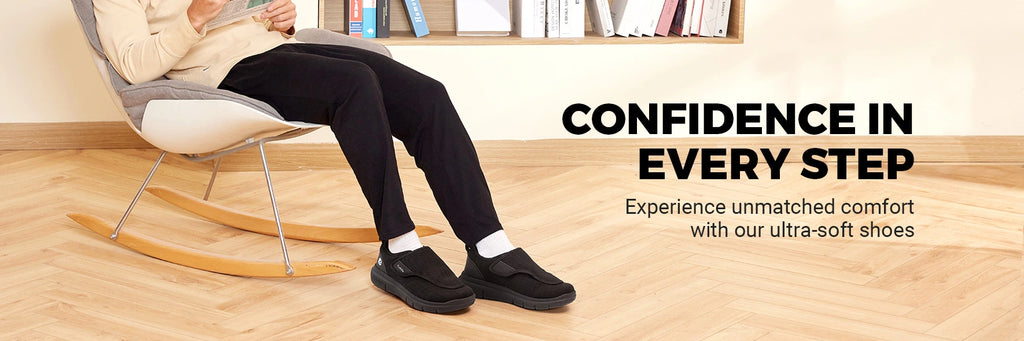
The FitVille Rebound Core v9 ($79.99) was built around exactly this kind of long, polished-floor, static-heavy day. The cushioning is tuned for repetitive impact and long static standing — the part of a museum visit that destroys most shoes — on a stable supportive platform that holds arch and heel through hours without a bench. The outsole is grippy-but-not-aggressive rubber, the right profile for polished marble and hardwood (not the deep trail lugs that reduce contact area on smooth floors).
The upper is breathable enough for the cool-interior-to-warm-city transition that defines a sightseeing day, and the roomy toe box leaves room for the swelling everyone gets from standing still. It comes in standard, 2E (wide), and 4E (extra wide) widths, in darker culture-day colorways that read as a deliberate clean modern walking shoe rather than as gym footwear in a gallery.
It's a use-case match — long static standing, polished floors, paired with city walking on either side — not a marketing claim.
Shop the Rebound Core v9 collection →
FAQ
What are the best shoes for visiting museums?
A cushioned, stable walking shoe with arch and heel support, a grippy-but-not-aggressive rubber outsole, a roomy toe box, a breathable upper, and a clean darker colorway that suits a culture-day dress code. The cushioning matters more for standing still than for walking — that's the museum-specific detail most general sightseeing guides miss.
Why are my feet so tired after a museum?
Because museum visits are dominated by long static standing on hard polished floors, not by mileage. Standing still loads the feet differently than walking — blood pools, arches fatigue, and the same micro-muscles fire without the relief of motion. A shoe with cushioning and arch-and-heel support tuned for static standing carries the visit better than a shoe designed only for forward gait.
What shoes should I wear to the Louvre?
A clean walking shoe in a darker colorway, cushioned for long static standing, in your true width with a roomy toe box. The Louvre is a 4-8 hour day on polished marble with very limited seating, and most visitors pair it with at least an hour of city walking on either side. One well-built walking shoe handles the whole day. Bright athletic-trainer styling reads as out of place; smooth-soled fashion shoes give up after about three hours on the marble.
Are sneakers OK at art galleries?
A clean modern walking shoe in a darker colorway is appropriate at almost any public museum or gallery. Bright neon running shoes, beat-up trainers, or aggressive trail styles can feel out of place at world-class venues — not because there's a written rule, but because the room itself has a tone. The right shoe quietly looks like a deliberate choice, not a gym holdover.
Related reads: Comfortable Travel Shoes 2026 · Best Walking Shoes for Europe · Best Shoes for National Park Day Trips · Best Shoes for Casino Vacation · How to Measure Foot Size and Width




