


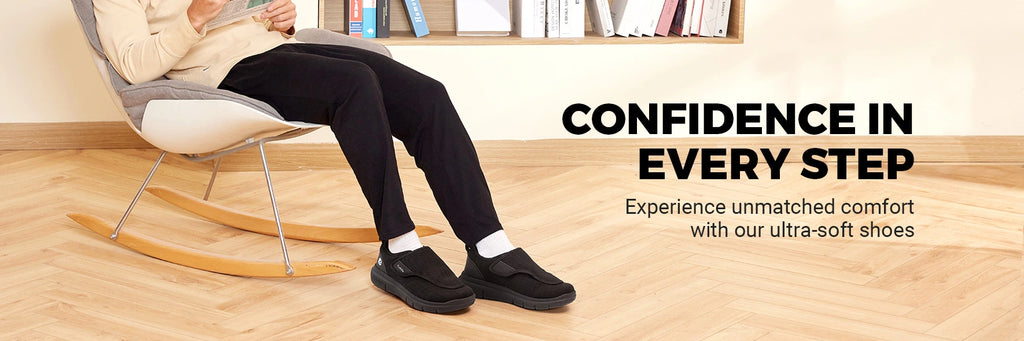
Best Shoes for Standing All Day in 2026: 8, 10 & 12-Hour Shifts
You know the moment. It's hour four. The arches start to ache, the heels feel bruised, and every step on the polished concrete sends a dull thud up into the knees. By hour eight your feet have swollen half a size, your toes are pressed against the seams, and the shoes that felt fine this morning feel like a punishment. By hour twelve, you're calculating how many minutes until you can sit down.
If your office is a shift, not a desk — a hospital ward, a classroom, a sales floor, a kitchen line, a factory aisle — your shoes are the most important piece of gear you own. This guide is built for you: the features that actually matter, the brands worth considering, and a 2026 comparison table that cuts through the marketing.
Why Standing All Day Is Different From Walking All Day
Walking flexes the calf and engages what's often called the foot's "muscle pump" — the rhythmic contraction that helps push blood and lymph back up the leg. Prolonged standing does the opposite. According to NIOSH research on prolonged standing, static loading pools fluid in the lower legs, fatigues the small stabilizer muscles in the foot, and hammers the plantar fascia against unforgiving surfaces.
Hard floors make it worse. Concrete, polished tile, and thin commercial mats don't absorb impact — your shoes and your body do. Late-shift swelling is real and predictable: most shift workers' feet expand by half a size to a full size between morning report and end-of-day. A shoe that fits at 7 a.m. can feel like a vise at 7 p.m.
The takeaway: shoes that work for a daily walk often fail on an eight-hour shift. You need different priorities.
The 5 Features That Actually Matter
After cutting through brand claims, five features separate shoes that survive a shift from shoes that don't.
1. A cushioned midsole that doesn't bottom out. Soft foam feels great in the store, but cheap EVA compresses fast. Look for layered midsoles, dual-density foam, or PU/EVA blends rated for long wear. Cushioning should feel firm-but-forgiving, not pillowy.
2. A slip-resistant outsole. Wet floors, kitchen grease, and waxed corridors are everyday hazards. Look for outsoles tested to ASTM F2913 or marked SR/slip-resistant by the manufacturer. Aggressive tread patterns also help on factory floors.
3. A structured arch. Standing collapses the arch over the course of a shift. A built-in arch shank or shaped footbed supports the longitudinal arch and reduces the strain that travels up to the calves and lower back.
4. Width that accommodates late-shift swelling. This is where most brands fail shift workers. If your shoe is snug at the start of a shift, it will hurt by hour six. Wide (2E) and extra-wide (4E) options aren't a luxury — they're the difference between finishing the shift comfortable and finishing it numb.
5. A removable insole. Many shift workers use custom orthotics or aftermarket insoles. A shoe with a glued-in footbed locks you out of that option. Removable insoles also let you air out the shoe and swap in fresh cushioning every few months.
Profession-Segmented Picks
Nurses & Healthcare Workers
Twelve-hour shifts, fast pacing, and the occasional sprint to a code call. Healthcare workers benefit from shoes with serious cushioning, easy-clean uppers, and slip-resistance for spills. Closed-toe is usually required. Look for cushioned trainers or professional clogs with structured arches.
Teachers
Teachers walk more than they realize — pacing rows, rotating between classrooms, monitoring recess. The footwear sweet spot is a comfortable, presentable trainer or low-profile walking shoe with strong cushioning and arch support. Style matters here too; a shoe that pairs with slacks reads more professional than running shoes.
Retail & Hospitality
Long static stretches behind a register or bar, broken up by shelf-stocking and floor walks. Slip-resistance is critical in food service. Comfort over eight to ten hours, with enough width for swelling, is the priority. Many retail workers prefer a clean sneaker silhouette that fits a uniform.
Factory & Food Service
The most demanding environment: concrete floors, possible wet conditions, sometimes safety-toe requirements. Slip-resistance is non-negotiable. Cushioning needs to be durable enough to survive eight to twelve hours of static loading without compressing within a month. Removable insoles let workers add aftermarket gel or memory-foam layers.
2026 Brand Survey: Six Shoes Worth Considering
Hoka Bondi. Maximalist cushioning. The thick EVA midsole is famous for impact absorption, which makes it a favorite among nurses on hard floors. Width options are limited to standard and a single wide; some shift workers find the rocker geometry takes adjustment.
Brooks Addiction Walker. The longtime healthcare and hospitality default. Slip-resistant outsole, structured support, and notably wide-width availability. Less plush than the Hoka, but predictable and durable.
Skechers Arch Fit. Affordable, podiatrist-developed footbed, easy on/off. A solid entry-level pick for retail and teaching. Cushioning isn't as deep as Hoka or as durable as Brooks, so replacement comes sooner.
Dansko Professional. The classic clog. Strong arch support, reinforced toe box, slip-resistant outsole. Healthcare standard for decades. Width can run narrow; the rocker sole is polarizing.
New Balance 990. Made in the USA, available in genuine wide and extra-wide. Excellent structured cushioning, ENCAP midsole, and a more sneaker-style aesthetic than Brooks. A favorite for teachers and retail managers.
FitVille. Built specifically around wide-fit comfort engineering. FitVille's comfort lineup includes wide-width options with cushioned midsoles and slip-resistant outsoles built for long shifts, plus removable insoles for orthotic users.
Comparison Table: 2026 Long-Shift Picks
| Shoe | Cushioning | Slip-Resistant | Width Availability | Removable Insole | Price Band |
|---|---|---|---|---|---|
| Hoka Bondi | Maximal | Standard rubber, not SR-rated | Standard, Wide | Yes | $$$ |
| Brooks Addiction Walker | Firm, supportive | SR-rated | Standard, Wide, Extra-Wide | Yes | $$$ |
| Skechers Arch Fit | Moderate | SR options available | Standard, Wide | Yes | $ |
| Dansko Professional | Firm | SR-rated | Standard, limited Wide | No (sewn footbed) | $$$ |
| New Balance 990 | Structured, durable | Standard rubber | Standard, Wide, Extra-Wide | Yes | $$$ |
| FitVille (wide-fit lineup) | Cushioned | SR options | Wide, Extra-Wide focus | Yes | $$ |
Price bands: $ under $90, $$ $90-140, $$$ $140+.
When to Replace Your Shift Shoes
Here's the part nobody mentions: even great shoes have a shelf life, and shift workers burn through them faster than runners do. Static loading on hard floors compresses foam differently than running flexes it.
A reasonable rule of thumb for shift workers: replace shoes every 6 to 9 months, or roughly every 1,000 hours of standing. Signs it's time:
- The midsole feels flat or "dead" — you can press a thumb into it without resistance.
- You can see compression lines or wrinkles wrapping the foam.
- The outsole tread is smoothed out, especially under the heel and ball.
- Your feet, knees, or lower back are sore in ways they weren't six months ago.
Rotating two pairs extends the life of both — the foam gets 24 hours to decompress between shifts, which slows breakdown noticeably.
The FitVille Difference for Shift Workers
FitVille was built around a specific idea: wide-footed people, swollen-footed people, and shift workers deserve comfort engineered for them — not borrowed from a runner's shoe with the toe box stretched.
The lineup focuses on roomy wide and extra-wide toe boxes, cushioned midsoles tuned to support long shifts on hard surfaces, slip-resistant outsole options for healthcare and food-service environments, structured arch support that holds through a twelve-hour day, and removable insoles for workers who run custom orthotics. It's a shoe designed for people whose office is a shift, not a desk.
Frequently Asked Questions
What are the best shoes for nurses standing all day?
Nurses do best in cushioned trainers or professional clogs with slip-resistant outsoles, structured arches, and enough width to handle hour-twelve swelling. Closed-toe is typically required. Brooks Addiction Walker, Hoka Bondi, Dansko Professional, and FitVille's wide-fit comfort lineup are all common picks.
Are wide shoes really necessary for standing all day?
For most shift workers, yes — even those with "normal" width feet at the start of the shift. Feet routinely swell half a size to a full size during a 10-12 hour shift, and a shoe that's snug at hour two becomes painful by hour eight. Wide-fit options give your feet room to expand without seam pressure.
What's better for concrete floors: maximum cushioning or firm support?
Both, in the right balance. Pure soft foam bottoms out and stops protecting you. Pure firmness transmits impact. The best shift shoes layer firm structural support with a cushioned top layer — supportive enough to keep your arch up, soft enough to take the edge off concrete.
How often should I replace shoes I wear for 12-hour shifts?
Every 6 to 9 months for most shift workers, or whenever the midsole foam feels flat and your legs start aching in new ways. Rotating two pairs extends the life of both.
Can I use my running shoes for an 8-hour retail shift?
You can, but they're not optimized for it. Running shoes are tuned for forward propulsion and impact during stride, not static loading on hard surfaces. They also rarely have slip-resistant outsoles. A purpose-built shift shoe usually outperforms them after the first few hours.
Do removable insoles really matter?
They do if you use orthotics, if you want to add aftermarket cushioning, or if you want to air out the shoe between shifts. A glued-in footbed locks you out of all three.
Ready to Upgrade Your Shift Shoes?
If hour four is hurting more than it should, your shoes are telling you something. Explore FitVille's wide-fit comfort lineup, built for the people whose work happens on their feet.
Shop the Fresh Picks collection and use code AFS25 for 25% OFF Sitewide. Your next shift deserves better footing.
References
- NIOSH — Standing All Day at Work: Health Effects
- Mayo Clinic — Foot pain causes and prevention
- OSHA — Working Surfaces and Slip, Trip & Fall Prevention
- Hoka — Bondi product information
- Brooks Running — Addiction Walker
- Dansko — Professional clog overview
- New Balance — Made in USA 990 series
- FitVille — Fresh Picks collection




